Service Level Agreements for Strata Maintenance Contractors: What Every SLA Must Specify
What an SLA with a strata maintenance contractor must include: response tiers, trade availability, make-safe scope, KPI reporting, and cost structure. Sydney context.
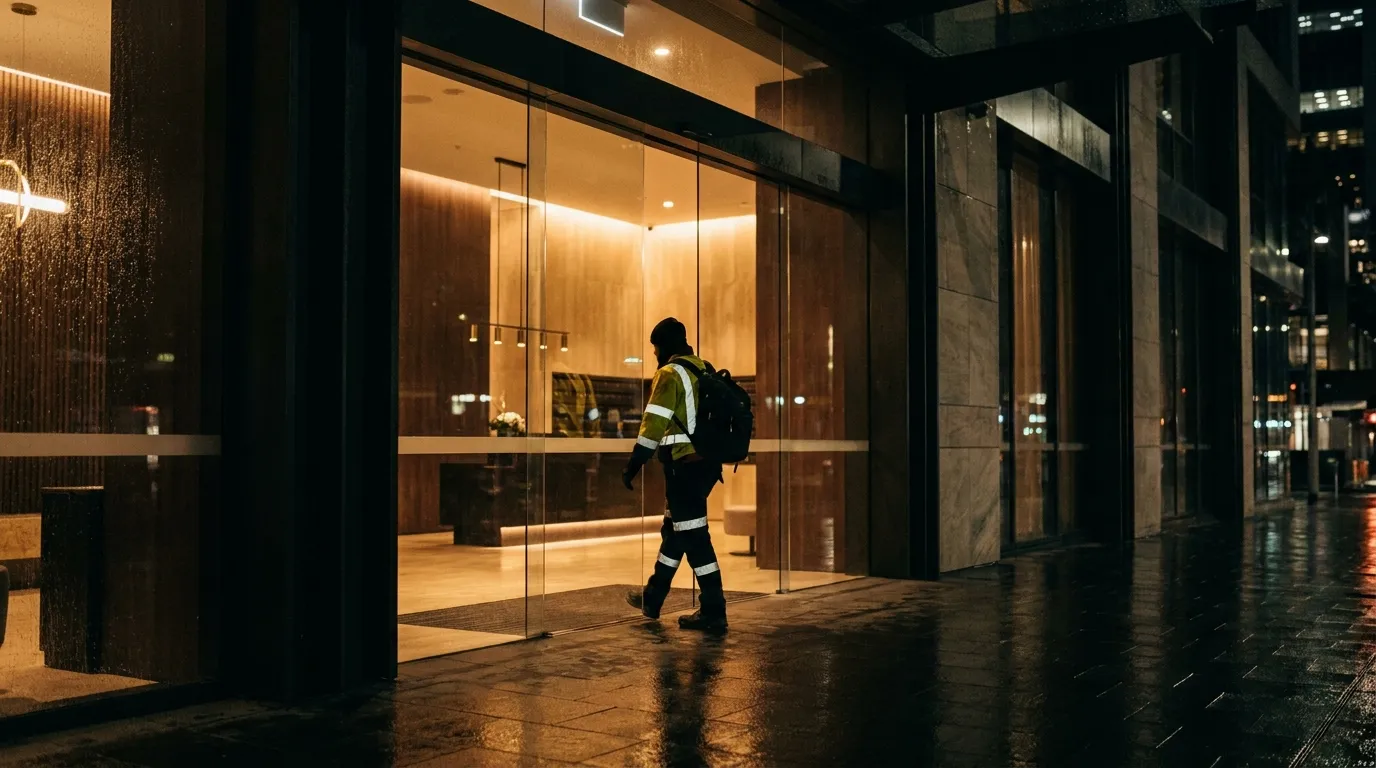
An SLA without measurable response time tiers is a marketing document, not a contract. The first time you have to enforce it - at 11pm on a Saturday when water is flooding the basement car park - you discover what was missing. For strata managers, a well-structured contractor SLA is not optional paperwork. It is the instrument that defines whether your emergency response is a managed process or a controlled panic.
What Is a Strata Maintenance SLA?
A strata maintenance Service Level Agreement is a contractual document between the owners corporation (or its managing agent) and a maintenance contractor that specifies: what work is covered, the response standards that apply to each category of work, the cost structure including all fees and premiums, the communication obligations of both parties, and the performance metrics against which the relationship is measured.
An SLA is not a quote acceptance or a scope of works. It is the framework document within which individual jobs are ordered and managed. Without it, every job is negotiated individually, and the contractor has no contractual obligation to respond at any particular speed or standard.
For owners corporations with statutory maintenance obligations under Section 106 of the Strata Schemes Management Act 2015, the SLA is also the document that demonstrates due diligence. If an OC is challenged on its response to a defect or emergency, the SLA - and the contractor's compliance with it - forms part of the evidence record.
Response Time Tiers: The Core of Any SLA
The priority tier system is the most important element of a strata maintenance SLA. Without defined tiers, "emergency" means whatever the contractor decides it means on the night.
| Priority | Name | Definition | Response Time Commitment | Availability |
|---|---|---|---|---|
| P1 | Critical | Immediate risk to life or essential services | 2 hours from notification | 24/7, 365 days |
| P2 | Urgent | Significant risk of property damage or security breach | 4 hours from notification | 24/7, 7 days |
| P3 | Standard | Non-critical defect requiring prompt rectification | 24 hours from notification | Business hours + Saturday |
| P4 | Routine | Planned or programmed maintenance | 5 working days | Business hours |
P1: Critical (2-Hour Response)
P1 events include:
- Structural falling material (concrete spalling, cladding separation, render collapse)
- Active electrical fault creating shock or fire risk
- Total loss of essential services (water, power) to the building or multiple lots
- Major water ingress actively compromising building services or lot interiors
- Lift entrapment (activation of lift company emergency line is separate - this covers associated building access issues)
- Security breach - main entrance access failure leaving building unsecured
The P1 response obligation is to attend site, assess the hazard, and implement a make-safe. P1 does not mean the rectification work is complete in 2 hours. It means a qualified person is on site within 2 hours taking steps to eliminate the immediate risk.
The SLA must specify what "notification" means for P1. Phone call to a dedicated 24/7 number? SMS to a monitored line? Email alone is not acceptable for P1 - no contractor can commit to monitoring email at 3am.
P2: Urgent (4-Hour Response)
P2 events include:
- Active water ingress not yet affecting building services or multiple lots
- Security damage - broken window, forced entry, damaged gate
- Partial power failure in common areas
- Lift out of service but no entrapment
- Sewage overflow or blockage in common property
The P2 response is to assess and make-safe or contain. A P2 that goes unattended overnight frequently becomes a P1 by morning.
P3: Standard (24-Hour Response)
P3 covers defects that are not urgent but should not wait for the next scheduled visit:
- Non-critical lighting failure
- Minor water ingress not actively worsening
- Vandalised common property
- Non-structural cracking identified during inspection
- Single-lot plumbing or electrical issue where the tenant has alternative facilities
P4: Routine (5 Working Days)
P4 covers planned maintenance, programmed inspections, and minor repairs identified through the quarterly inspection cycle. This is where most of the building's maintenance volume sits, and where the planned maintenance schedule drives the workload.
Trade Availability Requirements
The SLA must specify which trades are available under each response tier. A contractor who offers 24/7 coverage but only has a general maintenance technician available after hours - not a licensed electrician or plumber - does not meet the standard for P1 electrical or P2 plumbing events.
| Trade | Licence Required in NSW | P1/P2 Coverage Requirement |
|---|---|---|
| General building / remedial | Builder's licence (relevant category) | Senior tradesperson available 24/7 |
| Electrical | Electrical contractor's licence | Licensed electrician available 24/7 |
| Plumbing / drainage | Plumbing contractor's licence | Licensed plumber available 24/7 |
| Roofing | Builder's licence (roof work) | Senior tradesperson available for storm events |
| Fire systems | FPAS (Fire Protection Association Australia) accreditation | Via specialist subcontractor |
| Lift | Lift contractor's licence | Via specialist subcontractor (separate SLA typically required) |
The SLA should specify the contractor's licence numbers and the coverage model (in-house staff vs subcontractor network). Where subcontractors are used for specialist trades, the SLA should commit the primary contractor to managing the subcontractor's response and communicating to the strata manager as the single point of contact.
Make-Safe Scope and Limits
Make-safe is consistently the most disputed element of emergency maintenance agreements. The strata manager wants certainty that the hazard is gone. The contractor wants clarity on what they are obligated to do without a separate scope of works and approval.
A well-defined make-safe scope covers:
Included in make-safe (no additional approval required):
- Cordoning off the immediate hazard area
- Isolating the electrical fault at the board
- Isolating water supply at the building isolation point
- Removing immediately dangerous falling material (soffit spalling, loose render)
- Boarding or barricading a security breach
- Installing emergency lighting where egress is compromised
- Photographing the hazard and documenting site conditions
Requires separate scope and approval:
- Any rectification work beyond the immediate make-safe
- Structural assessment by an engineer
- Any works affecting lot owner property without lot owner notification
- Repair work estimated to exceed an agreed threshold (typically $2,000-$5,000 depending on OC's delegated authority policy)
The make-safe threshold - the dollar amount within which the contractor can act without prior approval - should be specified in the SLA and consistent with the OC's operational spending authority under its meeting resolutions.
Rectification Timeframes
After make-safe, the SLA should specify when the rectification scope, quote, and completion are expected.
| Priority | Scope and Quote Delivery | Rectification Completion |
|---|---|---|
| P1 | Within 24 hours of make-safe | Within 5 working days (subject to materials and access) |
| P2 | Within 48 hours | Within 10 working days |
| P3 | Within 5 working days | Within 20 working days |
| P4 | As per planned maintenance schedule | Per agreed schedule |
These are framework commitments. The SLA should include a provision for extension where specialist materials, subcontractor lead times, or lot owner access create genuine delays - but the provision should require written notification and a revised timeframe, not a verbal excuse.
Communication Cadence
A strata manager managing a portfolio of buildings cannot be chasing contractors for updates. The SLA must specify the communication obligations of the contractor - not aspirations, but minimum required communications with timeframes.
P1 minimum communication obligations:
- Attendance confirmation: notification when contractor is on site (within 15 minutes of arrival)
- Initial assessment: verbal or SMS summary of situation within 30 minutes of arrival
- Make-safe completion: written confirmation when make-safe is complete
- Incident report: written report with photographs within 4 hours of make-safe completion
- Rectification scope: written scope and cost estimate within 24 hours
P3/P4 minimum communication obligations:
- Booking confirmation: time and date confirmed within 24 hours of work order
- Completion confirmation: same-day notification when work is complete
- Defect report (if applicable): written report within 48 hours if additional issues identified during the job
A contractor who routinely fails to meet communication obligations should be treated as a contractor who routinely fails to meet response obligations - because the information blackout is the same problem from the strata manager's perspective.
Cost Structure: What to Specify
An SLA without explicit cost terms is not a commercial document. The cost structure section must include:
Call-Out Fees (2026 Sydney Benchmarks)
| Time | Typical Call-Out Fee |
|---|---|
| Business hours (7am-5pm Mon-Fri) | $150-$250 |
| After hours (5pm-10pm weekdays, 7am-5pm weekends) | $200-$350 |
| Night call (10pm-7am) | $300-$500 |
| Public holidays | $350-$600 |
Call-out fees should be clearly stated as separate from the hourly labour rate. A job that bills a $400 call-out fee plus 2 hours at $120/hour is not the same as a job billed at 2 hours at $120/hour.
Hourly Rates and Premiums
Specify base hourly rates for each trade category, and the multiplier applied after hours. Sydney market rates for licensed trades in 2026 range from $110-$180/hour base depending on trade and seniority. After-hours multipliers of 1.5x are standard; public holiday multipliers of 2x are common.
The SLA should include a cap on self-authorised hours per job. A cap of 4 hours before supervisor approval prevents a single overnight emergency from generating an unexpected $3,000 invoice.
Materials and Disbursements
Specify whether materials are billed at cost, at cost plus a margin (typical 10-15%), or at a fixed schedule rate. For emergency make-safe work, a cost-plus approach is standard. For planned maintenance, fixed-rate schedules reduce variation.
KPI Reporting
The SLA should require monthly KPI reporting from the contractor to the strata manager. The minimum KPI set:
| KPI | Description | Target |
|---|---|---|
| P1 response compliance | % of P1 events attended within 2 hours | 100% |
| P2 response compliance | % of P2 events attended within 4 hours | 95%+ |
| First-visit resolution rate | % of jobs resolved on first visit | 85%+ |
| Reactive to planned ratio | Reactive jobs as % of total work orders | <30% |
| Average time to rectification | Average working days from report to completion | <10 days |
A contractor who cannot produce this reporting does not have the operational maturity to manage a strata maintenance portfolio. The reporting capability is as important as the performance numbers - if the data is not tracked, the performance is not managed.
How Superb Maintenance Structures Emergency Response
Our 24-hour emergency response covers P1 and P2 events 7 days a week. A single point of contact - one phone number, one team - manages the initial response, the make-safe, and the handoff to rectification. Property managers at Belle Property Strathfield and Ray White Pyrmont have a direct line to our operations team, not a call centre.
The multi-trade model means that a P1 water ingress event that requires plumbing isolation, temporary waterproofing, and electrical isolation of affected circuits is handled by one contractor under one make-safe report, with one incident record. That record feeds directly into the rectification scope and cost estimate, without the version-control problem of coordinating three separate contractors.
For the full picture of how planned and reactive maintenance relates to levy spending, see Insurance vs Strata Levies for Repairs.
For waterproofing-specific emergency scenarios, see Balcony Waterproofing Rebuild Process.
See also:
- Maintenance Schedule Template for Property Managers
- Quarterly Inspection Checklist for Strata Buildings
- 2026 Sydney Building Remedial Cost Index
- General Maintenance Services
- Contact Superb Maintenance Group
External references:
- NSW Fair Trading - Building and Construction
- NSW Government Strata Living
- LookUpStrata - Strata Management Resources
The Bottom Line
The best time to review your maintenance SLA is not when the basement is flooding. It is before that moment - when you can read the call-out fee schedule, verify the response time commitments, and confirm that the contractor actually has a licensed electrician available at 2am. The SLA is the contract you never think about until you need it. Make sure it says what you think it says before that night arrives.
A contractor who resists committing to specific response time tiers, specific cost structures, and specific KPI reporting is telling you something important about how they intend to perform. Build accordingly.
Frequently asked questions
What is a reasonable P1 emergency response time for strata maintenance in Sydney?
What should a make-safe scope include?
Are after-hours call-out fees standard in strata maintenance SLAs?
What KPIs should a strata manager track for maintenance contractors?
Can one contractor cover all trades under a single SLA?
Continue reading

The Maintenance Schedule Template Every Sydney Property Manager Should Use
A practical annual maintenance schedule for Sydney property managers: seasonal tasks, quarterly inspections, monthly high-risk checks, and weekly common-area routines.

75-Point Quarterly Inspection Checklist for Strata Buildings
A complete 75-point quarterly inspection checklist for NSW strata buildings: common areas, exterior, services, and safety with defect identification guidance.
Insurance vs Strata Levies for Repairs: What's Covered and Who Pays
When does strata insurance cover repairs vs when do owners pay through levies? A practical guide to insurable events, exclusions, and the grey areas in NSW strata buildings.