Insurance vs Strata Levies for Repairs: What's Covered and Who Pays
When does strata insurance cover repairs vs when do owners pay through levies? A practical guide to insurable events, exclusions, and the grey areas in NSW strata buildings.
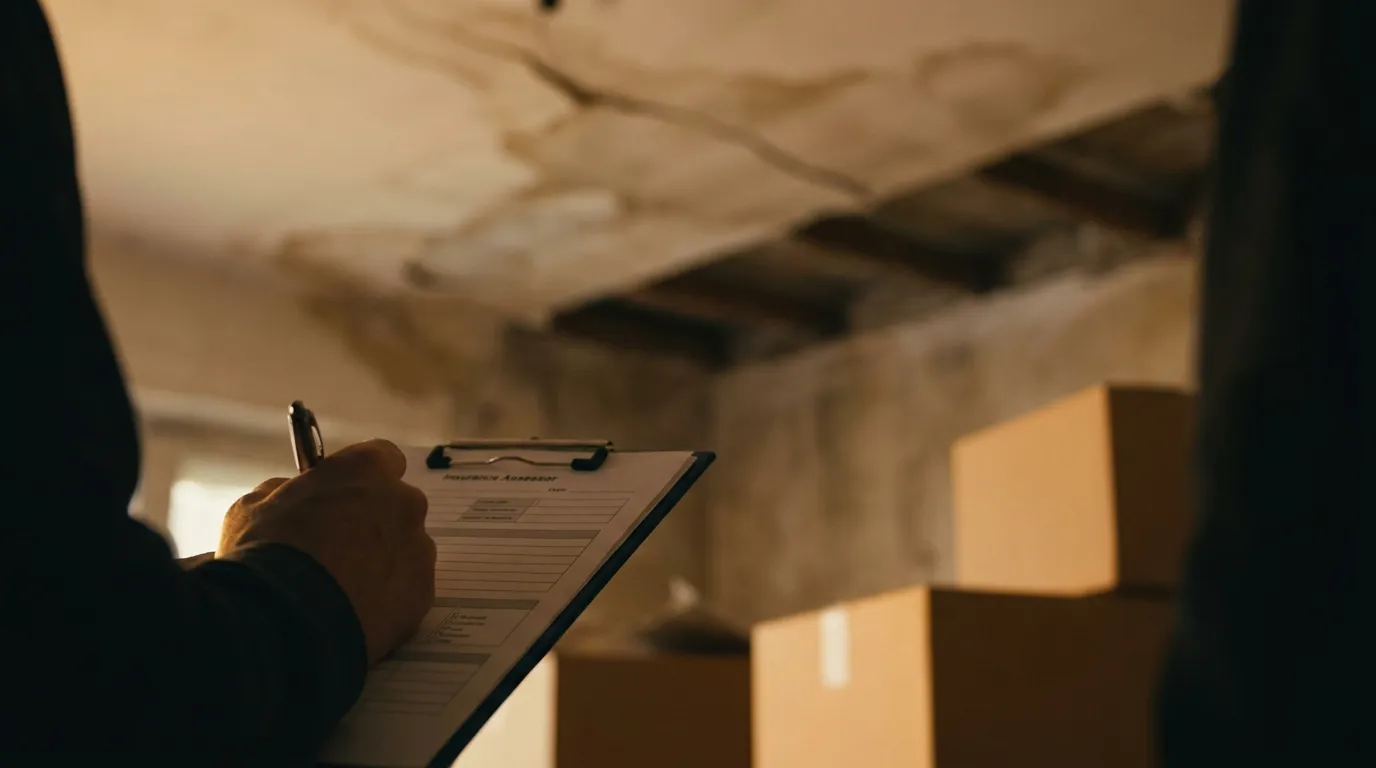
The question arrives after every significant defect or damage event in a strata building: does insurance cover this, or does the owners corporation fund it through levies? The answer matters because the difference between a covered claim and an unfunded repair can be tens of thousands of dollars, sometimes allocated through a special levy that surprises lot owners who expected their premiums to handle it. This guide sets out the practical framework: what strata building insurance covers, what it excludes, the grey areas where outcomes vary, and the decision process owners corporations and property managers should follow.
What Is Strata Building Insurance and What Does It Cover?
Strata building insurance, mandated by Section 160 of the Strata Schemes Management Act 2015, covers the building and common property against specified insurable events. The policy insures the structure - not the lot owners' contents, which are their individual responsibility.
The standard Australian strata building policy covers the following perils:
| Insurable Event | Typical Policy Position | Notes |
|---|---|---|
| Storm damage (wind, hail, rain entering via storm-damaged opening) | Covered | Flood from rising water is typically separate and often excluded or subject to high excess |
| Fire | Covered | Including firefighting damage (water damage from suppression) |
| Lightning | Covered | Including power surge from direct strike |
| Explosion | Covered | |
| Earthquake | Covered | Often with higher excess |
| Malicious damage / vandalism | Covered | Must be reported to police |
| Theft | Covered for common property items | |
| Burst pipe (sudden and accidental) | Covered | The "sudden" qualification is critical |
| Impact damage | Covered (e.g., vehicle into building, falling tree) | |
| Accidental damage | Covered under broader policies, excluded by narrower policies |
The major insurers operating in the Australian strata market include CHU Underwriting Agencies, SCI (Strata Community Insurance), Body Corporate Brokers, and Insurance House. Policy wording varies between these providers, and the specific wording governs the claim outcome - not general market assumptions.
What Strata Insurance Excludes
The exclusions are where disputes arise. Most strata building policies in Australia contain standard exclusions that eliminate coverage for the most common causes of building degradation.
| Excluded Event | Why It Is Excluded | Practical Impact |
|---|---|---|
| Gradual deterioration | Not a sudden, fortuitous event - it is predictable decline | Most waterproofing failures, render cracking, grout degradation |
| Wear and tear | Expected material lifecycle reduction | Aged membrane, worn seals, faded coating |
| Defective construction or design | Developer/builder liability issue, not insurer's risk | Concrete cancer in buildings with defective cover, non-compliant waterproofing |
| Lack of maintenance | OC's statutory duty to maintain - failure is not an insurable event | Blocked gutters causing water ingress, deferred waterproofing |
| Vermin damage | Excluded in most policies | |
| Deliberate acts by insured | Excluded in all policies | |
| Pre-existing damage | Known conditions at policy inception | Relevant if defect pre-dates current policy period |
The practical consequence: most of the structural and waterproofing defects that remedial contractors rectify are not insurable events. They are maintenance failures, construction defects, or gradual deterioration - all excluded categories.
The Insurable Event vs Maintenance Failure Distinction
The most important diagnostic question when a defect is identified: is this the result of a sudden, accidental event, or the result of ongoing deterioration?
A concrete cancer diagnosis in a 1980s Sydney apartment building is almost never an insurable event. It is the result of inadequate concrete cover to reinforcement, chloride ingress over decades, and the gradual electrochemical process of rebar oxidation. The NCC 2025 (National Construction Code) and AS 3600 (Concrete Structures) both establish the design and construction standards that, when followed, prevent this deterioration. When a building was constructed below those standards, or when maintenance has allowed water ingress to accelerate the process, the result is a construction or maintenance problem - not an insurable event.
Contrast this with a scenario where a vehicle impacts the base of a building and damages the waterproofing membrane, causing water ingress to the basement. That is a sudden, fortuitous impact event - the cause of the water ingress is the vehicle collision, not gradual deterioration. A claim has a sound basis.
The line gets complicated when both a covered event and a pre-existing excluded condition are present in the same claim.
The Grey Area: Mixed Causation Claims
Sydney's building stock contains a high proportion of cases where damage involves both an insurable event and a pre-existing maintenance or construction problem. These cases produce the most disputes.
Scenario 1: Storm water ingress + pre-existing membrane failure
A storm event drives water into a penthouse balcony. The owner reports water ingress and makes an insurance claim. The insurer's assessor attends and notes that the waterproofing membrane on the balcony has been failing for several years - there is evidence of ongoing water staining predating the storm. The insurer declines the claim on the basis that the storm did not cause the water ingress; the existing membrane failure did.
The OC's position: the storm was the proximate cause. The insurer's position: the storm was the trigger but the defective membrane was the cause. Outcome: disputed. Policy wording and expert evidence determine the result.
Scenario 2: Burst pipe + gradual damage from prior seepage
A pipe in the common property wall bursts suddenly. The resulting damage to the lot owner's ceiling and walls is claimed under the strata policy. During repair, the contractor finds that the wall cavity also contains older moisture damage from a slow seep that predates the burst. The insurer covers the damage from the burst but disputes the pre-existing moisture damage, which they classify as gradual and excluded.
The OC funded the repair of the pre-existing damage through a special levy in this scenario.
Scenario 3: Leaks starting as construction defect, then gradual
A class 2 building constructed in 2016 develops water ingress from a balcony waterproofing failure. The OC obtains an expert report establishing that the waterproofing was defective from construction - it was installed in breach of AS 4654 (External Waterproofing) and has gradually failed over 8 years. The insurance claim is declined on the basis of defective construction. The OC pursues the developer under the Design and Building Practitioners Act 2020 10-year statutory warranty.
This scenario is increasingly common in NSW for buildings constructed between 2010 and 2020. The insurance policy is not the right instrument. The warranty framework is.
For a full guide to waterproofing defects and the relevant standard, see AS 4654 Explained for Owners Corporations.
When to Fund Through Levies
Where the repair is not insurable, the owners corporation funds it through one of two mechanisms:
Administrative Fund (routine and recurrent maintenance): The administrative fund covers day-to-day maintenance costs. Routine maintenance, minor repairs, and planned maintenance items within the annual budget are funded from the administrative fund. The annual contribution rate is set by the OC at the AGM based on projected spending.
Capital Works Fund (major and cyclical expenditure): The capital works fund (formerly called the sinking fund) covers major work that is cyclical or long-term in nature. Repainting, roof replacement, waterproofing renewal, structural repairs, and lift replacement are capital works items. The 10-year capital works plan (mandatory under the Strata Schemes Management Act 2015) determines the required contribution rate.
Special Levy: Where the administrative or capital works fund is insufficient to cover a repair, the OC can resolve a special levy at a general meeting. Special levies are the signal of a funding failure - either the capital works plan underestimated the required expenditure, the fund contributions were set too low, or an unexpected defect has arisen that the plan did not anticipate.
The decision framework for strata managers and OC committees when a significant repair is required:
- Is the cause a sudden, fortuitous event? If yes, notify the insurer and make a claim.
- Is the cause gradual deterioration, defective construction, or lack of maintenance? If yes, insurance is unlikely to respond.
- Is the building within 10 years of construction? If yes, assess whether the DBP Act warranty is relevant.
- Is the repair within the capital works fund balance? If yes, proceed under existing fund authority.
- Is a special levy required? If yes, determine the meeting resolution requirement and timeframe.
Insurance Market Context in Australia
The three major strata insurance providers in Australia hold different policy positions on key exclusions. The differences matter:
CHU Underwriting Agencies: One of the market leaders in NSW strata insurance. CHU policies typically include defined-events cover with specific exclusions for gradual damage, defective design, and lack of maintenance. CHU's claims assessment process is established and their position on mixed-causation claims is market-standard.
SCI (Strata Community Insurance): SCI's policies vary by level of cover - standard, enhanced, and comprehensive options have different exclusion profiles. Enhanced and comprehensive products may offer broader accidental damage coverage.
Body Corporate Brokers and Insurance House: Specialist strata brokers who place business across multiple underwriters. The advantage of a specialist broker is the ability to select policy wording for specific building characteristics. A building with a known defect history may benefit from specific policy review.
The Strata Community Association (NSW) provides guidance on strata insurance obligations and common coverage questions.
Practical Guidance for OCs and Property Managers
When a defect or damage event occurs, the decision flow should follow this order:
-
Make-safe first. Before any coverage analysis, ensure the building is safe and secure. Make-safe costs are typically within the OC's operational authority and can be recovered from the insurance claim if the event is ultimately covered.
-
Document the event. Photographs with timestamps, written descriptions of when the damage was first observed, and any weather data (Bureau of Meteorology records for storm events) form the evidentiary basis for a claim.
-
Notify the insurer. For any event that could be insurable, notify the insurer promptly. Delayed notification can give the insurer grounds to reduce or decline a claim. The policy notification clause specifies the timeframe.
-
Do not repair before the insurer attends. For significant claims, the insurer will want to send an assessor. Repairing before the assessment removes the evidence base. Temporary make-safe measures are acceptable; permanent repair prior to assessment is risky.
-
Obtain your own expert opinion. For complex claims involving mixed causation or coverage disputes, commission an independent building consultant's report on causation. An insurer's assessor represents the insurer's interest. Your own report represents yours.
For the common area between insurance claims and tenant-caused damage, see Tenant-Caused vs Structural Damage.
See also:
- Emergency Response SLAs for Strata Managers
- Maintenance Schedule Template for Property Managers
- Section 106 Plain English Strata Guide
- 2026 Sydney Building Remedial Cost Index
- Remedial Works Services
- All Real Estate Maintenance Articles
External references:
- NSW Government Strata Living - Insurance Obligations
- NSW Fair Trading - Strata Schemes
- LookUpStrata - Insurance Resources
The Bottom Line
Insurance is the response to sudden, fortuitous events that could not reasonably have been prevented. Levies are the response to planned maintenance, gradual deterioration, and defects outside the insurance coverage window. The grey area between them is real and contested, but it shrinks considerably when the building's maintenance history is documented, the defect chronology is clear, and the causation evidence is organised. A building that runs quarterly inspections, maintains its capital works plan, and documents its maintenance conduct is in a significantly better position on a coverage dispute than one that does not.
The insurance policy is one layer of risk management. The maintenance schedule, the capital works fund, and the inspection record are the others. All four need to be working.
Frequently asked questions
Is strata insurance in NSW mandatory?
Does strata insurance cover gradual water leaks?
Who decides whether to make an insurance claim or fund repairs through levies?
What is an excess and who pays it in strata?
Can a special levy be raised for uninsured repairs?
Continue reading
Service Level Agreements for Strata Maintenance Contractors: What Every SLA Must Specify
What an SLA with a strata maintenance contractor must include: response tiers, trade availability, make-safe scope, KPI reporting, and cost structure. Sydney context.
Tenant-Caused vs Structural Damage: The Diagnosis Every Property Manager Needs
How to distinguish tenant-caused damage from structural or construction defects in NSW rental properties. Evidence standards, cost responsibility, NCAT decisions, and practical scenarios.

The Maintenance Schedule Template Every Sydney Property Manager Should Use
A practical annual maintenance schedule for Sydney property managers: seasonal tasks, quarterly inspections, monthly high-risk checks, and weekly common-area routines.