Tenant-Caused vs Structural Damage: The Diagnosis Every Property Manager Needs
How to distinguish tenant-caused damage from structural or construction defects in NSW rental properties. Evidence standards, cost responsibility, NCAT decisions, and practical scenarios.
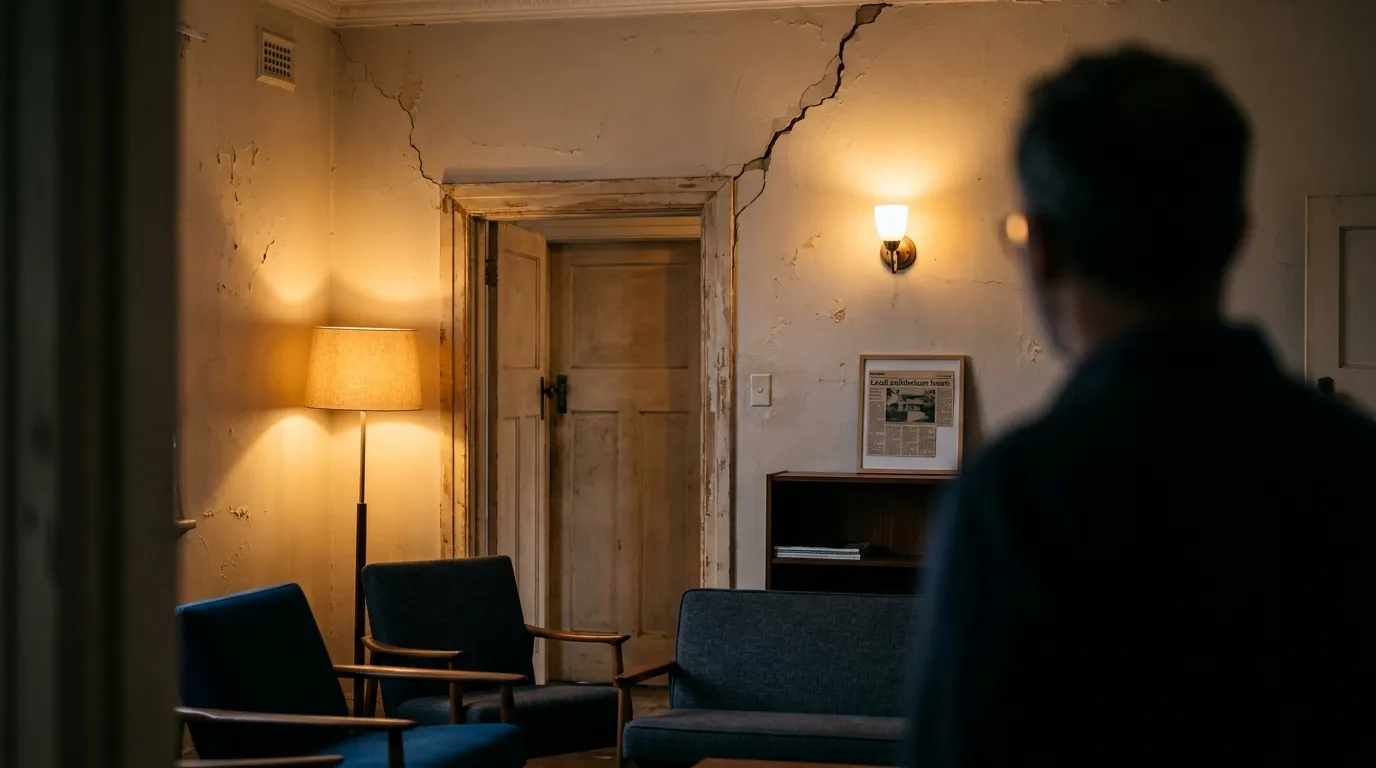
The diagnosis question every property manager faces when a tenant vacates: is this damage the tenant caused, or is this a building defect? The distinction determines who pays - and the consequences of getting it wrong flow in both directions. Charge a tenant for structural damage, and you risk an NCAT claim that costs more in time and damages than the original repair. Attribute structural damage to the tenant and ignore the underlying defect, and the next tenant inherits a worse problem. Both errors are preventable with the right diagnostic framework.
What Is Tenant-Caused Damage?
Tenant-caused damage is physical deterioration or loss to a property that would not have occurred through reasonable, normal use of the premises. It includes:
- Impact damage: holes punched in walls, broken door frames, smashed tiles
- Accidental damage: spilled substances that stain carpet or floor surfaces beyond cleanability, cracked splashback tiles from dropped objects
- Malicious damage: deliberate destruction of fixtures, fittings, or surfaces
- Unreasonable wear: damage inconsistent with the tenancy period and normal use (carpet worn through in a 12-month tenancy, for example)
- Negligent damage: allowing a minor defect to escalate through failure to report it as required under the tenancy agreement
Tenant-caused damage is recoverable from the tenant under Section 188 of the Residential Tenancies Act 2010 (NSW) - from bond, via a Fair Trading claim, or through NCAT proceedings.
What Is Structural or Construction-Related Damage?
Structural and construction-related defects are conditions that originate in the building's design, construction, or material composition - not in the tenant's conduct.
| Category | Definition | Common Examples |
|---|---|---|
| Settlement cracking | Cracking caused by building movement over time | Fine cracks at door frames, diagonal cracks at window corners, horizontal cracks in rendered walls |
| Concrete deterioration | Carbonation, chloride ingress, rebar corrosion (concrete cancer) | Rust staining, spalling, delaminating concrete on balcony soffits |
| Waterproofing failure | Membrane degradation or defective installation | Water ingress through balcony floor, bathroom waterproofing breaches, damp patches in walls |
| Water ingress from common property | Defect in common property causing water entry to lot | Roof leak tracking into ceiling cavity, blocked common-property downpipe causing overflow |
| Defective construction | Work not meeting the standard required at time of construction | Inadequate concrete cover, sub-NCC waterproofing, non-compliant structural elements |
Structural and construction-related defects are the responsibility of the property owner (for lot-specific issues) or the owners corporation (for common property issues). They are not recoverable from the tenant.
The Responsible Party Matrix
| Defect Type | Origin | Cost Responsibility | Legal Basis |
|---|---|---|---|
| Impact damage to lot | Tenant conduct | Tenant | RTA 2010 s.188 |
| Malicious damage to lot | Tenant conduct | Tenant | RTA 2010 s.188 |
| Fair wear and tear | Normal use | Landlord | RTA 2010 s.19 |
| Settlement cracking | Building movement | Landlord / developer | Common law / DBP Act |
| Water ingress from common property | OC maintenance failure | Owners corporation | SSMA 2015 s.106 |
| Water ingress from lot waterproofing failure | Defective or aged waterproofing | Landlord (lot owner) | RTA 2010 s.52 |
| Concrete cancer / structural concrete failure | Construction standard / age | Landlord / developer | DBP Act / common law |
| Burst pipe - common property | OC maintenance | Owners corporation | SSMA 2015 s.106 |
| Burst pipe - lot property, non-tenant-caused | Plumbing age / defect | Landlord (lot owner) | RTA 2010 s.52 |
| Burst pipe - lot property, tenant-caused | Tenant conduct | Tenant | RTA 2010 s.188 |
Common Scenarios with Practical Examples
Scenario 1: Water Staining on Ceiling
The finding: A tenant vacates and the property manager conducts the exit inspection. The bedroom ceiling has a water stain approximately 600mm in diameter.
Tenant-caused? Almost certainly not. Tenants cannot cause water staining on a ceiling from the interior of the room - water on a ceiling comes from above (the unit above, the roof, or a burst pipe in the ceiling cavity). The stain is the result of water ingress from a source outside the lot.
Correct diagnosis: Determine the source. If from the lot above, the lot above's owner is responsible (potentially their plumbing or waterproofing). If from the roof or common property, the OC is responsible under Section 106 of the Strata Schemes Management Act 2015. If from the building's external waterproofing, the OC is responsible. The tenant bears no liability.
NCAT precedent: NCAT regularly rejects claims that attribute ceiling water staining to tenant damage. The tribunal applies basic building physics - tenants cannot cause water ingress from above.
Scenario 2: Cracks in Plaster Walls
The finding: Multiple diagonal cracks appear at window and door corners throughout a ground-floor apartment.
Tenant-caused? No. Diagonal cracking at window and door corners is the classic signature of building settlement - differential movement of the building frame that concentrates stress at the weakest points in the masonry or plaster. This pattern is present in thousands of Sydney buildings and is entirely independent of tenant occupation.
Correct diagnosis: Engage a licensed builder or structural engineer to assess the cracking. Hairline settlement cracks (<0.2mm) in plaster are cosmetic. Cracks wider than 1mm at structural elements, or cracks that are progressive (getting wider over time), warrant structural engineering assessment. Rectification is the landlord's obligation under Section 52 of the Residential Tenancies Act 2010, which requires the landlord to keep the premises in a reasonable state of repair.
Scenario 3: Tile Cracking in Bathroom
The finding: Three tiles are cracked in the bathroom floor, in a diagonal line across the shower area.
Tenant-caused? Possibly, but not definitively. Cracking in a diagonal line can indicate either impact damage (a heavy object dropped) or substrate movement causing the tiles to crack. A single cracked tile in isolation is more likely impact. Multiple tiles in a pattern are more likely substrate movement or waterproofing-related differential movement.
Correct diagnosis: Remove one cracked tile and inspect the substrate. If the substrate (bedding mortar or tile adhesive) has cracked in the same line, the cause is substrate movement - not tenant impact. If the substrate is intact and only the tile itself is cracked, impact damage is more likely. A builder or tiler experienced with remedial work can make this assessment in 15 minutes.
For a detailed guide to tile cracking diagnosis, see Balcony Tile Delamination Diagnosis.
Scenario 4: Bathroom Damp and Mould
The finding: The bathroom walls have mould growth on the grout and in the shower corners. The tenant attributes it to poor ventilation. The property manager suspects insufficient cleaning.
Tenant-caused or building defect? Both may be contributing. Mould in bathrooms is typically a combination of inadequate ventilation (building design), insufficient cleaning frequency (tenant responsibility), and humidity (climate). The critical question is whether the bathroom was provided with adequate ventilation at the start of the tenancy and whether the ventilation was functional throughout.
Correct diagnosis: Test the exhaust fan function and airflow. Check that the bathroom has either a functioning mechanical exhaust fan or an openable window per the NCC 2025 requirements. If the ventilation is defective, the mould is partly attributable to the landlord's maintenance obligation. If the ventilation is fully functional, the mould is attributable to tenant cleaning habits.
Scenario 5: Damp Patch on External Wall
The finding: A persistent damp patch appears on an external wall in the living room of a mid-floor apartment. It is worse in winter and after rain.
Tenant-caused? No. External wall damp patches originate in the building envelope - either through cracked render, failed window seals, rising damp in masonry, or water tracking from a defect higher on the façade. No tenant conduct causes water ingress through an external wall.
Correct diagnosis: External wall water ingress requires a façade or waterproofing investigation. Common causes include failed window perimeter sealing, cracked render at junction with the window frame, and failed sill or parapet waterproofing above the affected apartment. The OC may be responsible (if the external wall is common property) or the landlord (if the defect is within the lot's envelope but originates from a lot-specific element). See Render Cracking: Causes and Fixes for diagnostic detail.
Documentation and Photographic Evidence Standards
The distinction between tenant-caused and structural damage is often litigated at NCAT. The decision usually turns on the quality of the evidence, not the legal principles.
Ingoing Condition Report
The ingoing condition report is the baseline. It must:
- Record the condition of every surface (walls, floors, ceilings, fixtures) at the start of the tenancy
- Include date-stamped photographs of every room and every material condition finding
- Note any pre-existing defects explicitly (cracks, stains, damage)
- Be signed by both tenant and landlord/agent
A well-documented ingoing report is the single most important document in any NCAT dispute. Any condition not documented at ingoing is presumed to have existed - which means the landlord cannot claim rectification costs from the tenant for undocumented conditions.
Exit Condition Report
The exit report must:
- Match the same room and element sequence as the ingoing report
- Include photographs taken on the day of exit inspection
- Compare each element directly against the ingoing report
- Clearly identify each item of claimed damage with reference to the relevant ingoing photograph
Evidence standard for NCAT: The photograph must show the damage clearly, be date-stamped at or near the inspection date, and be compared against a corresponding ingoing photograph showing the same location in sound condition.
NCAT decisions consistently show that claims without clear photographic comparisons fail - even where the damage is genuine. The evidence must support the claim, not just accompany it.
Expert Building Assessments
Where the nature of damage is disputed - particularly for structural or waterproofing matters - an independent building assessment by a licensed builder or building consultant carries significant weight at NCAT. A two-page report from a builder confirming that a defect is structural in origin, citing the relevant Australian Standard or building science principle, is far more persuasive than the property manager's opinion.
Commissioning this report before NCAT proceedings is far more efficient than trying to do it during them.
NCAT Decisions: Patterns to Know
NCAT (NSW Civil and Administrative Tribunal) handles residential tenancy disputes in NSW. Several consistent patterns emerge from its decisions:
Pattern 1: Settlement cracks are never tenant damage. NCAT has not, to our knowledge, held a tenant liable for settlement cracking. The pattern is too well-recognised as a building behaviour for the tribunal to attribute it to tenant conduct.
Pattern 2: Water ingress from above is OC/landlord responsibility. Where water enters a lot from a source above (another lot's plumbing, the roof, common property waterproofing), the tenant has no liability. The OC and landlord's respective obligations are determined by where the defect lies.
Pattern 3: Ingoing condition reports are determinative. The NCAT member will spend significant time on the ingoing report. If the ingoing report is incomplete, unsigned by the tenant, or lacks photographs, the landlord's position is materially weakened regardless of the merit of the underlying claim.
Pattern 4: Fair wear and tear claims are assessed against tenancy length. A claim for full carpet replacement after a 3-year tenancy will be significantly reduced to account for the wear that would have occurred through normal use. NCAT applies ATO depreciation schedules as a general guide to expected useful life.
For NSW tenancy law resources, see Fair Trading NSW.
See also:
- Insurance vs Strata Levies for Repairs
- Quarterly Inspection Checklist for Strata Buildings
- Balcony Defect Taxonomy with Photos
- 2026 Sydney Building Remedial Cost Index
- General Maintenance Services
- Contact Superb Maintenance Group
External references:
- NSW Fair Trading - Rental Bonds and Tenancy
- NSW Civil and Administrative Tribunal - Tenancy
- LookUpStrata - Tenant and OC Obligations
The Bottom Line
The diagnosis question - tenant or structure - is answered by building physics first and legal principles second. Water flows downward; tenants cannot cause ceiling stains. Settlement follows building geometry; diagonal cracks at door corners are not impact damage. The building assessment comes before the NCAT application. Get a licensed builder or building consultant to make the determination in writing, document it with photographs, and the question becomes answerable - rather than a costly dispute decided on the weakest evidence in the room.
Property managers who build this diagnosis step into their exit inspection process protect their landlord clients from speculative claims, protect their tenant relationships from unfounded charges, and protect themselves from the reputational damage of running claims they will not win.
Frequently asked questions
Who is responsible for water damage from a burst pipe in a strata apartment?
What is fair wear and tear and how does it differ from tenant damage?
Can a property manager charge a tenant for settlement cracks in walls?
What photographic evidence standard does NCAT expect for tenant damage claims?
What is the maximum bond a landlord can hold in NSW and what can it be claimed for?
Continue reading
Insurance vs Strata Levies for Repairs: What's Covered and Who Pays
When does strata insurance cover repairs vs when do owners pay through levies? A practical guide to insurable events, exclusions, and the grey areas in NSW strata buildings.
75-Point Quarterly Inspection Checklist for Strata Buildings
A complete 75-point quarterly inspection checklist for NSW strata buildings: common areas, exterior, services, and safety with defect identification guidance.

Commercial vs Residential Property Maintenance: A Practical Comparison for NSW
How commercial and residential strata building maintenance differs in NSW: compliance standards, inspection frequencies, cost structures, and NCC building classifications explained.