Section 106 SSMA Plain English: The OC's Duty to Maintain Common Property
Section 106 of the Strata Schemes Management Act 2015 is not optional. A plain-English guide to the owners corporation's repair duty, the 6-year limitation, and common misunderstandings.
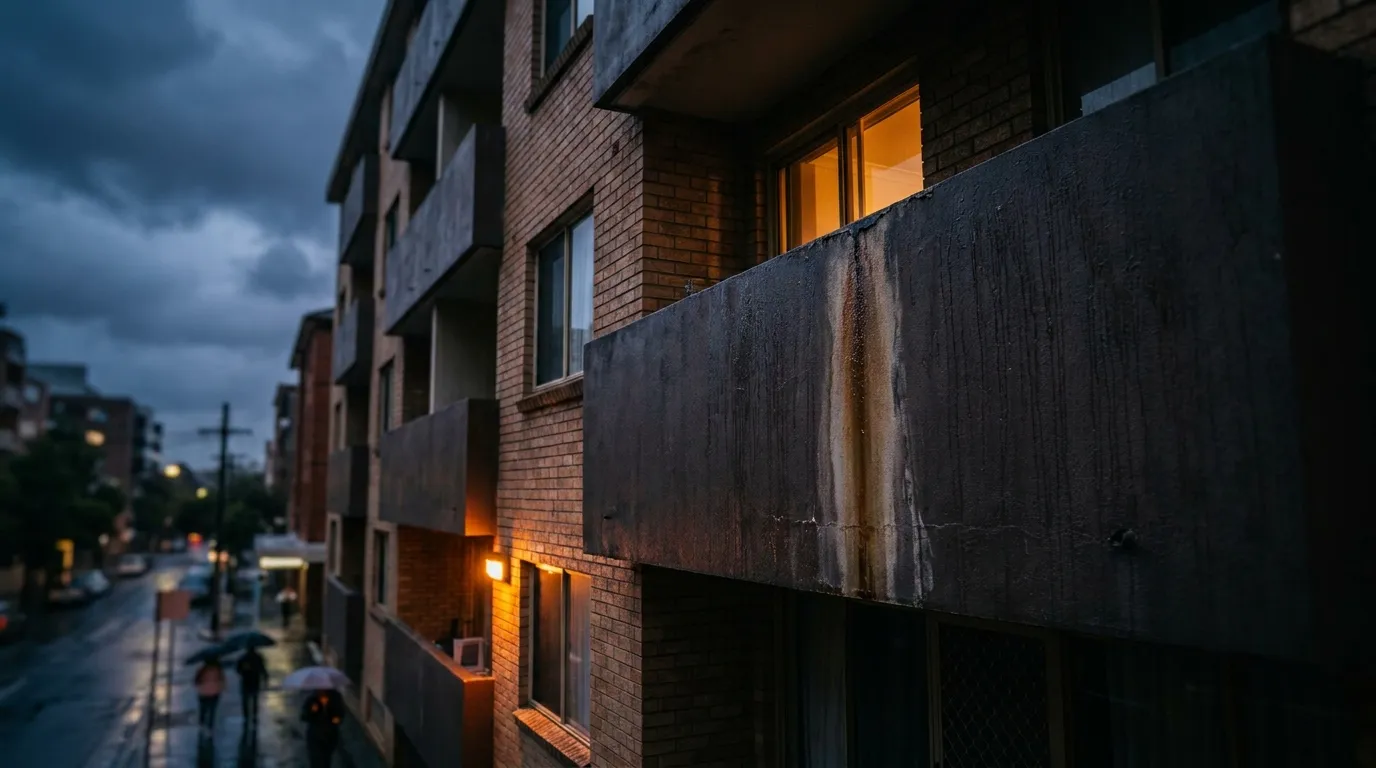
Section 106 of the Strata Schemes Management Act 2015 is not a guideline. It imposes a strict duty on the owners corporation to maintain and repair common property. Six years from awareness, owners can sue for non-compliance. The section cannot be avoided by special resolution, cannot be delegated to a lot owner without consent procedures, and cannot be ignored because the repairs are expensive.
What Section 106 Actually Says
Section 106 of the Strata Schemes Management Act 2015 (NSW) reads (in relevant part):
An owners corporation must properly maintain and keep in a state of good repair the common property in the strata scheme.
An owners corporation must renew or replace any fixtures or fittings comprised in the common property in the strata scheme.
Plain English version: the owners corporation must maintain common property. It must repair common property when it needs repair. It must replace fixtures and fittings that form part of common property when they reach end of life. These obligations exist whether or not the owners corporation can afford them, whether or not the committee is aware of them, and whether or not they were created by the original builder's inadequate construction.
The duty is a positive obligation, not a reactive one. "We didn't know about it" is not a defence to a Section 106 claim - it triggers a separate liability question about when the owners corporation ought to have known. "It's too expensive" is not a defence. "The original builder is responsible" does not eliminate the owners corporation's concurrent obligation.
What is Common Property?
Common property is defined by the strata plan. Everything shown as common property on the registered strata plan is within the owners corporation's Section 106 obligation. In most residential strata schemes, this includes:
- The building structure: columns, slabs, beams, load-bearing walls
- The building envelope: external walls, roof, windows (in most schemes), external doors
- Balcony slabs and balustrades (in most schemes - check the strata plan)
- Waterproofing membranes under tiles (a common source of dispute)
- Common area flooring, ceilings, and fixtures
- The lift and lift shaft
- Carpark slabs and drainage
- The fire system infrastructure
- Hydraulic and electrical services in common areas
- Gardens and common areas
The boundary between lot property and common property is defined by the strata plan, not by physical location. A waterproofing membrane under balcony tiles may be common property even though the tiles above it are lot property. This distinction is significant because the owners corporation's Section 106 duty covers the membrane, while the lot owner's Section 117 duty covers the tiles.
When there is a dispute about whether something is common property, the starting point is the registered strata plan. The next reference is the by-laws (which can allocate maintenance responsibility for common property elements to lot owners in some circumstances, but cannot eliminate the Section 106 duty entirely). Bannermans Lawyers publishes detailed analysis of boundary disputes at their strata law library.
The Six-Year Limitation Period
Prior to recent NSW strata law reforms, a lot owner had 2 years from the date of damage to bring a claim against the owners corporation for failure to maintain common property. That period has been extended to 6 years from the date the lot owner became aware (or ought reasonably to have become aware) of the defect.
This change has two implications.
First, it gives lot owners more time to identify, investigate, and pursue claims. A lot owner who discovers in 2026 that their apartment has been affected by water ingress through a failed balcony waterproofing membrane since 2021 has a Section 106 claim dating back to when the defect first became apparent to the owners corporation.
Second, it does not mean that limitation risks have disappeared. "Awareness" is assessed objectively. If the owners corporation received reports of water ingress from three lot owners in 2021 and did nothing, the 6-year period began in 2021. The owners corporation does not benefit from deliberately ignoring defect reports.
Lot owners who believe they have a Section 106 claim should seek legal advice early rather than waiting for damage to worsen. Lookup Strata at lookupstrata.com.au provides accessible guidance on the practical steps.
What Happens When the Owners Corporation Does Not Act
The enforcement pathway for a Section 106 breach is the NSW Civil and Administrative Tribunal (NCAT). A lot owner can apply to NCAT for:
- An order requiring the owners corporation to carry out specified maintenance or repairs
- Compensation for damage suffered as a result of the owners corporation's failure
- An order that the owners corporation pay the lot owner's costs
NCAT does not require the lot owner to have exhausted other remedies before applying. A committee that has been notified of a defect and has failed to act without a credible programme and timeline faces an NCAT order.
Committee members have personal liability exposure where their failure to act is deliberate or grossly negligent. Under Section 238 SSMA, an owners corporation's functions are exercised by the strata committee. Committee members who are shown to have ignored documented defects, or who have actively prevented the owners corporation from meeting its Section 106 obligations, face personal claims beyond their committee role.
Common Misunderstandings
"A lot owner can fix common property and the owners corporation must reimburse them"
This is incorrect. Section 117 SSMA prohibits a lot owner from carrying out work on common property without the owners corporation's approval. Where a lot owner proceeds without approval, they are not entitled to reimbursement as of right. The correct process is for the lot owner to request the owners corporation carry out the works under Section 108 SSMA.
Section 108 allows a lot owner to apply to NCAT for an order requiring the owners corporation to carry out work if the owners corporation has refused or failed to do so. This is the legally correct pathway, not self-help.
There is an exception for urgent work: a lot owner may carry out urgent work on common property where there is an immediate risk to safety or health, and the owners corporation cannot be reached. Even then, the lot owner should document the emergency and notify the owners corporation as soon as possible. The right to reimbursement in urgent circumstances is preserved but is not unlimited.
"The owners corporation can pass a by-law making lot owners responsible for common property maintenance"
A by-law can allocate ongoing maintenance responsibility for a common property element to individual lot owners (Section 140 SSMA). This is common for items like air-conditioning units on balconies or exclusive-use car spaces. However, a by-law cannot override Section 106's duty entirely. If the element is structurally significant (e.g., a balcony slab), the owners corporation retains an underlying duty even where a by-law nominally allocates maintenance to the lot owner.
The owners corporation's legal team should review any by-law that purports to transfer maintenance obligation for structural or waterproofing elements. PBL Legal has published analysis of this issue at pbl.legal/insights/.
"We can defer repairs because the building is old and we don't have the funds"
Age and funding are not defences to Section 106. An owners corporation that has chronically underfunded its capital works fund is in breach of Section 80 SSMA (capital works fund obligations), and that funding failure does not eliminate the Section 106 repair duty. The committee's responsibility is to levy adequately to fund the obligations that Section 106 imposes.
For guidance on capital works fund obligations and the 2026 plan format, see our 10-year capital works plan guide.
Balcony Repairs and Section 106
Balcony repair disputes are the most common Section 106 matter we encounter in our work across Sydney strata buildings. The question of who pays for balcony waterproofing, tile replacement, and balustrade rectification turns entirely on whether the element is common property.
In most Sydney strata schemes built after 1990, balcony slabs, structural balcony elements, and the primary waterproofing membrane are common property. Tiles on balconies may be lot property (where the strata plan adopts a mid-point boundary) or common property (where the plan adopts an exterior boundary).
For a detailed analysis of who pays in specific scenarios, see our dedicated guide on who pays for balcony repairs under Section 106.
Our remedial works services cover the full range of common property rectification that Section 106 requires: concrete repair, waterproofing, balcony rectification, and facade works. We have carried out Section 106-driven programmes across buildings in Vaucluse, Pyrmont, Lane Cove, and Zetland. See our project history or contact us for an assessment.
The 2026 Sydney Remedial Cost Index provides current cost benchmarks for common property rectification works.
References:
- Strata Schemes Management Act 2015 (NSW)
- Bannermans Lawyers - Section 106 Analysis
- Lookup Strata - Common Property Maintenance
The Bottom Line
Section 106 is an absolute obligation. It does not yield to budget constraints, committee preferences, or special resolutions. An owners corporation that defers common property repairs is accumulating two types of liability: the cost of the repairs themselves (which increases with deferral as deterioration progresses) and potential NCAT liability for damage suffered by lot owners. The duty exists. The question for a well-run committee is not whether to meet it, but how to fund and execute it efficiently.
Frequently asked questions
What does Section 106 of the SSMA require?
Can a lot owner fix common property themselves and bill the owners corporation?
How long does a lot owner have to sue the owners corporation for failing to maintain common property?
Can the owners corporation pass a special resolution to avoid carrying out repairs?
What is the relationship between Section 106 and a balcony repair dispute?
Does Section 106 apply to cosmetic items on common property?
Continue reading
Building Defect Reports Sydney: The Complete Owners Corporation Guide
Everything an owners corporation needs to know about building defect reports in Sydney: who writes them, what they contain, costs, and when to commission one.
Section 102 SSMA: The Two-Quotes Rule and How to Write a Defensible Scope
Section 102 SSMA requires two independent quotes for strata works over $30,000. How to write a scope that produces comparable quotes and manage the variation process.
12 Common Property Repairs That Should Never Be Ignored
Twelve deferred-maintenance items that cost strata buildings the most. For each: why it cannot wait, and what the consequence of waiting actually is.