Section 102 SSMA: The Two-Quotes Rule and How to Write a Defensible Scope
Section 102 SSMA requires two independent quotes for strata works over $30,000. How to write a scope that produces comparable quotes and manage the variation process.

Section 102 of the Strata Schemes Management Act 2015 requires owners corporations to obtain at least two independent quotes before entering any contract for work or services valued at $30,000 or more. The requirement exists to protect owners from inflated costs and conflicts of interest. In practice, the two-quotes rule is only as effective as the scope of works it is applied to. Comparable quotes require a comparable brief. A vague scope produces incomparable quotes and a procurement process that satisfies the letter of Section 102 while failing its purpose.
What Section 102 Requires
Section 102 of the Strata Schemes Management Act 2015 (NSW) states that an owners corporation must obtain at least two quotes before it enters a contract for the supply of goods or services, where the amount to be paid exceeds the amount set out in the Regulation.
The current threshold under the Strata Schemes Management Regulation 2016 is $30,000. This applies to:
- All remedial and maintenance works
- Supply of goods (materials, equipment)
- Services (consultants, inspectors, strata managers)
- Any contract that will be paid from the administrative or capital works fund
The two quotes must be:
- Independent: Neither quote can be from a contractor connected to the other, or connected to the building manager, strata manager, or a committee member
- Comparable: Both must price the same scope of works to the same standard
- Obtained before award: The quotes must be in hand before the owners corporation resolves to award the contract
The minutes of the meeting at which the contract is awarded must record that two quotes were obtained, identify both quote amounts, and record the basis for selecting the successful contractor.
Why Vague Scopes Produce Unusable Quotes
The two-quotes rule fails when the scope of works is vague. Here is the practical problem: if the scope says "repair concrete defects on north facade," Contractor A might price crack injection and surface coating, while Contractor B prices full concrete removal and replacement with approved repair mortar. The two quotes are not comparable. One is half the cost but addresses the symptom, not the cause.
A strata committee that selects the lower quote without a comparable scope has not protected itself - it has selected the cheaper solution without knowing whether it is the correct one. When the cheaper work fails in two years, the committee faces the same works again plus the cost of removing the failed repair.
The scope of works is the document that makes procurement work. Getting it right before you go to market is the single highest-impact action an owners corporation can take in a remedial programme.
Elements of a Defensible Scope of Works
A well-structured scope of works for remedial building work contains eight components.
1. Project Overview and Background
Who is the principal (the owners corporation), what is the building (address, number of lots, building class), and what is the purpose of the works (rectification of defects identified in [insert defect report reference]). This section establishes the contract context.
2. Scope of Works - Specific and Measurable
Every item must be described with enough specificity that a contractor can price it without assumptions. Compare these two descriptions:
Vague: "Repair balcony waterproofing on Level 3."
Defensible: "Strip and remove existing waterproofing system from 8 balconies on Level 3 (total approximately 145 m2). Prepare concrete substrate to SA 2.5 standard in accordance with AS 1627.4. Apply new waterproofing membrane system complying with AS 4654.2 Class III, installed by a licensed waterproofing applicator. Reinstate 600x600 mm porcelain tiles (supplied by principal) on beds of flexible tile adhesive. Regrout all joints. Allow for temporary protection of works during cure period. Includes scaffold for access."
The second description produces comparable quotes. The first produces chaos.
3. Materials Specifications
Name the standard, not just the outcome. Where a specific product is required (e.g., an epoxy injection resin approved by the relevant standard), name it. Where the contractor has discretion to select compliant products, specify the performance standard (e.g., AS 4654 Class III, minimum 0.5 mm dry film thickness, minimum 20-year manufacturer warranty). Materials specifications prevent contractors from substituting cheaper non-compliant products while technically pricing the scope.
4. Measurement Methodology
Specify how quantities are to be measured and verified. For waterproofing, is the price per m2 of new membrane installed, or per m2 of balcony area including the perimeter? For concrete repair, is the price per m2 of surface area repaired, or per m3 of substrate removed? Differences in measurement methodology produce quote variations that have nothing to do with price or quality.
5. Allowance for Unforeseen Works
Every remedial scope should include a provisional sum for unforeseen works. When concrete is opened up for repair, additional deterioration is often found behind the surface. A scope that has no provisional sum mechanism leaves the owners corporation either paying a large variation or arguing with a contractor who claims the additional work was outside scope.
A typical provisional sum is 10% to 20% of the main scope value. It is held as a contingency and drawn down against contractor claims for additional work, which must be approved in writing before the work is carried out.
6. Access and Site Conditions
Specify the access method (scaffold, swing stage, rope access) and who is responsible for providing it. Specify any restrictions on working hours, access to common areas, or protection of occupied lots. Site condition variations are a major source of cost escalation and should be addressed in the scope.
7. Quality and Compliance Requirements
Specify the standards the work must meet: the relevant Australian Standard, the NCC requirement, and any specific certifier requirement. Specify inspection hold points - points in the programme where the contractor must pause and allow inspection before proceeding. For waterproofing, typical hold points are substrate preparation (before membrane application) and first coat application (before second coat).
Specify whether the work requires a registered design practitioner under the DBP Act. If it does, the scope should require the contractor to engage one and provide evidence of registration before works commence.
8. Variations Procedure
Document the variation process in the scope. Variations should only be instructed in writing by the owners corporation (or its authorised representative). The contractor should provide a variation request with scope description, measurement, and pricing before work commences. The owners corporation or independent consultant assesses the variation request and issues a written approval (or rejects it with reasons) before the contractor proceeds.
A contractor who proceeds with additional work without a written variation approval has no contractual entitlement to payment for that work.
Common Scope Failures
| Failure | Consequence |
|---|---|
| No measurement basis specified | Unmeasurable quantities, disputes at payment |
| No materials specification | Contractor substitutes cheaper product, performance fails |
| No provisional sum | Works stop or escalate to large disputed variation |
| No hold point inspections | Quality failures discovered only at practical completion |
| No variation procedure | Verbal variations disputed at final account |
| No DBP Act registration requirement | Non-compliant work, certification refused |
| Scope splits to avoid $30K threshold | Committee personal liability, invalid procurement |
Managing Variations Post-Award
Even with a well-drafted scope, variations occur in remedial building works. Opening up concrete reveals additional deterioration. Removing tiles exposes substrate damage that could not be seen during inspection. These are not failures of scoping - they are the inherent nature of rectifying buildings where the extent of damage is unknown until works commence.
Managing variations effectively requires:
1. A clear authorisation chain. The owners corporation nominates a single point of contact (typically the strata manager or a committee member) to approve variations. No variation is approved verbally.
2. An independent assessor. The same consultant who produced the defect report and scoped the works should assess contractor variation claims. This separates the person who certifies additional work from the person who benefits from it.
3. A variation log. Every variation request, approval or rejection, and final agreed amount should be recorded. The variation log is part of the contract file and is reviewed by the committee at progress report stages.
4. A total cost ceiling. Define the maximum contingency amount that can be approved by the strata manager or consultant without a committee resolution. Variations above that ceiling require a committee resolution. This prevents scope creep without oversight.
For the broader capital works planning context that sits behind individual scopes, see our 10-year capital works plan guide. For the defect reports that typically precede a major remedial scope, see building defect reports explained. For the duty that makes these works mandatory, see Section 106 in plain English.
At Superb Maintenance Group, we quote against scopes we would be comfortable defending to an NCAT tribunal. Our 6-hour quote turnaround and written scopes for every project reflect this. See our remedial works services, our project history, or contact us directly.
References:
- Strata Schemes Management Act 2015 (NSW)
- NSW Government - Strata Living
- Lookup Strata - Strata Procurement Guidance
The Bottom Line
The two-quotes rule protects owners from inflated costs and conflicts of interest. It only works if both quotes are prepared against a scope specific enough to be truly comparable. A committee that satisfies Section 102 with two quotes against a vague brief has met the legal form but not the purpose. Write the scope properly. Get comparable quotes. Manage variations in writing. That is the whole of the procurement obligation, and it costs nothing extra to do correctly.
Frequently asked questions
What is the two-quotes rule in NSW strata?
Does the $30,000 threshold apply per item or in total?
What makes quotes 'comparable' under Section 102?
Are there exceptions to the two-quotes rule?
Can a remedial contractor manage the variations process?
Continue reading

Building Defect Reports Sydney: The Complete Owners Corporation Guide
Everything an owners corporation needs to know about building defect reports in Sydney: who writes them, what they contain, costs, and when to commission one.
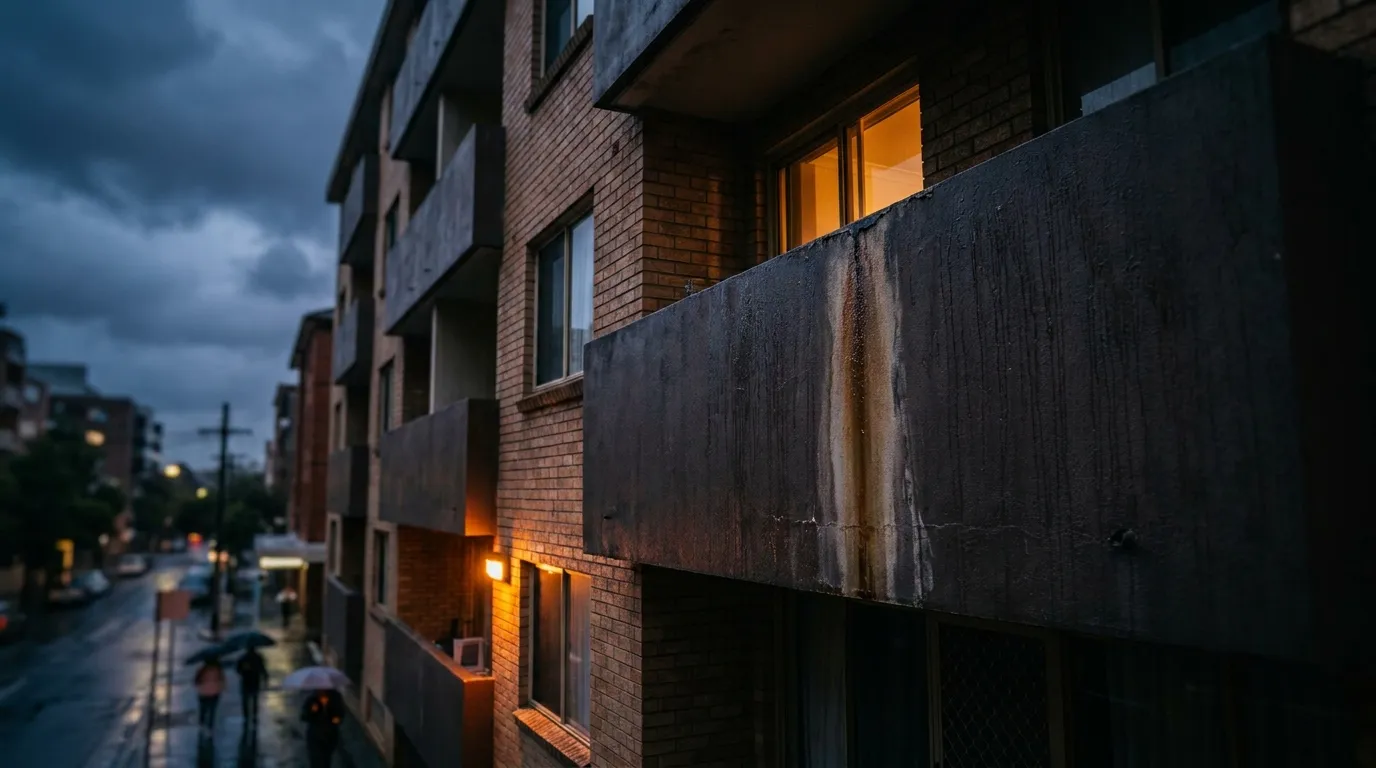
Section 106 SSMA Plain English: The OC's Duty to Maintain Common Property
Section 106 of the Strata Schemes Management Act 2015 is not optional. A plain-English guide to the owners corporation's repair duty, the 6-year limitation, and common misunderstandings.
NSW Capital Works Plans 2026: The New Mandatory Format Explained
The 2026 capital works plan format is mandatory from 1 April 2026. What changed, what's required, who writes compliant plans, and what it costs NSW strata schemes.