12 Common Property Repairs That Should Never Be Ignored
Twelve deferred-maintenance items that cost strata buildings the most. For each: why it cannot wait, and what the consequence of waiting actually is.
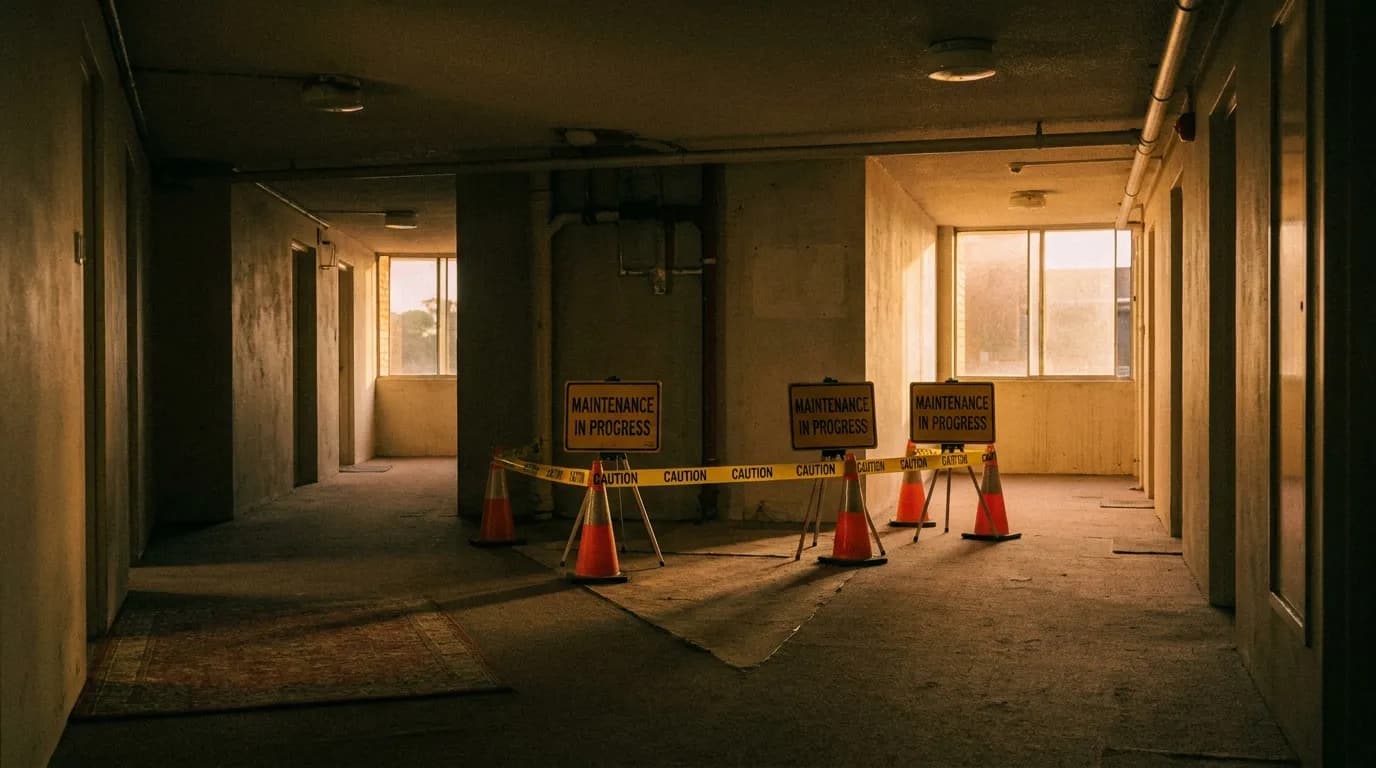
Strata buildings have two categories of deferred maintenance: items that are expensive to fix and items that are dangerous. The twelve items below belong to one or both categories. They appear regularly on buildings we assess, and without exception the cost of addressing them grows with every month they are left.
1. Structural Cracks With Active Movement
Why it cannot wait: A crack that is actively widening is telling you that the structural element it is in is still moving. Movement that has not stopped is unpredictable. The longer it continues, the greater the potential for sudden failure.
Consequence of waiting: Structural failure does not give much warning. Beyond the catastrophic safety risk, a building with documented structural movement that was not addressed faces serious liability exposure if anyone is injured.
What to do: Install crack monitors. Read them monthly. Any crack showing measurable movement over 60 days needs a structural engineer, not a plasterer. See Concrete Cracks vs Structural Issues: When Should You Worry?.
2. Water Ingress Into the Building Envelope
Why it cannot wait: Water inside a building structure is doing active damage every day. It corrodes steel reinforcement, saturates insulation, supports mould growth, softens plasterboard, and degrades timber. It does not take a break between wet seasons.
Consequence of waiting: Every year a water ingress point is left unresolved, the repair scope grows. A $3,000 sealant and membrane repair becomes a $40,000 multi-trade rectification. See The Hidden Cost of Delaying Minor Repairs in Apartment Buildings.
3. Fire Safety System Deficiencies
Why it cannot wait: Annual fire safety statement obligations are a legal requirement under NSW Building Code and local council regulations. Deficient fire doors, blocked egress paths, faulty sprinkler systems, and non-compliant exit signage are not cosmetic issues.
Consequence of waiting: Fines for non-compliance. Council rectification orders with tight timeframes. Voided building insurance in the event of a fire. Personal liability for committee members who were aware of deficiencies and did not act.
4. Handrail and Balustrade Safety
Why it cannot wait: Balustrades on balconies, corridors, and stairwells are required to meet minimum height and structural load requirements under the National Construction Code. A balustrade that fails these requirements is a fall risk.
Consequence of waiting: A fall from a non-compliant balustrade in common property is unambiguously an OC liability. Legal costs, compensation claims, and reputational damage are the consequences. For the detailed compliance requirements, see Balustrade Compliance and the NCC for Strata Buildings.
5. Electrical Compliance in Common Areas
Why it cannot wait: Common area electrical systems - switchboards, lighting circuits, outdoor power - must meet the current electrical safety standards. Outdated switchboards (particularly those with ceramic fuses or without RCDs), exposed wiring, and non-compliant outdoor fittings are fire and shock risks.
Consequence of waiting: Electrical fires in common areas. Electrocution. Failed safety audits. The cost of electrical rectification is generally modest relative to the risk it removes.
6. Lift Safety and Maintenance
Why it cannot wait: Lifts are regulated plant under NSW Work Health and Safety legislation. They require periodic inspections, servicing, and a current registration. A lift that fails a safety inspection must be shut down until rectified. In a multi-storey building, a lift shutdown is an immediate hardship for elderly and mobility-impaired residents.
Consequence of waiting: Forced shutdown during a safety inspection. Rapid corrosion and mechanical failure if lift pit water ingress is not addressed. Significant cost to bring a neglected lift back into service vs the cost of regular servicing.
7. Asbestos-Containing Materials (ACMs)
Why it cannot wait: Buildings constructed before 1990 in NSW commonly contain asbestos-containing materials in common property areas. The owners corporation has a legal obligation under the Work Health and Safety Act 2011 to maintain an asbestos register and manage ACMs safely.
Consequence of waiting: Any maintenance work that unknowingly disturbs ACMs - a renovation, a plumbing repair, a roof patch - without appropriate controls creates a serious health risk and legal liability. The cost of emergency asbestos remediation after accidental disturbance is significantly higher than the cost of a managed removal program.
8. Roof Membrane and Drainage Integrity
Why it cannot wait: The roof is the primary line of defence against water entry for the entire building. A roof membrane that has failed, or gutters and drains that are allowing water to back up onto the membrane, exposes every floor below to water damage risk.
Consequence of waiting: A single significant rain event through a failed roof can cause damage across multiple floors, to common property and individual lots. The damage from one such event can easily exceed the cost of the roof repair that would have prevented it. Roof replacement on a mid-rise building costs $80,000 to $300,000+. Emergency water damage across multiple lots costs more.
9. Drainage Failures
Why it cannot wait: Blocked or collapsed stormwater and sewer drainage causes immediate and spreading damage. Overflowing stormwater ponds against building walls. Sewer backup in common areas is a health emergency.
Consequence of waiting: Blocked stormwater that is not cleared causes incremental building deterioration every wet season. Collapsed drainage requires excavation and major repair that is significantly more expensive than maintaining functional drainage.
10. Common Stairwell Condition
Why it cannot wait: Stairwells are both an egress route and a high-traffic common area. Cracked or uneven steps, damaged stair nosings, damaged handrails, and poor lighting are trip and fall hazards. The OC duty of care extends specifically to maintaining safe egress paths.
Consequence of waiting: A fall on a defective stair in a common area is a direct OC liability. The cost of a simple stair nosing repair ($200 to $800 per step) is trivial against the cost of a personal injury claim.
11. Expansion Joint Failure
Why it cannot wait: Expansion joints allow the building to move under thermal and load changes. When the joint filler fails, the joint becomes a direct water entry point and the building loses its designed movement capacity. In concrete structures, this can cause slab cracking at the joint.
Consequence of waiting: Water ingress through failed expansion joints accelerates concrete deterioration. In long buildings, a failed expansion joint that restricts movement creates stress concentrations that crack adjacent structure. See Expansion Joint Failure in Buildings for the technical detail.
12. Common Area Flooring Hazards
Why it cannot wait: Lifted tiles, cracked concrete pathways, deteriorated carpet at thresholds, and uneven surfaces in common areas are slip and trip hazards. These are among the most frequent liability claims against owners corporations.
Consequence of waiting: An injury on a documented hazard that was not repaired is the worst possible liability outcome: the hazard was known, the OC had the obligation to fix it, and it did not. Repairs typically cost $200 to $2,000. Liability claims cost multiples of that in legal and compensation costs.
A Priority Matrix for Your Committee
When presenting these items to a committee for action, prioritise by the combination of safety risk and cost-of-delay:
| Priority | Items | Action Required |
|---|---|---|
| Immediate (this week) | Structural movement, fire safety deficiencies, balustrade failure, electrical faults | Authorise under emergency delegation |
| Urgent (this month) | Active water ingress, lift safety, asbestos management, stair hazards | Committee resolution at special meeting |
| Planned (next 90 days) | Roof and drainage, expansion joints, flooring hazards | Include in next committee meeting agenda |
The Bottom Line
These twelve items are not in this list because they are common. They are in this list because they are the ones that cost the most when they are deferred, and because they carry genuine safety and legal consequences that the owners corporation cannot afford to ignore. A strata manager who can walk through common property and identify which of these are present - and act on them - is providing a service worth having. Our general maintenance and remedial works teams can help assess and address any item on this list. Contact us for a building assessment.
Frequently asked questions
What are the owners corporation's legal obligations for common property repairs?
What happens if strata does not maintain fire safety systems?
Are balustrades and handrails common property in strata?
Who is responsible for roof maintenance in a strata scheme?
What does asbestos in a strata building mean for maintenance?
Continue reading
The Most Common Strata Maintenance Issues We See in Sydney
Eight problems show up on almost every Sydney strata building we walk into. Here's what causes them, what they cost to ignore, and what early action looks like.
The Hidden Cost of Delaying Minor Repairs in Apartment Buildings
Minor repairs in strata buildings compound silently. Real cost examples by defect type - and why the levy-raise conversation is always harder than early action.
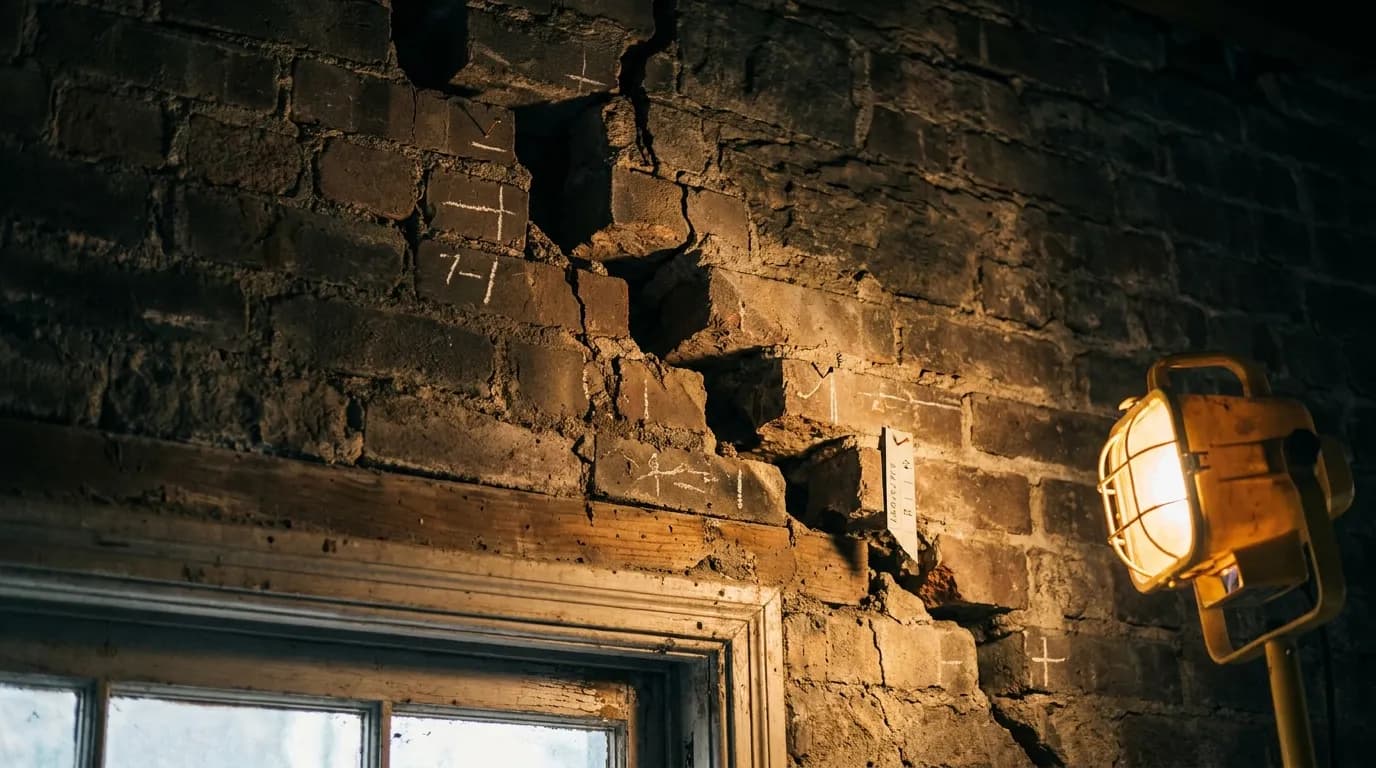
Concrete Cracks vs Structural Issues: When Should You Worry?
A plain-English guide for strata managers on telling hairline cosmetic cracks from cracks that need an engineer. When to monitor, when to call, and when NOT acting is the bigger risk.