Concrete Cracks vs Structural Issues: When Should You Worry?
A plain-English guide for strata managers on telling hairline cosmetic cracks from cracks that need an engineer. When to monitor, when to call, and when NOT acting is the bigger risk.
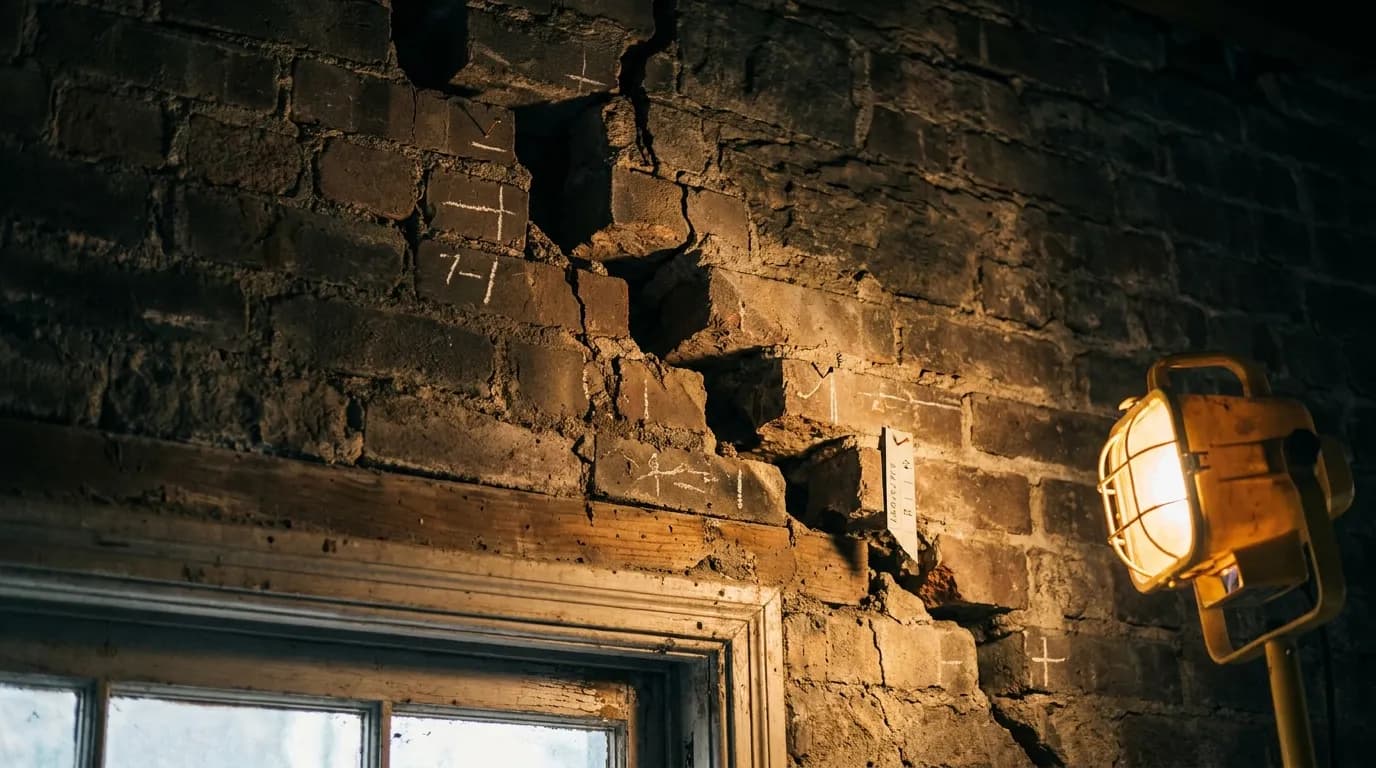
Not every crack in a strata building is a crisis. Some cracks are entirely normal: concrete shrinks as it cures, buildings settle slightly as they age, thermal movement opens and closes micro-cracks every day. But some cracks are serious, and the consequences of misreading them go both ways. Treating a structural crack as cosmetic is clearly dangerous. Calling an emergency engineer review for a normal shrinkage crack wastes the committee's money and creates unnecessary anxiety. This is a plain-English guide to telling them apart.
Start With the Basics: What Kind of Crack Is It?
The first thing to establish is the nature of the crack - not just its width.
Shrinkage Cracks
Fine, shallow, often random-patterned cracks in concrete or render. They typically appear in the first few years of a building's life as the concrete cures and dries. They are usually less than 0.2mm wide, do not run through the full depth of the element, and are not associated with any movement or displacement.
Risk level: Low. Generally cosmetic. Fill and paint as part of normal maintenance.
Thermal Cracks
Long, roughly straight cracks that run horizontally or vertically, typically appearing in long exposed walls. They are caused by temperature-driven expansion and contraction. They may open slightly in summer and close in winter.
Risk level: Low to moderate. If water can enter the crack, seal it. If the crack is widening over time, investigate the movement joint detail.
Settlement Cracks
Diagonal cracks, often starting from corners of openings (windows, doors). Typically caused by differential settlement in the early years of a building's life. Old settlement cracks that are not actively moving are usually not a current concern.
Risk level: Moderate. Assess whether movement is ongoing. Dormant = monitor and seal. Active = engineering input required.
Structural Cracks
Cracks with visible displacement (one side is higher or further forward than the other), wide cracks (1mm+), diagonal cracks at window corners that are widening, or cracks that pass through beams, columns, or load-bearing walls. These indicate that the structural element is under stress beyond its design tolerance.
Risk level: High. Stop, document, and call an engineer before authorising any cosmetic repair.
A Simple Decision Guide
Use this as a first-pass assessment. It is not a substitute for professional advice on anything above low severity.
| What you see | What it likely means | Next step |
|---|---|---|
| Fine random craze pattern in render | Normal shrinkage | Monitor; patch at next maintenance cycle |
| Hairline cracks (<0.2mm) at wall-ceiling junction | Normal thermal movement | Seal if water risk, otherwise monitor |
| Diagonal cracks at 45° from window corners, stable for years | Old settlement, likely dormant | Install a crack monitor; revisit in 6 months |
| Diagonal cracks widening month to month | Active movement | Structural engineer assessment |
| Stepped crack through brickwork, wide end at top or bottom | Differential settlement | Structural engineer assessment |
| Crack with visible vertical or horizontal displacement | Structural stress | Stop. Call an engineer immediately. |
| Concrete spalling around a crack, rust staining | Rebar corrosion | Remedial works: concrete cancer treatment |
| Horizontal crack in a retaining wall | Potential wall failure | Structural engineer, do not delay |
For a deeper look at the concrete cancer pathway (spalling + rust = rebar corrosion), see What is Concrete Cancer? A Sydney Guide.
When to Call a Structural Engineer
Structural engineers in Sydney typically charge $1,800 to $4,500 for a building crack assessment and written report. The cost is almost always justified when:
- Any crack shows visible displacement (one side higher, deeper, or more forward than the other)
- You see a crack appearing or widening over a short period (weeks to months)
- The crack is in a beam, column, or wall you believe is load-bearing
- Residents or committee members are expressing concern about safety
- An insurance claim, building sale, or legal dispute is involved
The engineer's report gives you something a tradesperson's verbal opinion cannot: a documented professional opinion that the building is (or is not) structurally sound, a recommendation for remediation if needed, and protection for the strata manager and committee who acted in good faith based on qualified advice.
For background on what a full building defect report covers, see Building Defect Reports: A Sydney Guide.
When Monitoring Is Enough
Not every crack needs an engineer. Many cracks can be appropriately managed by installing crack monitors and checking them monthly. A crack that shows zero movement over three to six months is dormant. Once you have that data, a tradesperson can fill and paint it without the cost of an engineering report.
Crack monitors cost almost nothing and take five minutes to install. They are the right first step for any crack that is:
- Under 0.5mm wide
- Not showing visible displacement
- In a rendered or plastered wall (not a structural element)
- More than five years old and not recently changed in appearance
When NOT Acting Is the Bigger Risk
The biggest risk we see is not over-reacting to normal cracks - it is under-reacting to cracks that have been present "forever" and assumed to be fine.
Old cracks that have never been attended to are often stable. But they are also open water pathways. In a Sydney building over 20 years old, a crack that has been open for a decade has been admitting water for a decade. The concrete behind that crack may have been slowly carbonating or the rebar may have been slowly corroding for years before any visible spalling appears.
Sealing old cracks - even dormant ones - is cheap and removes a water ingress risk. It costs $50 to $300 per crack to fill and seal. The alternative is finding out the hard way.
The Bottom Line
Most cracks in strata buildings are not structural emergencies. Some of them are, and the cost of missing one is serious. The right approach is a documented first assessment (is there displacement? is it moving?), crack monitors for anything uncertain, and an engineer's report for anything that shows active movement or displacement. Do not let "it's been there for years" stop you from sealing a crack against water. Contact us if you would like a building assessment or see our remedial works service for crack repair and structural rectification.
Frequently asked questions
Are hairline cracks in concrete walls normal?
How much does a structural engineering report cost for a strata building?
What is a crack monitor and how does it work?
Do staircase or step cracks in brickwork indicate structural issues?
Can a crack in concrete be a waterproofing risk even if it is not structural?
Continue reading

The Most Common Strata Maintenance Issues We See in Sydney
Eight problems show up on almost every Sydney strata building we walk into. Here's what causes them, what they cost to ignore, and what early action looks like.
12 Common Property Repairs That Should Never Be Ignored
Twelve deferred-maintenance items that cost strata buildings the most. For each: why it cannot wait, and what the consequence of waiting actually is.
Why Waterproofing Failures Become Expensive Strata Problems
Waterproofing membranes fail silently and compound fast. The real cost curve of balcony, planter box, lift pit, and roof terrace failures in Sydney strata buildings.