Why Waterproofing Failures Become Expensive Strata Problems
Waterproofing membranes fail silently and compound fast. The real cost curve of balcony, planter box, lift pit, and roof terrace failures in Sydney strata buildings.
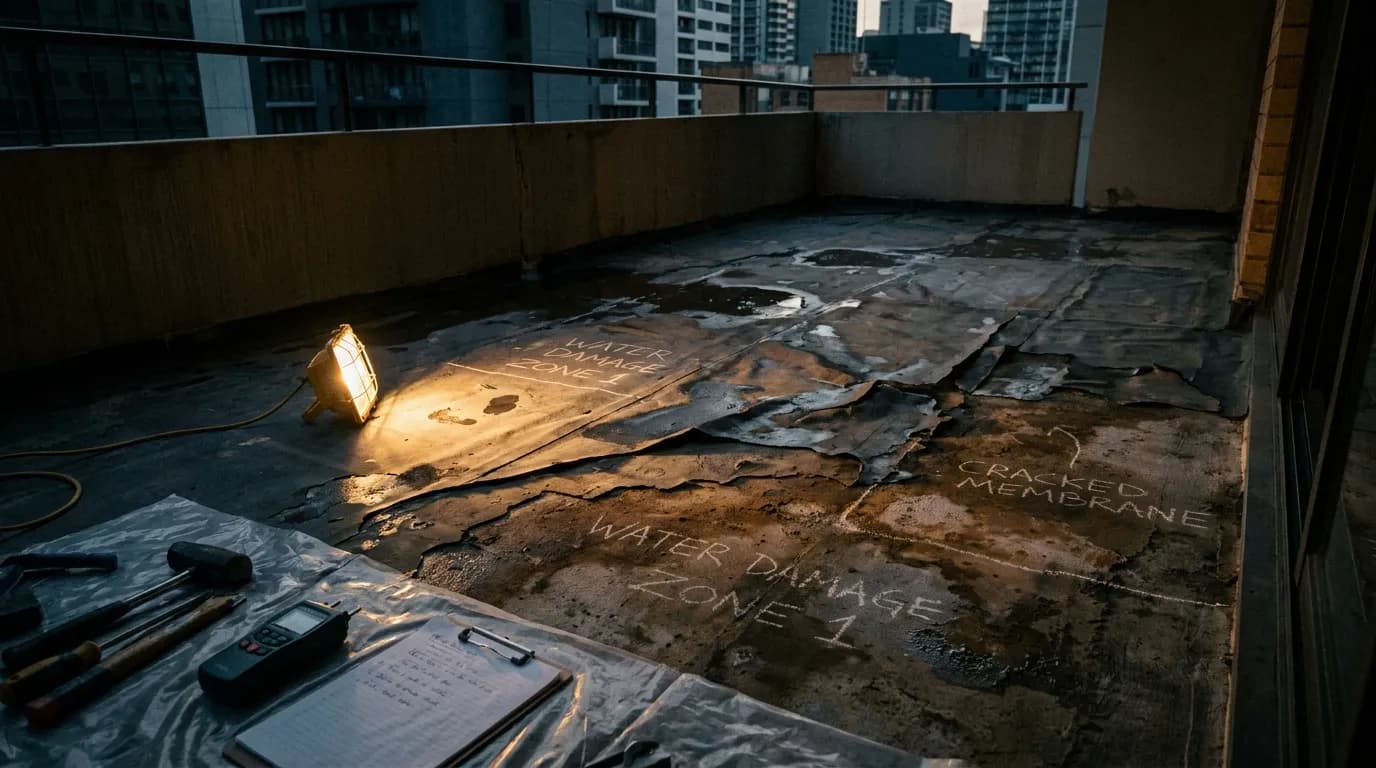
Waterproofing fails quietly. There is no alarm, no obvious moment of failure. A membrane that has been deteriorating for two years looks the same on the surface as one that is still sound. By the time the damage is visible - a stain on a soffit, a damp patch in a ceiling, a crack in the slab above - the membrane failure is months or years old and the secondary damage has already begun. This is what makes waterproofing the single most expensive maintenance category in strata buildings across Sydney.
Why Membrane Life Is Shorter Than Building Life
Most Sydney apartment buildings are designed to last 50 to 100 years. The waterproofing membranes inside them are not. A standard liquid-applied or sheet membrane has a design life of 10 to 15 years. Some premium systems advertise 20-year life expectancies under ideal conditions.
The practical reality in Sydney's climate: coastal buildings with salt air and UV exposure see membrane degradation from year eight or nine. Inland buildings in areas with significant thermal movement can see movement-joint failures even earlier.
This means most strata buildings in Sydney that are over 15 years old are operating with waterproofing systems that are at or past their design life. If those systems have not been assessed, some of them are already failing - just not visibly yet.
The Common Failure Points
Balconies
The most common waterproofing failure in strata buildings. The failure typically starts at the movement joint (the junction between the balcony slab and the adjacent wall) where sealant has deteriorated, or at cracks in the tile bed where water gets beneath the tiles and sits on the membrane, accelerating its deterioration.
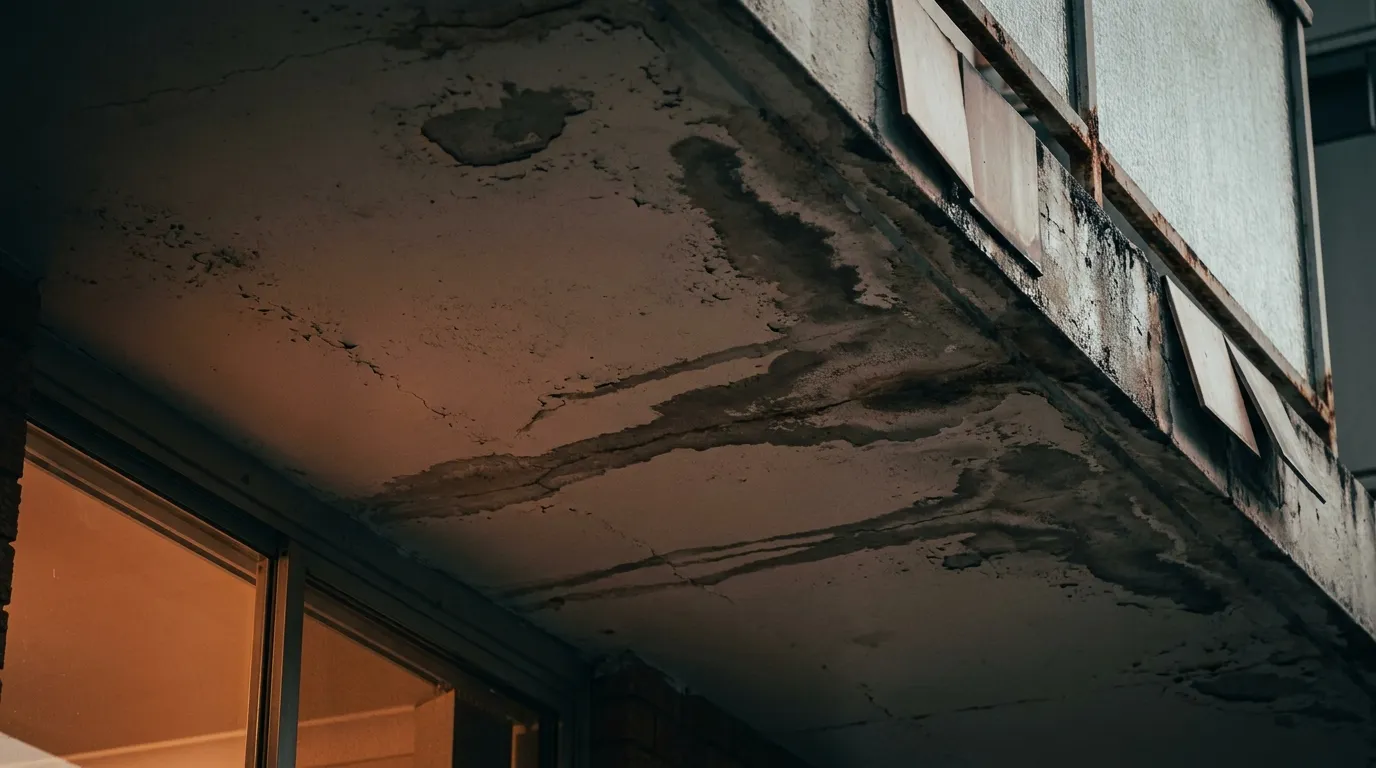
See Balcony Leaks, Cracks and Water Damage: What Strata Managers Should Act On Early for the full early warning sign guide.
Cost to rebuild an 8-12m² balcony waterproofing system: $8,000 to $28,000 for the waterproofing and tiling. Add concrete repairs if the slab has been affected: $2,000 to $15,000 more. Add soffit repair below: $1,500 to $6,000. Total range for a fully failed balcony: $15,000 to $60,000+.
Planter Boxes
Planter boxes are one of the most consistently underestimated waterproofing risks in strata. The membrane under the garden bed is permanently saturated, under constant biological stress from roots and organisms in the soil, and almost never inspected because it is buried. Membranes in planter boxes often fail within 10 to 15 years of installation.
When the planter box membrane fails, water tracks directly into the slab or wall below. Unlike a balcony (which is generally over an external soffit), a planter box is often over a parking structure, a common corridor, or a residential lot. The damage it causes is serious.
For a detailed technical look at this failure mode, see Planter Box Waterproofing Failures.
Cost to rebuild a planter box waterproofing system: $600 to $1,200 per linear metre for the membrane and drainage layer. A typical large planter box: $4,000 to $15,000. Add structural or slab repair if the leak has been active for years: significant additional cost.
Lift Pits
Lift pits sit below ground, surrounded by soil and groundwater. The waterproofing on the pit walls is subject to hydrostatic pressure, ground movement, and the vibration of the lift mechanism. When it fails, water accumulates in the pit.
Beyond the cost of the waterproofing repair itself, ongoing water in a lift pit corrodes the buffer, hydraulic components, and electrical systems. A lift shutdown for a strata building is an immediate operational crisis.
See Lift Pit Waterproofing in Strata for the technical options.
Cost to waterproof a lift pit: $3,000 to $10,000 depending on the depth and the waterproofing method used. Crystalline injection or cementitious slurry are the common approaches.
Roof Terraces and Podium Decks
Roof terraces combine the challenges of balconies and planter boxes at scale, often with added complexity from services penetrations, drainage structures, and traffic loading. A failed podium deck membrane over a basement car park is one of the most expensive rectification scopes we deal with.
Cost to rebuild a roof terrace or podium deck waterproofing system: $700 to $2,400 per square metre depending on access, existing system, and specified replacement. A 200m² podium deck: $140,000 to $480,000 for the full scope. This is the category where early detection and proactive membrane maintenance pays for itself most dramatically.
For the technical detail on rooftop membrane systems, see Rooftop Membrane Systems Compared.
The Real Cost Curve
Waterproofing failure is not a switch that flips from "fine" to "failed." It is a gradient, and the cost of repair grows along that gradient:
| Stage | What You See | Repair Cost (per failure location) |
|---|---|---|
| Early: membrane stressed, minor point failures | No visible signs. Detected by proactive inspection only. | $1,500 - $5,000 for targeted repair |
| Developing: water tracking through slab | Efflorescence, minor staining on soffit below | $4,000 - $12,000 for membrane repair |
| Active: established leak path | Ceiling staining below, hollow tiles above | $12,000 - $35,000 for full waterproofing renewal |
| Late: structural involvement | Spalling concrete, rust bleed, damaged finishes in lot below | $35,000 - $100,000+ for full remediation |
Every Sydney strata building should know where each of its waterproofed elements sits on this curve. For the full cost benchmarks across all remedial categories, see the 2026 Sydney Building Remedial Cost Index.
What Proactive Waterproofing Management Looks Like
The approach that consistently limits repair costs:
- Know the age of your membranes. Request as-built documents or building records. If you cannot find them, assume membranes over 12 years old in coastal locations and 15 years old elsewhere need assessment.
- Inspect the failure indicators. Walk all soffits, planters, and common areas after heavy rain. Look for new staining, new efflorescence, or any change in previously stable areas.
- Get condition assessments on aging systems. A waterproofing specialist can assess membrane condition without demolishing the surface in many cases. Core samples and moisture meter readings give a reliable condition picture.
- Plan membrane renewals in the capital works fund. A 10-year capital works plan should include provision for membrane renewals based on age and condition.
Our remedial works service includes full waterproofing investigation and rectification. The Pyrmont remedial facade project is an example of a full-building water ingress remediation at scale.
The Bottom Line
Waterproofing membranes are consumable components of a building. They have a lifespan. When they are replaced before they fail, the cost is predictable and manageable. When they are allowed to fail silently, they trigger secondary damage that multiplies the repair cost by five to twenty times. Every strata portfolio over 10 years old should have a documented view of where each waterproofed element sits - and a plan for what to do about the ones that are ageing. Contact us for a building waterproofing condition assessment.
Frequently asked questions
How long does waterproofing last on a balcony?
How much does it cost to rebuild a balcony waterproofing system in Sydney?
Can you repair waterproofing without removing tiles?
What is the most common cause of balcony waterproofing failure?
Does strata building insurance cover waterproofing failures?
Continue reading
Balcony Leaks, Cracks and Water Damage: Act Early and Save
The early warning signs strata managers should never ignore on balconies. What efflorescence, lifting tiles, and soffit staining actually mean - and what waiting costs.
The Hidden Cost of Delaying Minor Repairs in Apartment Buildings
Minor repairs in strata buildings compound silently. Real cost examples by defect type - and why the levy-raise conversation is always harder than early action.
The Most Common Strata Maintenance Issues We See in Sydney
Eight problems show up on almost every Sydney strata building we walk into. Here's what causes them, what they cost to ignore, and what early action looks like.