The Most Common Strata Maintenance Issues We See in Sydney
Eight problems show up on almost every Sydney strata building we walk into. Here's what causes them, what they cost to ignore, and what early action looks like.
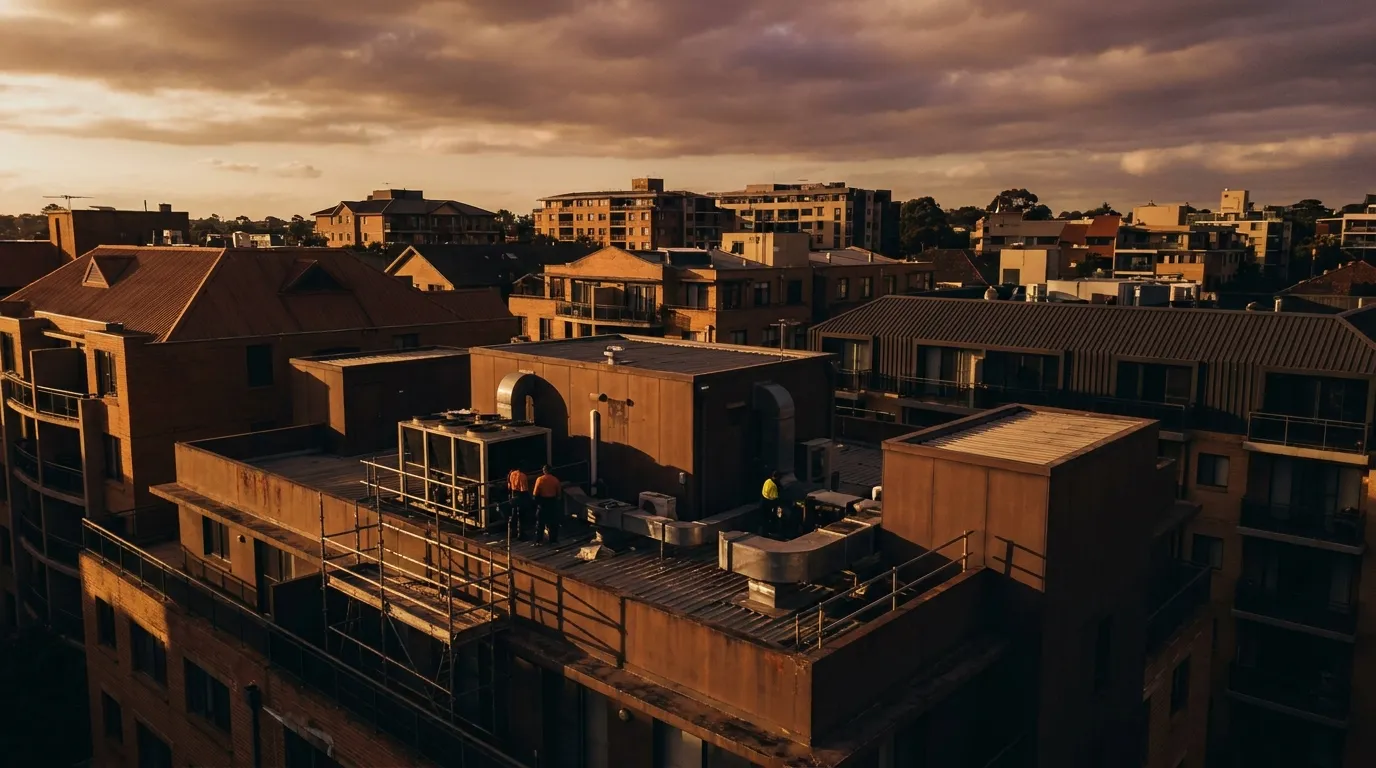
Eight problems show up on almost every Sydney strata building we walk into. Six of them could have been prevented for under $5,000 each. The rest start small and end up between $40,000 and $200,000 if they sit too long. After 860+ projects across Greater Sydney, these are the issues we see again and again, and what actually happens when they are left alone.
The Eight Issues We See Most Often
1. Balcony Leaks
What causes it: Failed waterproofing membrane under the tile bed, failed grout and sealant joints, cracked tiles letting water track to the slab. Waterproofing membranes have a lifespan of 10 to 15 years. Most Sydney apartment buildings over that age are on borrowed time.
What it costs to ignore: A slow balcony leak does not stay on the balcony. Water tracks through the slab and appears as staining on the soffit below, then as ceiling damage in the lot underneath, and eventually as concrete spalling as the rebar corrodes. An $8,000 membrane repair becomes a $45,000 rebuild plus a soffit repair and a ceiling insurance claim.
Early action: Look for efflorescence (white salt deposits) on the soffit below any balcony. Lifting or hollow-sounding tiles. Rust staining around balustrade posts. Any of these is a signal to investigate before winter.
For more on what to look for, see Balcony Leaks, Cracks and Water Damage: What Strata Managers Should Act On Early.
2. Ceiling Water Stains in Common Areas
What causes it: Most common causes are a leaking roof membrane, failed plumbing (burst pipes or slow drips from the unit above), or a blocked overflow drain on a roof terrace or balcony. The stain you see on the ceiling is rarely directly below the source.
What it costs to ignore: Water in a ceiling cavity is active damage every day it sits there. It softens plasterboard, encourages mould, and can track to electrical conduits. Landlord and building insurance claims escalate when damage is demonstrably old.
Early action: Document the stain with a photo and date. Find the closest drain or plumbing above it. A plumber with a moisture meter can locate the source in an hour and save a ceiling replacement.
3. Render Cracks on the Facade
What causes it: Thermal expansion and contraction, building movement, and age. Hairline cracks in cement render are normal. Wider or stepped cracks can indicate movement, water ingress, or substrate failure.
What it costs to ignore: Cracked render is an entry point for water. Once water gets into the wall cavity it starts attacking the blockwork, the steel lintels above windows, and eventually the structure. Re-rendering one panel costs $1,500 to $4,000. Re-rendering an entire facade after water damage costs $30,000 to $150,000+.
Early action: Any crack wider than 2mm that reappears after patching deserves investigation. See Concrete Cracks vs Structural Issues: When Should You Worry? for a plain-English guide on when to escalate.
4. Blocked Gutters and Downpipes
What causes it: Leaf debris, sediment, and bird nesting material. Sydney's urban tree canopy means gutters need clearing every three to six months in leafy suburbs.
What it costs to ignore: Overflowing gutters back up onto roof membranes and fascia boards, accelerating their failure. Downpipe blockages cause water to sheet down the facade and pond at the base of the building. A $300 gutter clean becomes a $12,000 fascia and membrane repair.
Early action: Gutter and downpipe clearing should be a line item in every strata maintenance schedule, not an emergency call. Our quarterly inspection checklist gives strata managers a full list of what to check at each visit.
5. Common Area Paint Peeling from Moisture
What causes it: Paint on external or semi-exposed walls peels when there is ongoing moisture. The paint is not the problem. The moisture is the problem. Painting over peeling paint without fixing the moisture source is money wasted.
What it costs to ignore: Recurring paint jobs are a budget drain. More importantly, the moisture causing the peeling is actively damaging the substrate underneath. Address the source first.
Early action: Before authorising a repaint, identify the moisture pathway. Is it a failed sealant? A cracked render panel? A blocked weep hole? Contact us for a moisture investigation before the next paint cycle.
6. Planter Box Waterproofing Failures
What causes it: Planter boxes are one of the most underestimated water risks in strata buildings. The waterproofing membrane under the garden bed deteriorates and water tracks directly into the slab or wall below. Many buildings have had the same planter box soil and plants since construction, and the membrane underneath has never been touched.
What it costs to ignore: A failed planter box membrane can cause water ingress across an entire floor of units below. We have seen planter box failures responsible for $80,000 worth of internal damage across multiple lots. For a detailed look at why this happens, see Planter Box Waterproofing Failures.
Early action: If a planter box is 10+ years old and has never had the soil removed for membrane inspection, it is overdue. Look for damp patches or salt staining on the wall or slab directly below or adjacent to any planter.
7. Balcony Tile Delamination
What causes it: Tiles lift off balcony decks when the adhesive bed fails (usually due to water ingress through failed grout joints) or when there is insufficient allowance for thermal movement. Hollow-sounding tiles mean the bond has broken.
What it costs to ignore: Delaminated tiles are a trip hazard and a liability. More importantly, once the tile bed is lifting, water is getting underneath and accelerating membrane failure. Re-tiling a balcony with intact membrane costs $4,000 to $10,000. Re-tiling after the membrane has failed costs two to three times that.
Early action: A simple tap test (knock tiles with a coin or key) identifies hollow areas. Any cracked tile on a balcony deck should be replaced promptly: it is an immediate water entry point. See Balcony Tile Delamination Diagnosis for more.
8. Lift Pit Water Ingress
What causes it: Lift pits sit below ground level and are surrounded by soil and groundwater. Waterproofing on lift pit walls deteriorates over time and water seeps in. Common in older buildings without modern injection-based sealing.
What it costs to ignore: Water in a lift pit corrodes the lift buffer and hydraulic components, triggers lift shutdowns, and can cause electrical faults. A lift shutdown in a strata building is an immediate emergency with significant costs and resident disruption. The waterproofing fix itself (crystalline admixture or injection grouting) costs $3,000 to $8,000. The lift repair after long-term water exposure can run $15,000 to $40,000.
Early action: Ask your lift maintenance contractor to report on pit water presence at each service. If they are pumping water out regularly, that is a signal to address the waterproofing. See Lift Pit Waterproofing in Strata for the technical detail.
A Quick Reference: Cost of Action vs Inaction
| Issue | Early Action Cost | Cost After Delay (3-5 years) |
|---|---|---|
| Balcony waterproofing | $3,000 - $8,000 | $30,000 - $60,000 |
| Render crack repair | $1,500 - $4,000 | $30,000 - $150,000 |
| Gutter clearing | $300 - $600 | $5,000 - $15,000 |
| Planter box membrane | $4,000 - $12,000 | $40,000 - $100,000 |
| Balcony tile re-bedding | $4,000 - $10,000 | $12,000 - $30,000 |
| Lift pit waterproofing | $3,000 - $8,000 | $15,000 - $40,000 |
These are real numbers from our project history, not estimates. The ratio of prevention to repair cost consistently sits between 1:5 and 1:15.
The Bottom Line
Most strata buildings in Sydney are not failing because of one catastrophic event. They are failing because six or eight small problems were deferred for long enough to become expensive ones. A twice-yearly inspection and a maintenance schedule that takes these eight issues seriously will protect levy income and keep residents from living through major disruptions. For our view on how to build that system, read How to Reduce Resident Complaints Through Better Maintenance Systems.
For a quote on any of these issues, contact us or explore our general maintenance and remedial works services.
Frequently asked questions
What are the most common strata maintenance problems in Sydney?
How much does it typically cost to fix a leaking balcony in strata?
Who is responsible for fixing common property maintenance issues in strata?
How often should strata buildings be inspected?
Can strata fix maintenance issues without a special levy?
Continue reading
How Preventative Maintenance Saves Strata Committees Thousands
The maths of prevention vs reaction in strata buildings. Real numbers, real examples, and how to budget preventative maintenance through your capital works fund.
The Hidden Cost of Delaying Minor Repairs in Apartment Buildings
Minor repairs in strata buildings compound silently. Real cost examples by defect type - and why the levy-raise conversation is always harder than early action.
12 Common Property Repairs That Should Never Be Ignored
Twelve deferred-maintenance items that cost strata buildings the most. For each: why it cannot wait, and what the consequence of waiting actually is.