Balcony Leaks, Cracks and Water Damage: Act Early and Save
The early warning signs strata managers should never ignore on balconies. What efflorescence, lifting tiles, and soffit staining actually mean - and what waiting costs.
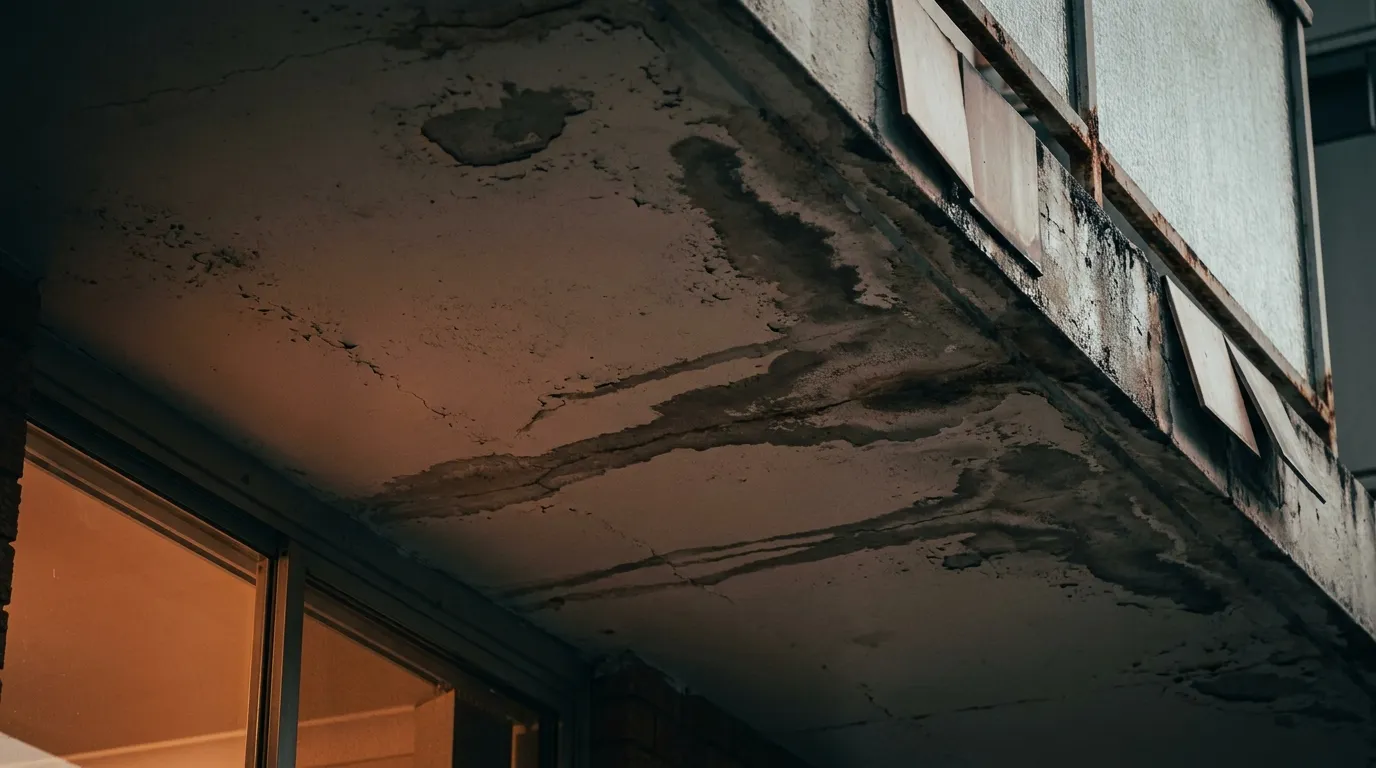
An 8-square-metre balcony left leaking for three years is rarely just a balcony rebuild. It is also a soffit repair below, sometimes a ceiling repair in the lot underneath, occasionally a structural concrete repair as well. The original $11,000 job becomes $48,000. We have seen this pattern play out on strata buildings in Pyrmont, Darling Point, Vaucluse, and across Eastern Sydney. The single most valuable thing a strata manager can do is know what to look for before the repair scope multiplies.
The Early Warning Signs That Matter
Most balcony waterproofing failures give you clear signals long before they become expensive. The problem is that the signals look cosmetic.
Efflorescence on the Soffit
White chalky deposits on the concrete underside of a balcony are not just unsightly. They are evidence that water is moving through the slab above. Dissolved salts travel with the water and are deposited on the surface as the water evaporates.
What it means: the waterproofing membrane on the balcony deck above has failed at one or more points, and water is actively tracking through the concrete. This is not a painting issue.
What to do: get a tradesperson to inspect the balcony above. Identify the entry point. Act before the next wet season.
Hollow or Lifting Tiles on the Balcony Deck
The tile bed on a balcony deck should be fully bonded to the substrate. When waterproofing fails and water gets underneath, the adhesive bond breaks down. The tiles start to feel soft underfoot, or they sound hollow when you tap them.
What it means: water is between the tiles and the membrane (or former membrane). Every time it rains, more water enters. The membrane, if not already fully failed, will be soon.
Cracked tiles on a balcony deck are an immediate water entry point. They should never be left more than a few weeks.
Soffit Staining and Rust Streaks
A brown or orange stain on a soffit (the underside of a balcony or slab) means water has reached the steel reinforcement inside the concrete. The steel is rusting, and the rust is leaching out through the concrete face.
This stage is more serious. Once rebar begins to corrode, it expands inside the concrete, eventually causing the concrete cover to crack and spall. You move from a waterproofing repair into concrete cancer territory.
Rust Staining at Balustrade Post Bases
Steel balustrade posts are typically set into the balcony slab or tile bed. When the sealant around the post base fails, water enters and starts corroding the post from the inside. The rust migrates outward as an orange stain.
Beyond aesthetics, this is a safety concern. A corroding balustrade post loses structural capacity. Balustrade compliance in NSW requires balustrades to meet specific load requirements - a corroding post may no longer meet them.
Failed or Missing Sealant Joints
The movement joints between the balcony and the wall, and around penetrations (drains, pipes, post bases), are sealed with flexible silicone or polyurethane sealant. This sealant has a lifespan of 7 to 12 years. When it cracks, shrinks, or pulls away, it opens a direct water pathway.
Sealant renewal is one of the cheapest maintenance items on a building. It costs $200 to $600 per balcony to re-seal all joints. Left to fail, the same joints allow water ingress that costs tens of thousands to repair.
The Cost of Waiting: 6 Months vs 2 Years vs 5 Years
This is what the cost curve actually looks like on a typical Sydney apartment balcony (approximately 8 to 12 square metres):
| Intervention Timing | Typical Scope | Approximate Cost |
|---|---|---|
| 6 months after first sign | Sealant renewal, grout repair, localised membrane patch | $1,500 - $4,000 |
| 12-18 months after first sign | Partial tile strip, membrane repair, re-tile affected area | $5,000 - $12,000 |
| 24-36 months after first sign | Full tile and membrane strip, new waterproofing system, full re-tile | $15,000 - $35,000 |
| 48-60 months after first sign | Full rebuild plus soffit repair below, possible concrete cancer treatment | $35,000 - $80,000+ |
These are indicative ranges from our project history. See the Balcony Repair Cost Guide for Sydney for a detailed breakdown by repair type.
What the Owners Corporation is Required to Do
The owners corporation's duty to maintain common property is set out in Section 106 of the Strata Schemes Management Act 2015. In plain terms: if it is common property, the OC must keep it in good and serviceable repair. Balconies in most NSW strata schemes are common property (the structural slab and waterproofing system) even if the tiles on top are lot owner responsibility.
An owners corporation that is on notice of a defect - through a strata manager's report, a resident complaint, or an inspection - and does not act on it, faces significant liability if damage results. For the full legal picture, read Who Pays for Balcony Repairs in NSW under Section 106.
The practical takeaway: if your inspection report identifies a waterproofing concern, document it, escalate it, and authorise an investigation. Do not defer it.
A Practical Inspection Checklist for Balconies
Use this at each common property inspection. Any positive item warrants follow-up within 30 days:
- Efflorescence (white deposits) on soffit below any balcony
- Brown or rust-coloured staining on soffit
- Concrete chips or spalling on soffit
- Hollow or cracked tiles on balcony deck (tap test)
- Failed, missing, or cracked sealant at wall-to-floor joint
- Failed grout in tile joints on deck
- Rust staining at balustrade post bases
- Slow or blocked balcony floor drain
- Visible crack in balcony edge beam
- Standing water on balcony deck after rain
Our quarterly inspection checklist covers all common property areas, not just balconies.
The Bottom Line
Balcony water damage is predictable and largely preventable. The signs are there months or years before the repair cost compounds. A strata manager who knows what to look for - and acts on it - protects levies, protects residents, and keeps the building out of the emergency spend cycle. For a professional inspection of your balconies and common property, reach out via our contact page or see our remedial works service.
Frequently asked questions
What does efflorescence on a balcony soffit mean?
How do I know if a balcony tile is delaminating?
What does balustrade rust staining tell me?
What is the Section 106 duty for balcony maintenance?
How long before a leaking balcony affects the lot below?
What does a balcony repair actually cost in Sydney in 2026?
Continue reading
The Most Common Strata Maintenance Issues We See in Sydney
Eight problems show up on almost every Sydney strata building we walk into. Here's what causes them, what they cost to ignore, and what early action looks like.
Why Waterproofing Failures Become Expensive Strata Problems
Waterproofing membranes fail silently and compound fast. The real cost curve of balcony, planter box, lift pit, and roof terrace failures in Sydney strata buildings.
The Hidden Cost of Delaying Minor Repairs in Apartment Buildings
Minor repairs in strata buildings compound silently. Real cost examples by defect type - and why the levy-raise conversation is always harder than early action.