How Often Should You Repaint Your Home?
Weatherboard, render, brick, interior walls - each material has a different repainting cycle. Here are the Sydney-specific intervals and what happens if you wait too long.
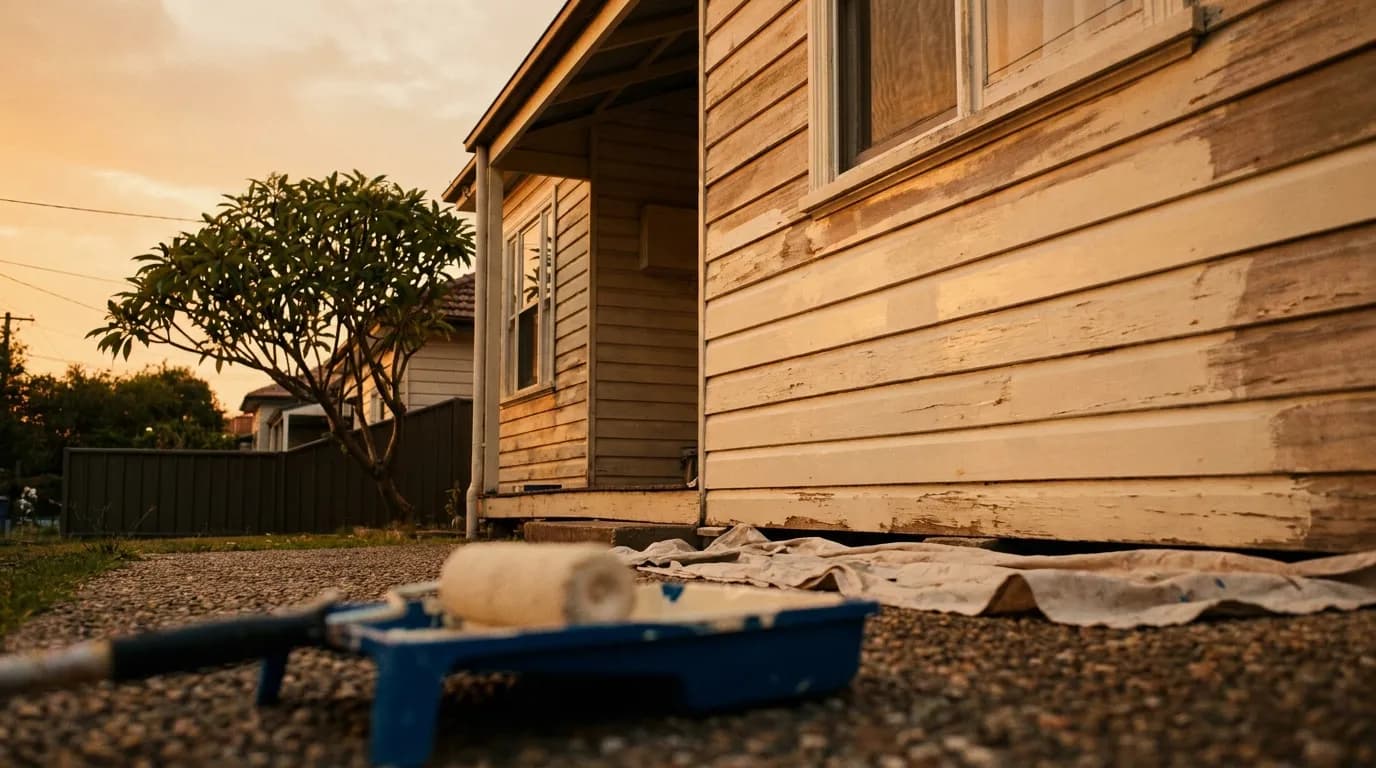
Paint does more than make your home look good. On weatherboards, it is the only barrier between the timber and the rain. On render, it is what keeps the surface from absorbing water and eventually cracking. Knowing when your home needs repainting - before the paint fails completely - is the difference between a routine maintenance cost and a significant repair bill.
Here are the intervals that apply in Sydney for each major surface type, and what the Sydney climate does to each of them.
Exterior repainting cycles by material
Weatherboard: 5 to 7 years
Timber weatherboards are the most maintenance-intensive exterior material you can have in Sydney. The combination of summer heat expansion, winter moisture, and UV exposure from our climate puts significant stress on the paint bond.
When weatherboard paint fails, it fails at the end grain of each board first - the cut ends where the factory seal was never as strong as the face. Moisture gets in, the timber swells and dries repeatedly, and paint lifts in sections.
The consequence of ignoring this cycle: rotting timber. A weatherboard that has gone 3 to 4 years past its repaint cycle typically has some degree of rot at the ends and low points. Rotted boards need replacing before repainting, which increases cost significantly.
Coastal note: Within 3 to 5km of the ocean, weatherboards in Sydney need attention every 3 to 5 years. Salt air accelerates paint bond failure and penetrates end grain faster.
Render: 10 to 12 years
Painted render has a longer cycle than weatherboard because the render itself is relatively stable as a substrate. The paint fails from UV exposure and weathering gradually over a decade, losing its protective quality before it visibly peels.
The signal that render paint has reached its service life is chalking: running your hand along the wall leaves a chalky residue. This means the paint binder has broken down and the pigment is loose. Paint at this stage is no longer protecting the render from water absorption.
The other render-specific issue to check before repainting: hairline cracks. These need to be filled and sealed before a new coat goes on, or the cracks will telegraph through the new paint. See Render Cracks: Cosmetic Issue or Bigger Problem? for how to assess these before calling a painter.
Coastal note: Rendered homes within 3 to 5km of salt air typically need repainting at 7 to 9 years rather than 10 to 12.
Brick: 15 to 20+ years (if previously painted)
Unpainted brick does not need painting and should not be painted unless the brick face is deteriorating. Sealing exposed brick does allow moisture to escape and can trap water behind it in some applications.
Previously painted brick has a long cycle but does need maintenance. When the paint on brick fails, it fails in patches, and moisture can begin moving through the exposed areas into the mortar. Full repaint of brick is labour-intensive because of the profile of the surface.
Timber windows, doors, and trims
Timber joinery on the exterior - window frames, door frames, trims, fascia boards - needs attention on the same cycle as weatherboards (5 to 7 years) or sooner if they are south-facing and receive no direct sun. These are the most commonly neglected items in a repaint, and the cost of replacing rotted fascia boards is far higher than the cost of maintaining them.
Interior repainting cycles
Standard interior walls: 7 to 10 years
Interior paint lasts significantly longer than exterior because it is not exposed to UV, rain, or temperature extremes. A quality paint job in a standard bedroom or living room should look good for 7 to 10 years before the wall needs attention.
High-traffic areas - hallways, kitchens, bathrooms, children's rooms - wear faster. Expect 4 to 6 years before these spaces show marks, scuffs, and fading that a repaint would address.
Practical note: If you are preparing a property for sale, fresh interior paint is always worth doing regardless of the age of the existing paint. See Should You Renovate Before Selling Your Home?.
Kitchens and bathrooms: treat separately
These rooms have higher moisture, higher cleaning frequency (which wears paint), and are often coated with specialist paints. Kitchen walls near the stove and rangehood typically need attention every 4 to 5 years. Bathroom ceilings and upper walls in poorly ventilated bathrooms may show mould-related paint failure within 3 to 4 years.
Sydney climate factors that affect repainting cycles
| Factor | Effect on paint life |
|---|---|
| UV intensity (Sydney summer) | Accelerates exterior paint breakdown, particularly on north and west faces |
| Salt air (coastal suburbs) | Reduces exterior cycle by 30-40% on all materials |
| High humidity (summer) | Promotes mould on surfaces with limited airflow |
| Temperature range | Expansion and contraction stresses paint bond on all rigid substrates |
| Rain frequency | Constant wet-dry cycles on unprotected surfaces accelerate failure |
Sydney's eastern suburbs, northern beaches, and areas within 5km of the coast should apply the coastal cycle: roughly 30 to 40% shorter than the standard interval above.
Cost ranges for repainting in Sydney
| Scope | Typical cost range |
|---|---|
| Interior full repaint (3-bed home) | $4,000 - $8,000 |
| Interior full repaint (4-5 bed home) | $6,000 - $12,000 |
| Exterior render repaint | $5,000 - $12,000 |
| Exterior weatherboard repaint | $6,000 - $16,000 |
| Exterior with significant prep work | $10,000 - $25,000 |
| Coastal or marine-grade specification | Add 20-30% to above |
These ranges assume good to moderate existing condition. Properties with significant paint failure, rot, or cracks requiring extensive preparation sit at or above the higher end of each range.
The bottom line
Repainting on schedule is one of the most cost-effective ways to protect a Sydney home. The material protection function of paint - keeping moisture out of timber, render, and masonry - matters far more than the cosmetic result. A weatherboard home that gets repainted on a 6-year cycle stays in good structural condition indefinitely. One that gets pushed to 10 or 12 years accumulates rot that adds thousands to the next repaint and requires board replacement as well.
If your exterior paint is reaching the end of its cycle, contact Superb Maintenance Group for an assessment and quote. We respond within 6 hours and provide a written quote for all painting work before any commitment is required.
For homes approaching a sale, the related reading at What to Fix First When Preparing a Property for Sale covers where exterior and interior paint sits in the full pre-sale priority list.
Frequently asked questions
How long does exterior paint last in Sydney?
How much does it cost to repaint a Sydney home?
How do I know it's time to repaint without being told by a tradesperson?
Is it worth painting inside before selling?
Can I paint over old paint or does it need to be stripped?
Continue reading
7 Small Property Problems That Turn Into Expensive Repairs
Hairline cracks, blocked gutters, lifting tiles - these 7 small issues cost hundreds to fix now and tens of thousands if you wait. Know what to look for.
Should You Renovate Before Selling Your Home?
The cost vs value math for Sydney homeowners. Which renovations actually add value before sale, when to skip them, and the Kingsgrove $530K uplift story.
Render Cracks: Cosmetic Issue or Bigger Problem?
Hairline shrinkage cracks are common and fixable. Vertical cracks growing at corners are something else entirely. Here is how to tell the difference.