Render Cracks: Cosmetic Issue or Bigger Problem?
Hairline shrinkage cracks are common and fixable. Vertical cracks growing at corners are something else entirely. Here is how to tell the difference.
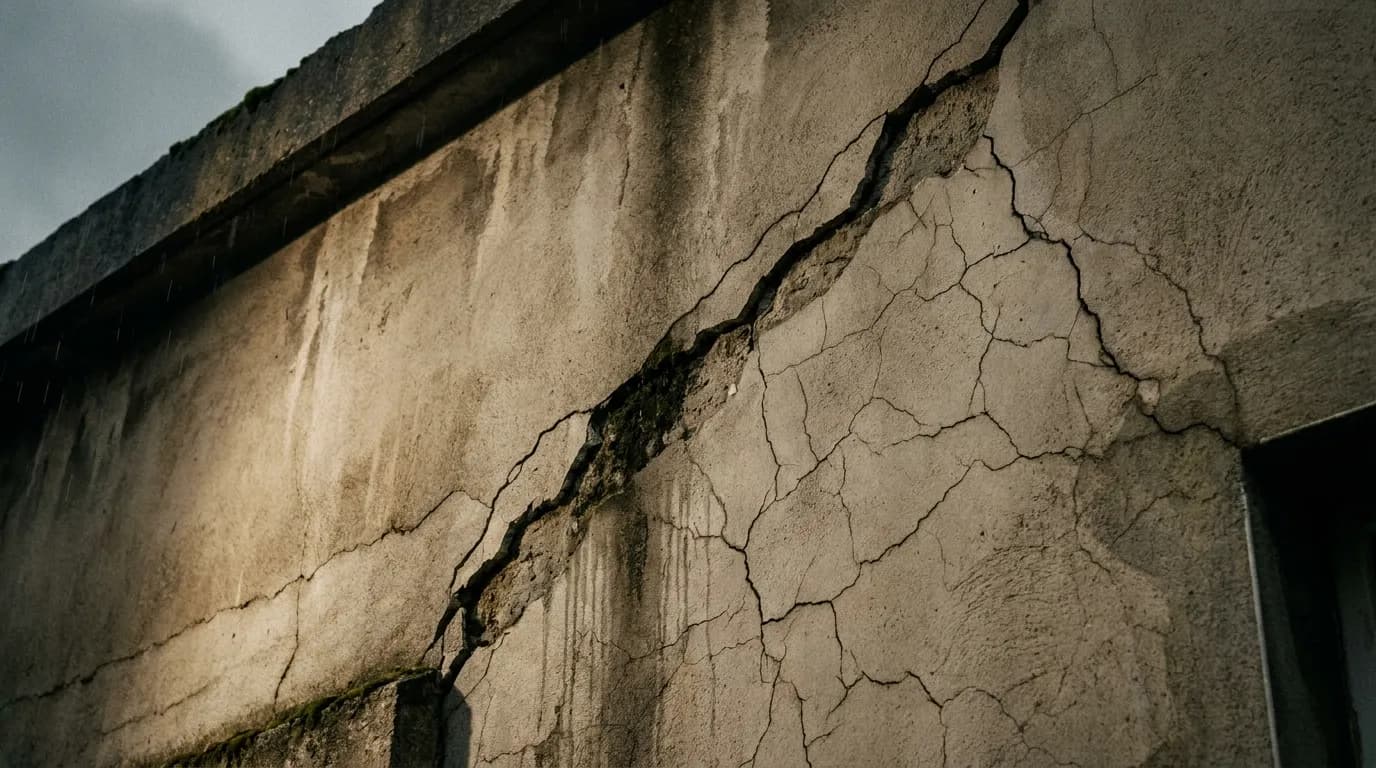
Hairline cracks in render are usually shrinkage. Vertical cracks at corners that grow over months are usually structural. The two need very different responses, and treating them the same way wastes money at best and misses a serious problem at worst.
Here is a practical guide for reading the render cracks on your Sydney home.
The three main types of render crack
1. Hairline shrinkage cracks (cosmetic)
What they look like: Very fine cracks, typically less than 1mm wide, often appearing in a craze or network pattern across a wall surface. Also common along the line of wall framing behind the render, or at the junction where two materials meet.
Why they happen: Render shrinks slightly as it cures and as it ages. Temperature changes cause microscopic expansion and contraction. These forces produce fine surface cracks that go only into the render, not into the substrate behind it.
Are they a problem? On their own, no. But they do allow water to enter the render coat, and over time this can cause the render to bulge away from the wall (delaminate) if the water gets behind it. The risk is higher in Sydney's coastal areas where salt air also works into these cracks.
What to do: Monitor them. If they are not growing and the render is not showing any signs of bulging or hollowness, they can be treated at the next repaint cycle with a flexible filler and elastomeric paint. For larger network cracking affecting a significant portion of a wall, re-rendering the section is a better long-term solution than patching.
Cost: Patch and repaint - $300 to $900. Re-render a section - $2,500 to $6,000.
2. Vertical or diagonal cracks at openings (substrate movement)
What they look like: A crack running diagonally upward from the corner of a window or door opening, or a vertical crack appearing near an opening. The crack may be wider than a hairline (1mm to 5mm or more) and may have a slightly open, stepped quality.
Why they happen: The masonry or framing above window and door openings is supported by lintels (steel or concrete beams that span the opening). When a lintel corrodes, deflects, or shifts - or when the masonry above an opening settles unevenly - the crack forms at the weakest point, which is the corner of the opening.
Are they a problem? Yes, always worth investigating. These cracks are not in the render itself - they are expressing movement in the structure behind the render. The render is just showing you where the movement is occurring.
What to do: Do not fill and paint without understanding the cause. A crack at an opening that is wider than 2mm, or any crack at an opening that was not there 12 months ago, should be assessed by a structural engineer or building consultant. Related: see the lintel rusting section in 7 Small Property Problems That Turn Into Expensive Repairs.
3. Stepped cracks following mortar joints (differential settlement)
What they look like: A crack that follows the mortar joints between bricks in a stair-step pattern. This appears through the render as a diagonal line that periodically shifts horizontally as it follows the joint pattern.
Why they happen: Differential settlement - when one part of the building's foundation has moved more than another. This might be caused by reactive clay soils (very common in Sydney's western and south-western suburbs), tree root impact on footings, changes in drainage around the building, or the original footings being undersized.
Are they a problem? Stepped cracks that have stopped growing may be the result of historic movement that has stabilised. Stepped cracks that are actively growing, or that are wider than 5mm, indicate ongoing movement that needs professional assessment. Filling these without addressing the cause achieves nothing - the crack will reappear.
What to do: Photograph and measure. If the crack has been stable for 12 months (no growth in length or width), it may be historic movement. If it is growing or has appeared recently, engage a structural engineer. Do not patch and paint over growing stepped cracks - it hides the monitoring evidence you need.
Quick diagnostic: how to assess a crack yourself
The following checks take 10 minutes and give you useful information before calling anyone.
-
Measure the width with a coin or ruler. Under 1mm = hairline, likely cosmetic. Over 2mm = investigate. Over 5mm = treat as urgent.
-
Check the depth by running a thin card or matchstick along the crack. If it only scores the surface of the render, it is a surface crack. If it goes deeper, the render itself has cracked through.
-
Look for matching cracks inside the house at the same location. A crack that appears on both the exterior render and the interior plaster is telling you something is happening in the wall itself, not just the surface.
-
Check for hollow render by tapping along the wall near the crack. A hollow sound (dull thud rather than solid click) means the render has delaminated from the substrate - water may already be behind it.
-
Mark and date the ends of any crack with a pencil line. Return in 4 to 8 weeks and see if it has grown. Growing = investigate. Stable = monitor.
| Crack type | Width | Action |
|---|---|---|
| Hairline network | Under 1mm | Monitor, treat at next repaint |
| Isolated hairline | Under 1mm, stable | Flexible filler at repaint |
| At opening corner | Any | Investigate cause, may need engineer |
| Stepped in masonry | Under 3mm, stable | Monitor, photograph monthly |
| Stepped in masonry | 3mm+, or growing | Structural engineer assessment |
| Vertical, growing | Any | Structural engineer assessment |
When to repair vs when to investigate further
Repair without further investigation is appropriate when:
- The crack is under 1mm, not growing, and not at an opening or corner
- The render sounds solid when tapped (no delamination)
- There are no interior cracks corresponding to the exterior crack
- There are no other signs of structural movement (sticking doors, sloping floors, cracked brickwork)
Further investigation is required before any repair when:
- Any crack is growing over a monitoring period
- Crack is at a window or door opening
- Stepped cracks visible in the masonry
- Interior and exterior cracks correspond in location
- Render is hollow near the crack
- Any crack is over 5mm wide
The bottom line
Most render cracks in Sydney homes are cosmetic. The hairline network of shrinkage cracks that appears on a 10-year-old rendered wall is normal aging and fixable at a repaint. The crack that starts at the corner of a window and grows 50mm in 3 months is a different category of problem entirely.
The mistake to avoid is treating both the same way - either by panicking over cosmetic cracks or by ignoring the ones that need engineering input. The simple monitoring steps above give you the information to tell them apart.
For render repair and re-rendering work, contact Superb Maintenance Group. We respond within 6 hours and provide a written assessment of the render condition before any work is proposed. See also /services/general-maintenance for our full scope of exterior wall repairs.
For the broader context on reading interior signs of the same underlying issues, see Ceiling Cracks, Bubbling Paint and Water Damage: What They Usually Mean.
Frequently asked questions
What is the difference between a hairline crack and a structural crack in render?
Is it safe to live in a house with render cracks?
How much does render crack repair cost in Sydney?
Can I fill render cracks myself?
What causes stepped cracks in rendered brick?
Continue reading

7 Small Property Problems That Turn Into Expensive Repairs
Hairline cracks, blocked gutters, lifting tiles - these 7 small issues cost hundreds to fix now and tens of thousands if you wait. Know what to look for.
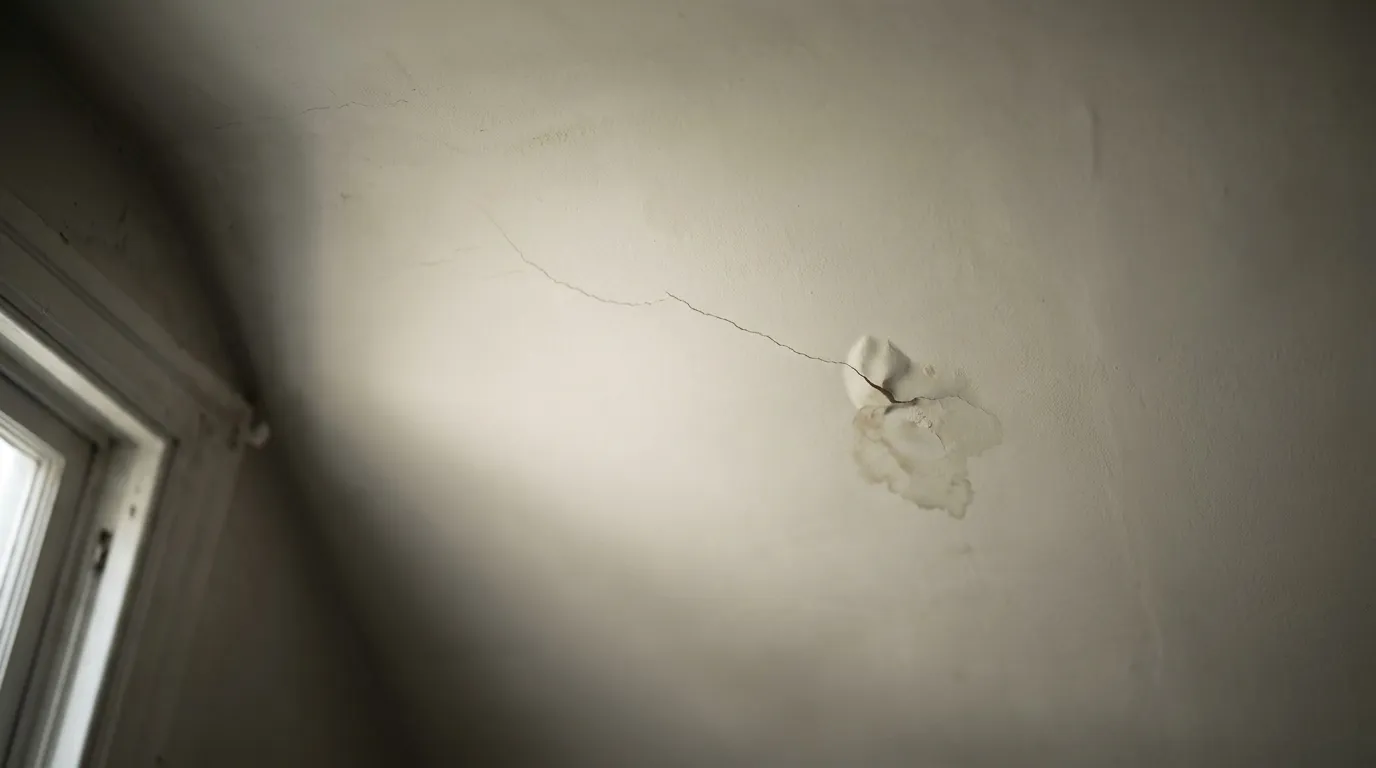
Ceiling Cracks, Bubbling Paint & Water Damage: What They Usually Mean
Hairline ceiling crack or structural issue? Bubbling paint or active leak? This guide helps Sydney homeowners read the most common interior warning signs.
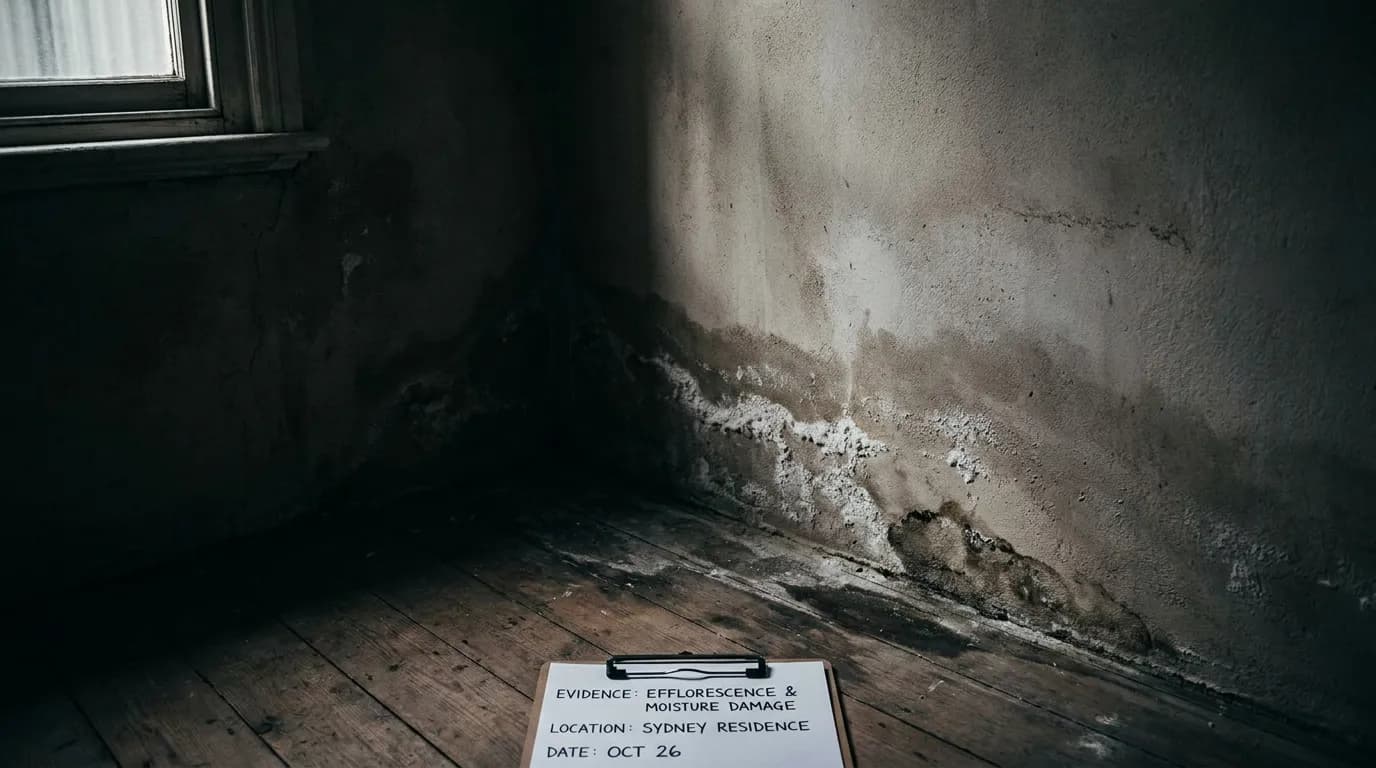
Signs Your Home Needs Waterproofing Repairs
Efflorescence, rising damp, lifting tiles, peeling render - these visible signs tell you waterproofing has failed. Know what to look for and what to do.