Signs Your Home Needs Waterproofing Repairs
Efflorescence, rising damp, lifting tiles, peeling render - these visible signs tell you waterproofing has failed. Know what to look for and what to do.
Water is patient. It will find any gap in a home's defences and keep working through it, month after month, doing damage you cannot see until the signs start appearing on surfaces. Most homeowners notice the symptoms long before they understand what is causing them.
Here is a clear guide to the visible signs of waterproofing failure in Sydney homes - what each sign looks like, where to find it, and what action to take.
The visible signs: what to look for and where
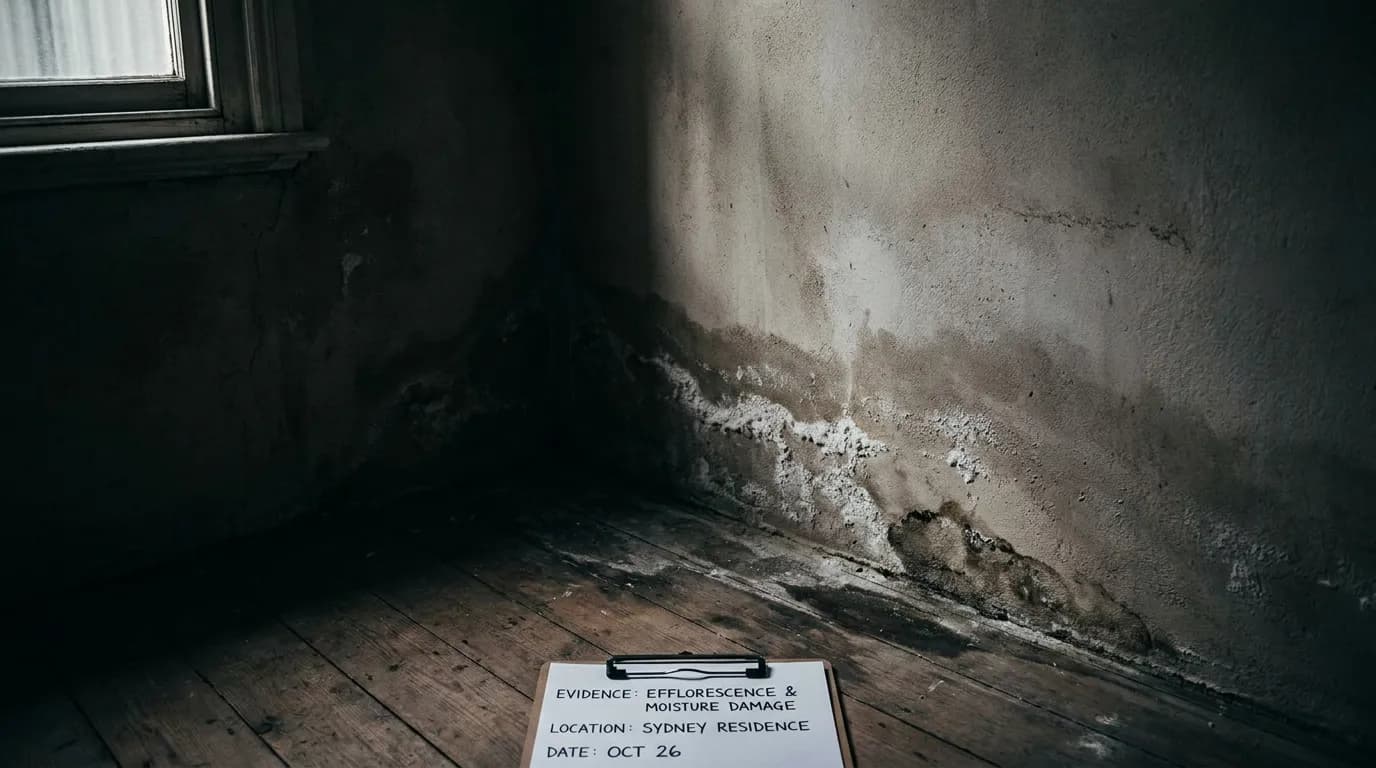
Efflorescence (white salt deposits)
What it looks like: White, chalky, or crystalline deposits on the surface of bricks, concrete, or render. It can appear as a fine dusty powder or as harder crystalline growths.
Where it appears: Lower sections of exterior brick walls, on rendered surfaces, on retaining walls, around window sills, and on basement or undercroft walls.
What it means: Water is moving through the material from behind or below, carrying dissolved minerals. When the water reaches the surface and evaporates, it leaves those minerals behind as efflorescence. This is a reliable early indicator that water is penetrating - and the damage it causes is happening behind the surface.
Rising damp marks at the base of walls
What it looks like: A horizontal tide-mark or staining at the base of interior or exterior walls, typically 300mm to 1,000mm above floor level. The paint or render above this line may be bubbling, peeling, or soft to touch. There is often a musty smell in the room.
Where it appears: On interior walls at ground level, most commonly in older Sydney homes that lack an effective damp proof course. Also common in rooms below ground level.
What it means: Groundwater is wicking up through the masonry by capillary action. The damp proof course (a horizontal barrier built into the wall at construction) has failed, is missing, or has been bridged. This is a serious issue that causes ongoing structural damage to mortar, brickwork, and wall finishes.
Paint bubbles on walls and ceilings
What it looks like: Raised blisters or bubbles under the paint surface. They may be small and isolated or large and widespread. Pressing a bubble may reveal moisture beneath.
Where it appears: Interior walls in bathrooms and laundries, ceilings below wet areas, external walls near windows and downpipes, and lower sections of walls in rooms prone to damp.
What it means: Moisture is trapped between the paint and the surface beneath. In bathrooms, this usually means the waterproof membrane behind the tiles has failed and water is tracking through the wall substrate. See also: Ceiling Cracks, Bubbling Paint and Water Damage: What They Usually Mean.
Peeling or bubbling render on exterior walls
What it looks like: Render that is lifting away from the masonry beneath, often in patches. The surface may feel hollow when tapped. Paint over the render may be peeling.
Where it appears: Exterior walls, particularly below window sills, around penetrations (pipes, cables), and on south or west-facing walls in Sydney that receive less sun.
What it means: Water has penetrated the render and is sitting between the render coat and the masonry. This causes the adhesion to fail. In older homes, it can also indicate the render mix was incorrect or the original surface preparation was poor. Peeling render leaves the masonry fully exposed to water.
Lifting tiles in bathrooms, laundries, or balconies
What it looks like: Tiles that sound hollow when tapped, tiles with visible cracks in the grout around them, or tiles that have visibly lifted at their edges. In severe cases, tiles may have already come away from the wall or floor.
Where it appears: Shower floors and walls (particularly at floor level), bathroom floors near the shower base, laundry floors, and external tiled balconies.
What it means: The waterproof membrane below the tiles has failed, or the tile adhesive has broken down due to water ingress. Water is actively moving beneath the tiles. This is one of the most common waterproofing failure signs we see and one of the most important to act on quickly. Related: Why Re-Grouting and Re-Sealing Can Save You Thousands.
Ceiling stains and mould below wet areas
What it looks like: Brown or yellow staining on ceilings, mould growth (black or green spots, often around the stain), or soft spots in the ceiling plaster.
Where it appears: On the ceiling directly below a bathroom, laundry, or balcony on the floor above.
What it means: Water from the wet area above has penetrated the structure and is tracking downward. The waterproof membrane in the floor of the room above has failed, or there is a plumbing leak. Every day this continues adds to the structural damage.
Where waterproofing exists in a Sydney home
Understanding where waterproofing membranes are installed helps you know which areas to monitor:
| Location | What is waterproofed | Failure signs to watch for |
|---|---|---|
| Shower and bath | Floor and walls to at least 1,800mm height | Hollow tiles, grout failure, wall bubbling |
| Wet area floors | Full bathroom and laundry floors | Lifting tiles, damp below |
| External balconies | Full deck surface and upstand to wall | Ceiling stains below, lifting tiles, efflorescence |
| Planter boxes | All internal surfaces | Seepage through adjacent walls, efflorescence |
| Below ground areas | Basement walls and floor | Rising damp, efflorescence, mould |
| Window penetrations | Flashing around window frames | Water marks inside below windows |
What action to take
If you see one or more of these signs, here is the priority sequence:
- Photograph and date everything - you want a record of current condition and whether it progresses
- Check whether the sign is weather-dependent (gets worse after rain = external or roof source) or constant (plumbing source)
- Stop the water source first - there is no point repairing finishes until the source is fixed
- Get a professional assessment of how far the damage has spread - moisture meters and thermal cameras can map damage without opening up walls
- Plan the repair in one scope - patching visible damage only to have it reappear 6 months later is the most expensive way to handle waterproofing failures
For general maintenance and waterproofing assessment, see /services/general-maintenance. For specific bathroom waterproofing repair, /services/tiling covers full substrate and membrane repair.
The bottom line
Waterproofing failures rarely announce themselves loudly. They show up as a chalky white mark on a brick wall, a bubble in the paint behind the toilet, or a tile that feels slightly hollow near the shower drain. The gap between "early sign" and "major repair" is usually 1 to 3 years. Catching these signals early and acting on them is the lowest-cost way to keep a Sydney home in good condition.
If you are seeing any of these signs, contact Superb Maintenance Group for an assessment. We respond within 6 hours and service all Sydney suburbs.
Related reading: 7 Small Property Problems That Turn Into Expensive Repairs and The Most Ignored Causes of Bathroom Water Damage.
Frequently asked questions
What is efflorescence and is it serious?
What does rising damp look like?
Where does waterproofing exist in a typical Sydney home?
Can I waterproof a bathroom myself?
How urgent is lifting tile near a bathroom or balcony?
Continue reading
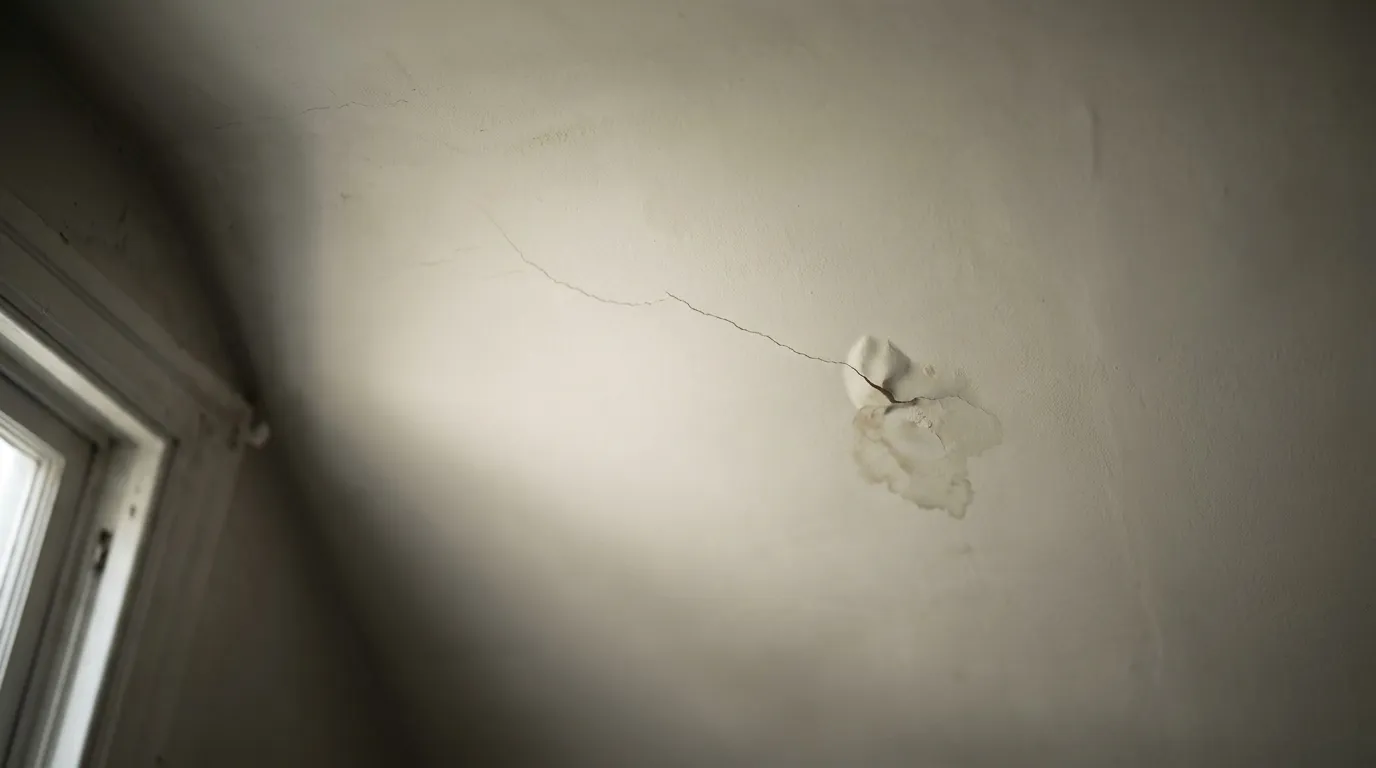
Ceiling Cracks, Bubbling Paint & Water Damage: What They Usually Mean
Hairline ceiling crack or structural issue? Bubbling paint or active leak? This guide helps Sydney homeowners read the most common interior warning signs.
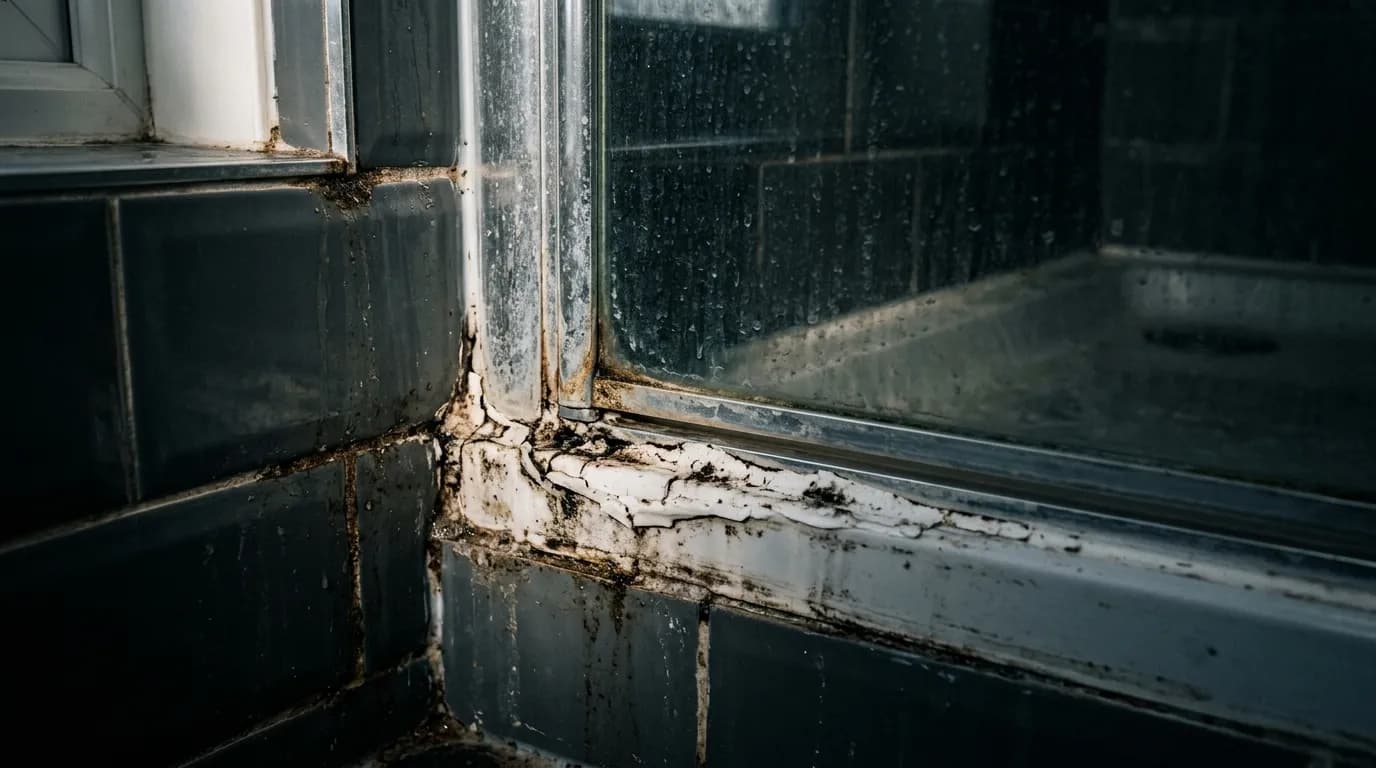
The Most Ignored Causes of Bathroom Water Damage
Failed silicone, cracked grout, loose taps - most bathroom water damage starts with something small and ignored. Know what to check and what you can spot yourself.
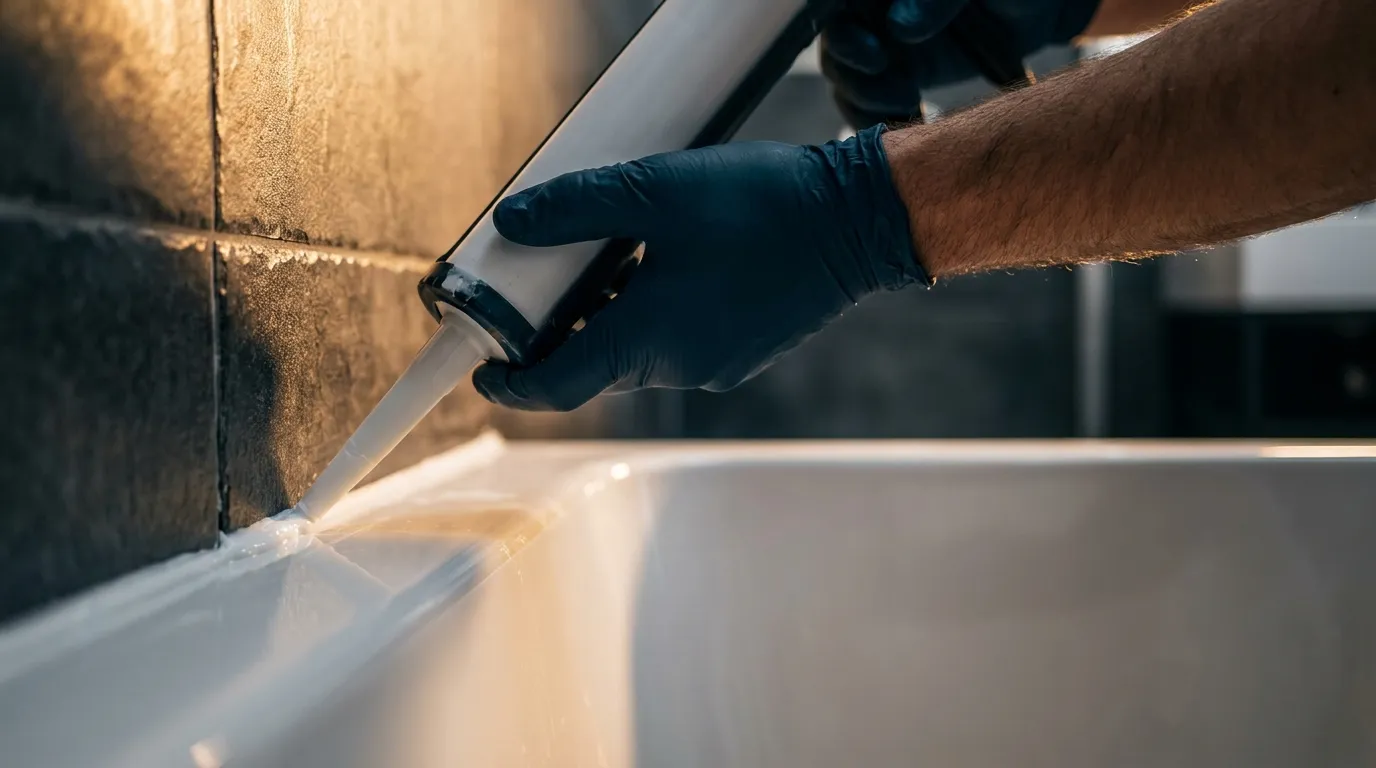
Why Re-Grouting and Re-Sealing Can Save You Thousands
A bathroom reseal costs $600 to $1,200. Skip it for 3 years and you may be facing an $18,000 to $35,000 strip-and-rebuild. Here is why the cycle matters.