Ceiling Cracks, Bubbling Paint & Water Damage: What They Usually Mean
Hairline ceiling crack or structural issue? Bubbling paint or active leak? This guide helps Sydney homeowners read the most common interior warning signs.
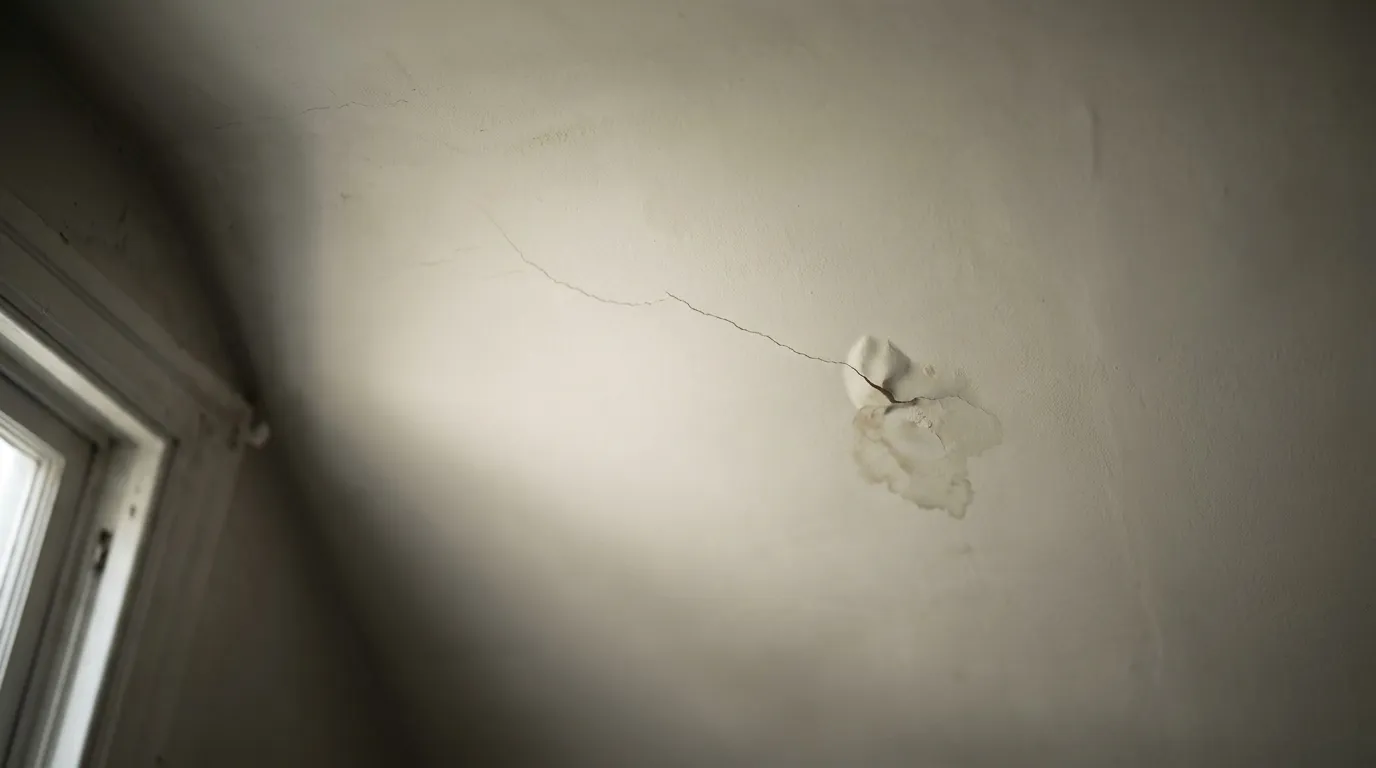
A brown stain on your ceiling is not just a cosmetic problem. In our experience across 860+ Sydney properties, it is one of the most reliable signs that something is leaking above - and that it has been leaking for long enough to travel through the structure and show itself. By the time you can see it, the water has usually done damage you cannot see.
This guide helps you read the most common interior signs correctly, so you know what is likely minor and what needs attention now.
How to tell a cosmetic ceiling crack from a structural one
This is the question we get most often, and the answer comes down to a few key characteristics.
Cosmetic cracks
- Fine (under 1mm wide) and do not grow over months
- Run along plasterboard joints (straight lines, usually 1,200mm or 2,400mm apart - the standard sheet sizes)
- Appear at the wall-ceiling junction after a home has settled or after renovation work nearby
- No accompanying signs of movement elsewhere (doors still close, floors still level)
These are common in Sydney homes, especially older ones, and are fixed with a simple plaster skim and repaint. Cost: $200 to $800 depending on the room.
Structural cracks
- Wider than 2mm and visibly open
- Diagonal, especially running from the corners of window openings upward
- Growing - you can photograph and track them over 4-6 weeks and see clear progression
- Accompanied by sticking doors or windows, uneven floors, or visible gaps at wall-ceiling junctions
Structural cracks need an engineer's assessment before any repair work starts. The crack is a symptom, not the problem itself. Filling it without understanding what caused it is money wasted.
What bubbling paint on a ceiling is telling you
Bubbling paint is one of the clearest signals in a home, and it always means the same thing: moisture is trapped between the paint film and the surface beneath it.
The question is where that moisture is coming from. The four most common sources in Sydney homes:
1. Roof above
The most common source in single-storey homes or the top floor of a two-storey. Damaged, slipped, or missing roof tiles let rainwater in during storms. The water travels along rafters and sits in the ceiling cavity before eventually soaking through.
What to look for: bubbling or staining that appears or grows after heavy rain. Check roof tiles from the ground - visible damage, missing mortar on ridge caps, or cracked tiles directly above the affected area.
2. Bathroom or laundry on the floor above
In two-storey homes, the ceiling below a bathroom or laundry is one of the first places to show water damage when something fails upstairs. Failed shower silicone, a leaking bath overflow, or a slow drip from a pipe joint can all track down through the floor structure.
What to look for: staining or bubbling directly below a wet area upstairs. The shape of the stain often mirrors the shower or bath footprint, though water does travel before it drops.
3. Plumbing in the wall or ceiling cavity
Supply pipes and waste pipes run through ceiling and wall cavities throughout every home. A loose joint, a pinhole corrosion leak, or a failing pipe connection can drip slowly for months before you see any visible sign.
What to look for: staining that is not near any obvious exterior opening and does not change with weather. Plumbing leaks tend to be consistent rather than weather-dependent. A plumber can use moisture meters and thermal cameras to find these without opening up walls.
4. Condensation
In bathrooms, laundries, and kitchens with poor ventilation, warm moist air condenses on cold surfaces including the ceiling. Over time this causes paint failure, mould, and eventually plaster damage.
What to look for: bubbling and mould concentrated on the ceiling of a wet area, especially in the corners and above the shower. No staining pattern that suggests water travelling from elsewhere.
Reading brown stains: active leak vs old damage
Brown staining on a ceiling comes from the minerals and organic material that water picks up as it travels through roof timbers, insulation, or building materials. The stain colour and shape give you useful information.
| Stain type | What it usually means |
|---|---|
| Fresh dark ring with wet centre | Active leak, address urgently |
| Old yellow-brown ring, dry | Past leak - may have resolved or may recur |
| Multiple overlapping rings | Recurring leak across multiple events |
| Staining with visible mould growth | Moisture has been present long enough for mould to establish |
| Staining around a light fitting | Water tracking to the lowest point - the hole - which is the fitting |
An important note: a stain that appears dry does not mean the problem is gone. It means the leak has paused. In Sydney's climate, another rain event or seasonal pipe movement will usually restart it. Act on any brown stain, even if it currently feels dry.
Where to look when you see these signs
Once you have identified a suspicious ceiling crack, stain, or bubble, here is a practical sequence for tracing the source.
- Check the floor above (if there is one) - look under wet area mats, check around the toilet base, feel the grout and silicone in the shower for gaps
- Check the roof from the ground after the next rain - look for water tracking down interior walls in the roof space if you have roof access
- Check external walls for damage at the same level as the staining - cracked render, gaps in window flashings, or failed caulking around penetrations
- Note whether the stain changes with weather or is constant - weather-dependent = roof or external; consistent = plumbing
- Call a professional with moisture detection equipment if you cannot identify the source within one inspection
Do not wait for the next rain to confirm it - that approach turns a fixable problem into a larger one.
The bottom line
Ceiling cracks, bubbling paint, and brown stains are your home's way of flagging that something above them needs attention. Most of these problems are entirely fixable at low cost when they are caught early. The ones that become expensive are the ones that get monitored for "a few months" before anything is done.
If you are seeing any of these signs in your Sydney home, contact Superb Maintenance Group for an assessment. We typically respond within 6 hours. Our team handles everything from roof repairs and plumbing trace-and-fix through to full ceiling replacement and replastering.
For related reading, see Signs Your Home Needs Waterproofing Repairs and 7 Small Property Problems That Turn Into Expensive Repairs.
Frequently asked questions
Is a hairline crack in my ceiling dangerous?
What causes bubbling paint on a ceiling?
I have a brown ring stain on my ceiling but no active drip. Should I still act?
How do I tell if a ceiling crack is getting worse?
What does a structural crack look like versus a cosmetic one?
Continue reading
7 Small Property Problems That Turn Into Expensive Repairs
Hairline cracks, blocked gutters, lifting tiles - these 7 small issues cost hundreds to fix now and tens of thousands if you wait. Know what to look for.
Signs Your Home Needs Waterproofing Repairs
Efflorescence, rising damp, lifting tiles, peeling render - these visible signs tell you waterproofing has failed. Know what to look for and what to do.
The Most Ignored Causes of Bathroom Water Damage
Failed silicone, cracked grout, loose taps - most bathroom water damage starts with something small and ignored. Know what to check and what you can spot yourself.