Why Long-Term Maintenance Relationships Save More Money
A contractor who has worked your building for five years already knows where the concrete cancer started, which balcony failed first, and what the substrate looks like under every waterproofed surface.
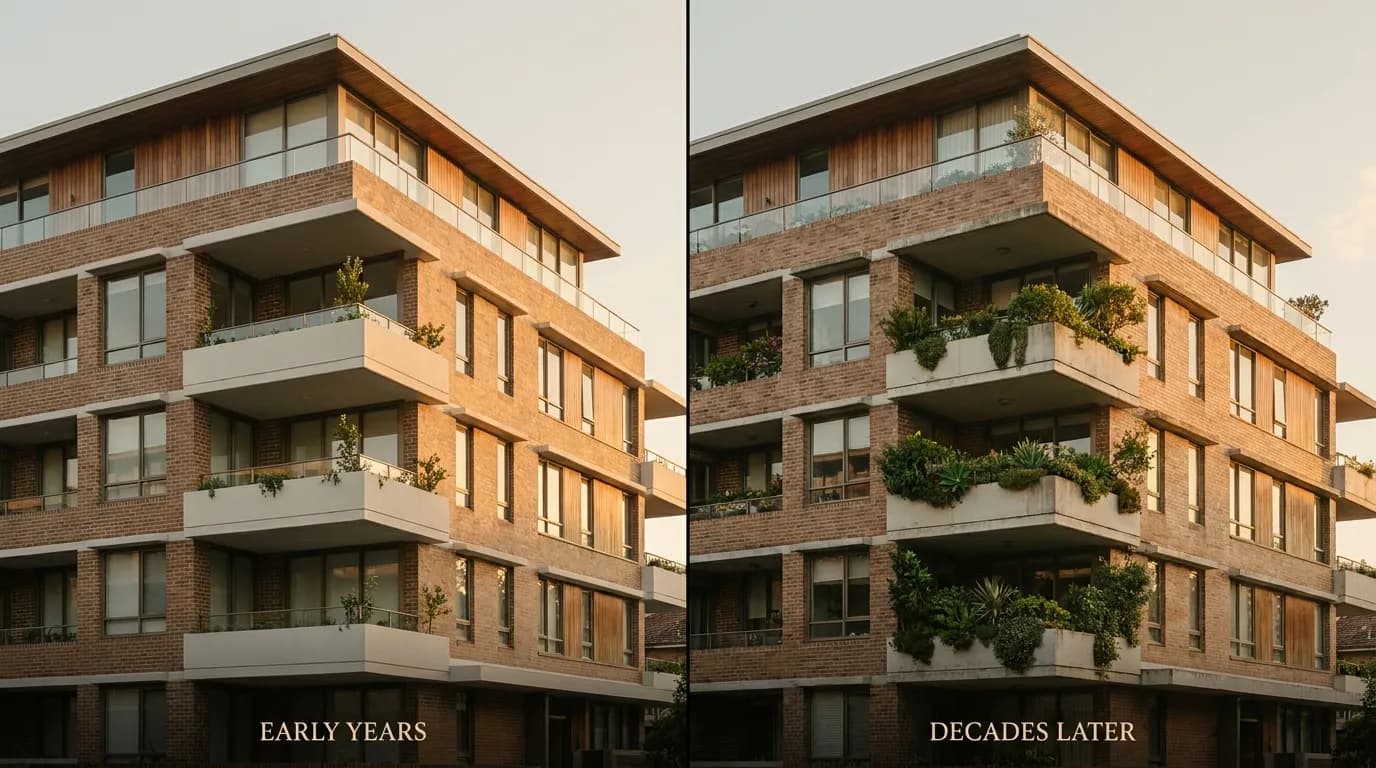
The first time a new contractor visits a building, they spend part of their quoting time learning it: the access points, the structural system, the maintenance history, the problem areas, the materials used in prior repairs. That time is real. It is absorbed into their quote margin, charged as a site visit fee, or priced into their contingency. You pay for it, one way or another.
By the fifth year, that time is gone. A contractor who has worked your building for five years already knows where the concrete cancer first appeared, which balcony failed and why, what the substrate looks like under every waterproofed surface, and which building systems need close watching in the next capital works cycle. They don't need to learn the building because they know it. That knowledge has financial value.
The case for long-term maintenance relationships is not primarily about loyalty or convenience. It is about what an experienced, building-familiar contractor can do that a first-visit contractor cannot: faster accurate quotes, lower contingency pricing, predictive identification of issues before they become emergencies, and advice that is grounded in the specific history of your specific building.
What a Contractor Learns Over Time
A contractor who has maintained a building for several years accumulates knowledge that cannot be transferred in a handover document. It lives in observations made during routine visits, in the pattern of which repairs have needed revisiting, in the understanding of how the building moves and ages in its specific location.
The Building's Problem Patterns
Every building has patterns: the side that gets most sun and most thermal cycling, the waterproof membranes that are oldest and closest to failure, the drainage system that blocks in heavy rain, the facade areas that hold moisture. A contractor who has observed these patterns over multiple years knows where to look during an inspection and what level of intervention those areas are likely to need in the next cycle.
A first-visit contractor inspects a building and reports what they can see. A long-term contractor inspects the same building and reports what they can see plus what they expect to see based on how the building has behaved previously. The second report is more useful. It changes what gets budgeted, what gets actioned now versus later, and how a capital works plan is structured.
The Repair History
Every building has a repair history: what has been fixed, when, at what scope, with what products, and by whom. A long-term contractor who has carried out the repairs has that history in their own records. They know whether the waterproofing membrane installed three years ago has started showing early signs of movement. They know whether the concrete cancer repair from two years ago has held or whether adjacent areas were affected.
This history informs diagnosis. When a new problem presents in an area near prior work, a long-term contractor can quickly assess whether it is a continuation of a prior issue or a new defect, and whether it falls within the warranty period of prior work. A first-visit contractor has to start from scratch.
The Governance Structure
Strata buildings have committees that change. Managing agents rotate. But the building has continuity. A long-term contractor develops relationships with the building's governance cycle: they understand which items need committee approval versus manager approval, they know the capital works fund position, and they know which owners are likely to ask questions and what those questions will be. This understanding makes communication faster and more effective.
Brian Carberry, as Owners Corporation representative for the Pyrmont building where we completed a large remedial and facade scope, experienced the difference between a contractor new to the building and one familiar with its structure. The efficiency of the job planning, the pre-briefing of the committee, and the scope communication were all improved by the fact that we had existing context for how that building's governance worked.
The Financial Case
Quote Efficiency
The time a contractor spends learning a building is quoted time. Either they charge for it explicitly (site visit fee), or they build it into their margin. A contractor who knows the building quotes faster and needs less contingency because they have less uncertainty about access, scope, and substrate condition.
Across a 5-year relationship with a Sydney strata building, the reduction in contingency pricing alone is typically several percentage points on each quote. For a building spending $80,000-$150,000 annually on maintenance, that is a material saving: $4,000-$8,000 per year in contingency that doesn't need to be priced because the uncertainty is gone.
Reactive vs. Predictive Maintenance
Emergency call-outs are the most expensive maintenance events in a building. Not because the repairs themselves are always more expensive, but because emergency work attracts call-out rates, disrupts tenants, and often has to proceed on a compressed timeline that limits the ability to stage and plan properly.
A long-term contractor conducting regular maintenance visits observes conditions before they become emergencies. They flag a developing waterproofing failure during a routine visit rather than responding to it after it has caused internal damage. They note that a drain is showing early signs of root infiltration and recommend jetting before it blocks completely.
Mitch Wallis, a Superb Maintenance Group client, observed this effect directly: the shift from reactive to predictive maintenance on his properties reduced the number of emergency calls over two years while also reducing the average size of repairs, because issues were caught and addressed earlier in their development.
Predictive maintenance is not a premium service. It is what a contractor who knows your building naturally does when they visit it, because they have a baseline to compare against.
Negotiated Rates Over Time
Volume and reliability create pricing power. A contractor managing work for a property manager across a portfolio of buildings will offer more competitive pricing than the same contractor quoting individual jobs, because the relationship has predictable value. The contractor can plan their team's workload, reduce their sales and quoting overhead, and extend pricing that reflects the efficiency of the relationship.
This is not a given: it requires the client to offer genuine volume and consistency, and it requires the contractor to honour the relationship with performance. But it is a real dynamic. The property managers and strata managers who get the best contractor pricing are the ones who have built relationships based on consistent volume and clear communication, not the ones who requote every job to the market.
Response Priority
A contractor who has worked with you for five years returns calls faster than a contractor who doesn't know you. This is partly practical (they know the building and can give a fast answer) and partly relational (existing clients take priority over cold enquiries). When an emergency make-safe call comes in at 6pm on a Friday, the contractor who picks up is the one with a relationship, not the one you called from a Google search.
Superb Maintenance Group provides 24-hour emergency response 7 days a week to all clients. But the clients who get the fastest response are the ones we know: the buildings we've worked on, the managers we have relationships with, the owners whose properties we understand. That speed has a real value when something goes wrong.
What to Look for in a Long-Term Maintenance Partner
Not every contractor is positioned for a long-term relationship. The markers to assess:
-
Consistent team. A contractor who cycles through subcontractors has no institutional memory. The person who worked your building last year may not be the person quoting it this year. In-house trades create continuity.
-
Documentation standard. A contractor who doesn't photograph jobs and doesn't keep written records cannot provide the building history that makes a long-term relationship valuable. Ask to see their record-keeping system.
-
Proactive communication. A long-term contractor is one who calls you about a problem they noticed, not one you have to chase. Ask references whether the contractor flags issues during routine visits.
-
Trade breadth. A contractor who handles most of your trade requirements in-house reduces the coordination overhead of managing a multi-contractor arrangement. Superb Maintenance Group runs concrete, rendering, plastering, tiling, waterproofing, microcement, and general maintenance with our own team, covering the majority of standard building maintenance needs.
-
Reference longevity. References from clients the contractor has worked with for three or more years are more meaningful than one-job testimonials. Ask specifically: "How long have you worked with them, and what changed after the first year?"
The Bottom Line
A contractor who has worked your building for five years is a different thing to a contractor quoting your building for the first time. They know what they're quoting. They know what's coming. They know how your committee makes decisions and who to call when something urgent arises.
That knowledge is not transferable. It accumulates through jobs done, visits made, and problems solved. The financial return on building that relationship, in lower contingency pricing, predictive maintenance, faster emergency response, and better capital works advice, is real and measurable over a 3-5 year horizon.
If you're currently managing maintenance across a fragmented set of contractors with no continuity, talk to us about how we approach building relationships. Read What Makes a Good Property Maintenance Company for the markers to apply when making that transition, and How Professional Maintenance Protects Property Value for the financial context.
For strata managers specifically, Why a Reliable Maintenance Team Makes Strata Management Easier covers how contractor continuity simplifies building governance and committee reporting.
Frequently asked questions
What is predictive maintenance and how does it save money?
Do long-term contractors charge less than single-job contractors?
How do I transition from using multiple contractors to a single maintenance relationship?
What should I expect from a preferred maintenance contractor in terms of response time?
Is a long-term contractor relationship suitable for strata buildings specifically?
Continue reading

How Professional Maintenance Protects Property Value
Deferred maintenance doesn't just cost more to fix later. It actively reduces the value of a property in ways that compound quietly and surface at the worst possible time.

What Makes a Good Property Maintenance Company? 8 Markers Worth Checking
Most contractors look the same on paper. These 8 markers separate the ones worth hiring from the ones you'll be chasing for warranty work in six months.
How a Reliable Maintenance Team Makes Strata Management Easier
Managing eight trades across one portfolio is exhausting and expensive. What a single reliable maintenance contractor actually delivers - in time saved, costs avoided, and documentation you can use.