How Professional Maintenance Protects Property Value
Deferred maintenance doesn't just cost more to fix later. It actively reduces the value of a property in ways that compound quietly and surface at the worst possible time.
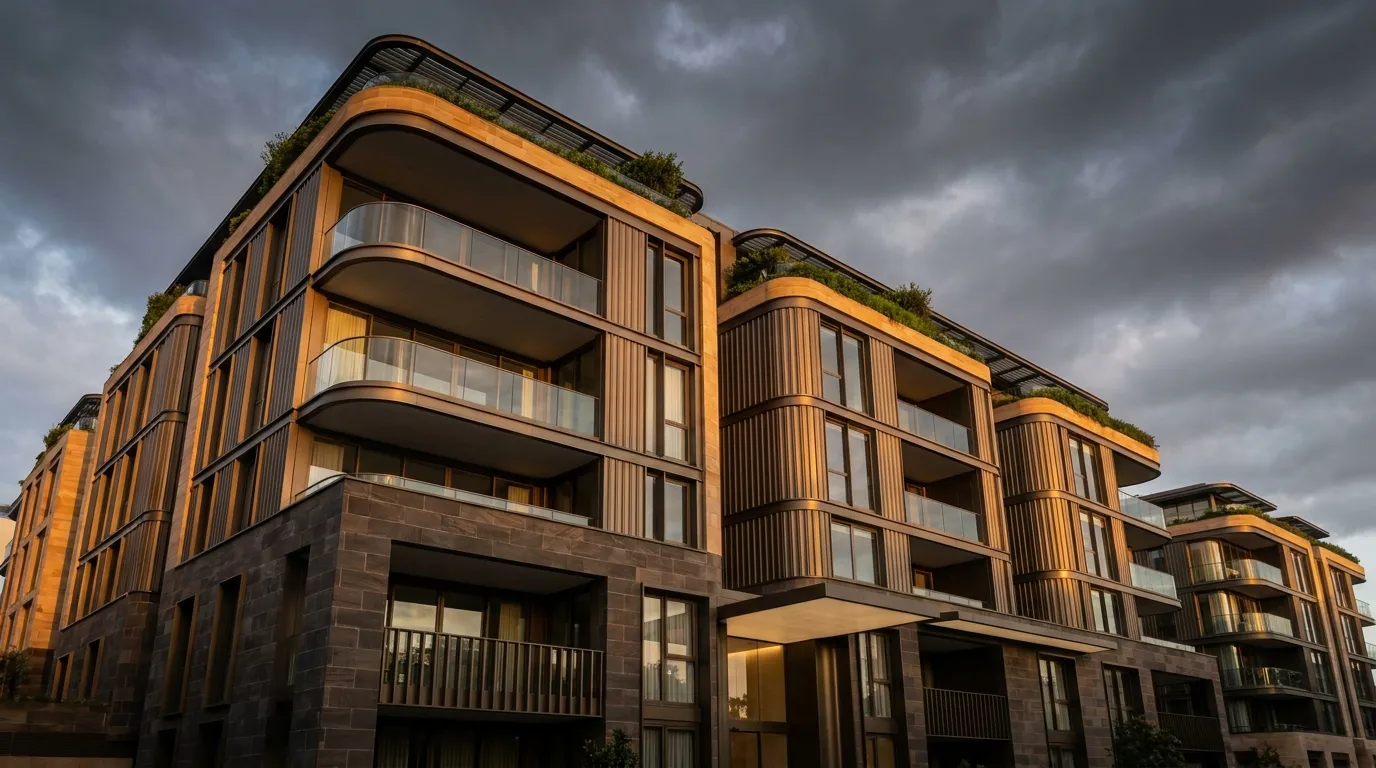
A Kingsgrove property we renovated in 2024 sold for $530,000 more than the pre-renovation valuation. The scope was a full interior renovation plus facade works: new microcement bathrooms, updated kitchen, full exterior render and paint. The cost was around $140,000. The value uplift was $530,000. That is a return on investment of approximately 3.8 times the spend.
That result is not typical of every maintenance decision. But the underlying principle is consistent: Sydney buyers and valuers assign a penalty to visible deferred maintenance that exceeds the actual cost of fixing it, and they assign a premium to properties that present as maintained, documented, and problem-free.
Professional maintenance doesn't just prevent deterioration. It actively creates financial upside that deferred maintenance destroys.
How Deferred Maintenance Compounds
Maintenance deferred is not maintenance avoided. It is maintenance that becomes more expensive, for three reasons.
First, the underlying problem continues to develop. A concrete cancer repair that costs $8,000 when the carbonation zone is 30mm deep costs $35,000 when it's been left for three more years and the corrosion has propagated along 4 metres of beam. Moisture doesn't stop when the maintenance budget runs out. The repair scope grows every year the problem is left unaddressed.
Second, deferred maintenance creates secondary damage. A leaking balcony that isn't repaired doesn't just deteriorate the balcony. It migrates into the ceiling of the apartment below, into the structural slab, and potentially into the wall cavities and electrical systems it contacts. What starts as a $7,000 waterproofing job becomes a $7,000 waterproofing job plus $12,000 of internal ceiling reinstatement plus a potential insurance claim and tenant compensation for a rental property. The original deficiency is now embedded in a much larger remediation scope.
Third, deferred maintenance signals risk to buyers and valuers. A building or property that has visibly outstanding maintenance items tells buyers that there may be more they can't see. Buyers compensate for this uncertainty with price reductions that typically exceed the actual cost of the outstanding work. A strata building going to sale or valuation with a current defect report and outstanding items will receive a discount that reflects not just the repair costs but the risk premium of unknown scope.
The Property Value Maths
The relationship between professional maintenance and property value is most visible at three points: sale, insurance renewal, and strata levy assessment.
At Sale
Buyers negotiate hard against visible maintenance deficiencies. The discount they apply is not a dollar-for-dollar reflection of the repair cost. It is a dollar-for-dollar cost plus an uncertainty premium, because the buyer doesn't know if the visible issue is isolated or symptomatic of a larger problem they haven't found yet.
In practice, a buyer who knows a building needs $15,000 of waterproofing work will typically negotiate a $25,000-$35,000 price reduction, because they're pricing in the repair cost, their time and disruption, the risk that the scope is larger than quoted, and the risk that adjacent areas are also affected. A buyer who sees a recently completed waterproofing scope with documentation and warranty, priced into the property, sees no risk to price.
Properties with documented maintenance histories, up-to-date compliance certifications, and no outstanding defect items consistently sell at a premium relative to comparable properties without that documentation.
The Kingsgrove project is one example. A Vaucluse property we completed microcement and pool quartz work on similarly lifted presentation quality to a level consistent with the suburb's premium positioning, directly supporting the sale price the vendor achieved.
At Insurance Renewal
Building insurers price risk. A building with evidence of regular maintenance, current waterproofing warranties, and no outstanding defect notices presents differently to an insurer than one with known defects, deferred remedial work, or prior claims related to preventable deterioration.
The financial impact is variable, but buildings that can demonstrate maintenance compliance and current certifications are in a stronger position to negotiate premiums and coverage terms than buildings that cannot.
For strata buildings, the insurance implication extends to coverage of individual lots. A strata building with known structural or waterproofing deficiencies may face coverage exclusions that affect lot owners directly, particularly where damage is attributable to a defect the body corporate was aware of and chose not to remediate.
At Capital Works Fund Assessment
The 10-year capital works plan required for NSW strata schemes under the Strata Schemes Management Act 2015 is a maintenance planning document. Buildings with accurate capital works plans, funded appropriately, and with up-to-date maintenance records can plan levies and special levies with confidence.
Buildings where maintenance has been deferred have capital works plans that understate the actual liability. When the deferred maintenance finally has to be addressed, either through a large remediation project or a building defect notice, the cost hits the owners' corporation as a reactive expense, not a planned one. Special levies are expensive administratively and financially, and they often represent costs that were predictable years earlier but weren't funded.
Regular professional maintenance, documented and tracked against a capital works plan, converts reactive emergency expenses into planned budget items. The total cost may be similar over a 20-year horizon, but the managed version is funded gradually through levies rather than through emergency calls and special levy votes.
The 1% Annual Maintenance Rule
A widely used benchmark for property maintenance budgeting is 1% of property value per year. For a $1.5M Sydney house, that is $15,000 annually. For a $12M strata building, $120,000 annually.
The 1% rule is a planning heuristic, not a precise prescription. Newer buildings in good condition may spend less in stable years. Pre-2000 buildings with coastal exposure, concrete structures, or ageing waterproofing systems often need more. The relevant point is not the exact percentage but the principle: maintenance is a recurring capital cost, not an optional expense.
Buildings that treat maintenance as an optional line item to be cut when budgets are tight consistently face larger repair bills later. The compounding works in one direction: deferred maintenance creates more deferred maintenance, until a failure event forces a reactive spend that could not be deferred.
Buildings that fund maintenance as a regular capital expense consistently present better, sell better, insure better, and require fewer emergency repairs.
Maintenance as an Investment, Not a Cost
The frame that changes the maintenance conversation is whether maintenance is treated as a cost to be minimised or an investment in the asset's condition and value.
The cost frame leads to approving the cheapest quote, deferring items that don't look urgent, and cutting maintenance budgets when other pressures emerge. The investment frame asks: what is the return on spending $8,000 on waterproofing this year versus the return on deferring it?
For a rental property, professional maintenance protects rental income by reducing vacancy from unliveable conditions, reducing tenant disputes over maintenance responsiveness, and reducing the capital required for reactive repairs that take a property offline. For a strata building, it protects levy predictability and preserves the value of every lot owner's asset. For a sale property, it converts every dollar spent on professional maintenance into a multiple of that dollar in sale price protection.
This is the financial case for professional maintenance. The operational case is simpler: a well-maintained building requires fewer emergency calls, fewer variations, and fewer disputes. It is a more manageable asset in every dimension.
The Bottom Line
Deferred maintenance doesn't stay deferred. It develops, compounds, and surfaces at the moment it causes the most disruption: during a sale, an insurance claim, a capital works review, or an emergency. Professional maintenance, planned and funded as a regular capital expense, is consistently cheaper over a 10-year building horizon than the reactive alternative.
See our project portfolio for documented examples of maintenance and renovation work that have directly supported property values in Sydney. For strata managers looking at capital works planning, Preventative Maintenance Saves Strata Thousands goes deeper on the planning framework.
If you're looking at a deferred maintenance backlog and want a realistic scope and cost picture, contact us. We provide detailed scopes with costs, and we can help prioritise what needs to happen now versus what can be staged over a longer capital works cycle.
For a complete picture of maintenance cost dynamics, read Why Cheap Repairs Usually Cost More Later and Why Long-Term Maintenance Relationships Save More Money.
Frequently asked questions
How much does deferred maintenance reduce a property's sale price?
What is the 1% annual maintenance rule?
How does maintenance affect strata levies?
What maintenance records are most important for a property sale?
Does professional maintenance affect insurance premiums?
Continue reading
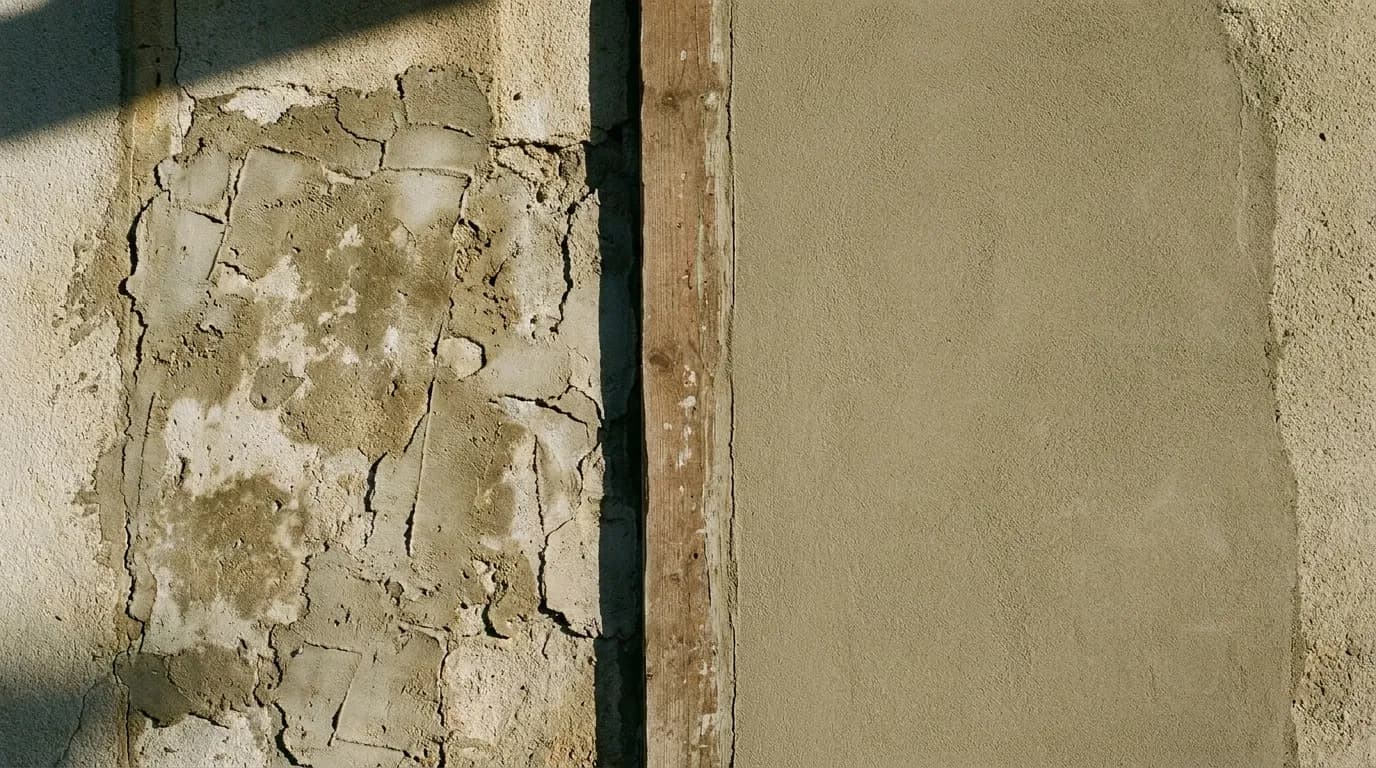
Why Cheap Repairs Usually Cost More Later
The gap between a cheap repair and a proper one is usually $2,000. The gap between a cheap repair and the remediation of that cheap repair is often $40,000.
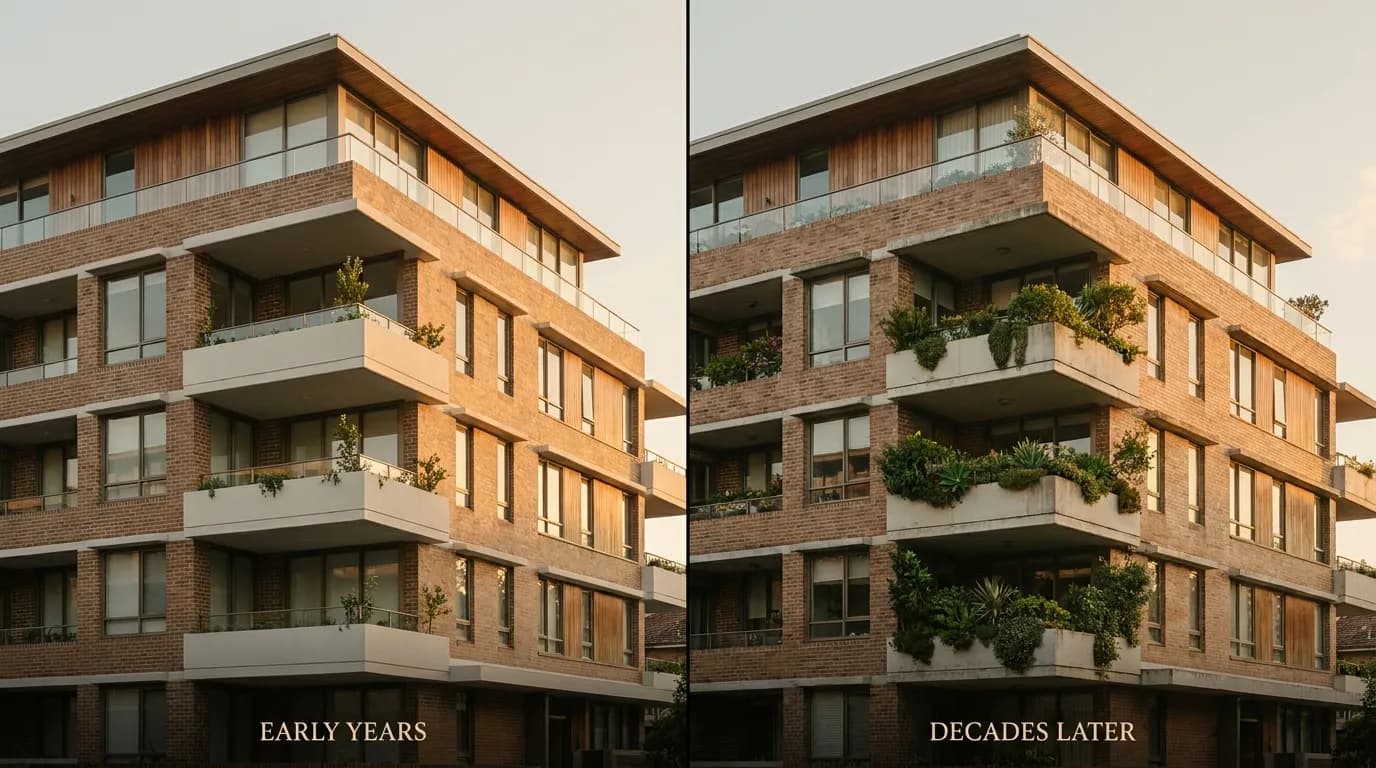
Why Long-Term Maintenance Relationships Save More Money
A contractor who has worked your building for five years already knows where the concrete cancer started, which balcony failed first, and what the substrate looks like under every waterproofed surface.

How Preventative Maintenance Saves Strata Committees Thousands
The maths of prevention vs reaction in strata buildings. Real numbers, real examples, and how to budget preventative maintenance through your capital works fund.