Why Cheap Repairs Usually Cost More Later
The gap between a cheap repair and a proper one is usually $2,000. The gap between a cheap repair and the remediation of that cheap repair is often $40,000.
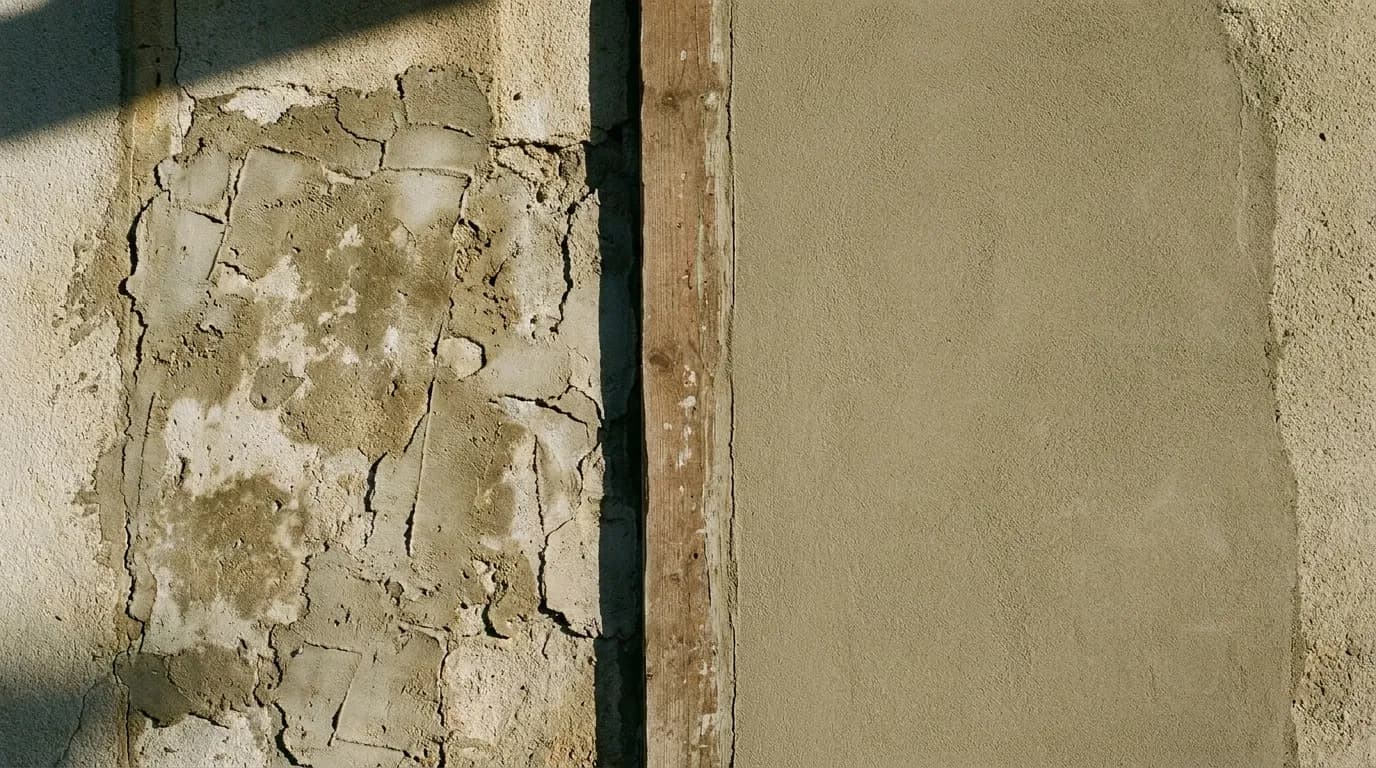
Cheap quotes are easy to write because they leave things out. The thing that makes a quote defensible, the thing that makes the repair last, is rarely the thing that makes a quote cheap. Over 860+ projects across Sydney, the most expensive jobs we have ever done were remediating other contractors' cheap work. In most cases, the building paid twice: once for the repair that failed, and once for the proper repair that replaced it.
This is not a critique of contractors who compete on price. Price is a legitimate business strategy. It is a critique of quotes that appear to solve a problem but are structured so that the problem persists. The gap between a cheap repair and a proper one is usually $2,000. The gap between a cheap repair and the remediation of that cheap repair is often $40,000. These are not exaggerations. They are figures from real Sydney building jobs.
How Cheap Repairs Are Built
A cheap repair is not a less expensive version of a good repair. It is a different thing entirely. The price reduction is achieved through four consistent mechanisms:
Scope shrink. The quote describes the outcome ("repair balcony") without specifying the steps. Once work begins, the contractor does the minimum required to make the surface look acceptable, not the minimum required to make the repair durable. The gap between those two standards is where the cost lives.
Material substitution. A single-coat membrane instead of a two-coat system. A generic patching compound instead of a polymer-modified repair mortar. A non-breathable coating over concrete instead of a breathable one. These substitutions are invisible in a quote and invisible in a freshly completed job. They are not invisible at 18 months.
Missing preparation. Preparation is the most expensive part of any repair because it is entirely invisible once the job is finished. Grinding back to sound concrete, treating reinforcement, cutting angle fillets, and priming substrates costs money and time. Contractors who need to reduce price remove preparation first because clients cannot see the difference between a properly prepared surface and an inadequately prepared one on the day.
Missing certification. Waterproofing systems applied to AS 4654 standard should be inspected before tiling. Remedial concrete repairs on buildings requiring a regulated design should be accompanied by a declaration of compliance. Cheap contractors skip these steps because they cost time. The absence of certification becomes your problem when you need to make a warranty or insurance claim.
Two Cases From the Field
Concrete Cancer: Patch vs. Proper Repair
A building in Wardell Road came to us after a contractor had patched visible concrete spalling on two balconies. The patch had been applied over the rusted reinforcement without passivation treatment or the removal of carbonated concrete. Twelve months later, the patch had delaminated and the underlying steel was visibly corroding again, now in a wider area than before because moisture had tracked laterally under the patch.
The original patch repair cost approximately $1,800. By the time it failed, the affected area had expanded from two discrete spots to a continuous run across the balcony edge, involving the beam soffit. The proper repair, removing all affected concrete to sound material, treating the reinforcement, rebuilding with polymer-modified mortar, and applying a breathable protective coating, cost $27,400.
The building paid $29,200 for what a $27,400 job would have solved the first time. The extra $1,800 didn't save anything. It bought 12 months of visible patching and then a larger, more expensive problem.
This is a predictable outcome, not a freak result. Concrete cancer is caused by moisture reaching reinforcement steel. A surface patch that doesn't address the moisture ingress pathway and doesn't remove the already-carbonated concrete leaves the corrosion process running. The steel keeps rusting. The rust expands. The concrete keeps cracking. The only variable is how fast.
For a full breakdown of this repair process, see our Wardell Road concrete cancer project.
Balcony Waterproofing: Silicone vs. Proper Membrane Rebuild
A property manager in Pyrmont called us about a balcony that had been "waterproofed" 14 months earlier by another contractor. The water ingress complaint that had originally triggered the repair had returned. When we inspected the balcony, we found the prior contractor had applied silicone to the visible perimeter joints and covered the weep holes. They had not assessed or replaced the membrane, which was the actual source of the failure.
The silicone job cost $480. It lasted 14 months, possibly because the sealed joints redirected water that then found the already-failed membrane at a slightly different location. The proper repair, removing tiles, cutting back the substrate, installing a compliant two-coat membrane system to AS 4654, applying angle fillets at all junctions, retiling, and grouting, cost $8,900.
The building paid $9,380 for what an $8,900 job would have resolved immediately. The previous tenant had spent 14 months of that period lodging maintenance requests, and the property manager had spent time on two separate contractor engagements, two separate scope discussions, and two separate days of access coordination.
The financial comparison understates the actual cost.
The 24-Month Total Cost Framework
When you receive two quotes for a property repair, the relevant comparison is not the day-one price. The relevant comparison is the 24-month total cost: the quote price plus the probability of re-work multiplied by the expected re-work cost, plus the cost of any collateral damage that compounds while the underlying problem persists.
| Repair Type | Cheap Quote | Proper Quote | 24-Month Probability of Re-Work | Expected 24-Month Total |
|---|---|---|---|---|
| Concrete cancer patch (no passivation) | $1,800 | $27,400 | Very high | $30,000-$55,000 |
| Silicone joint repair (no membrane) | $480 | $8,900 | Very high | $9,500-$18,000 |
| Single-coat membrane (no AS 4654) | $4,200 | $7,800 | Moderate-high | $12,000-$22,000 |
| Render patch (no substrate prep) | $650 | $2,100 | Moderate | $3,000-$6,000 |
These figures are illustrative, not fixed. The variables are how badly the original problem was addressed, how quickly the failure compounds, and what the access cost is for a repeat repair. But the direction is consistent: cheap repairs that fail cost more than the proper repair would have, because you pay for the proper repair on top of the cheap one.
Why the Cheapest Quote Is Rarely Cheapest at 24 Months
We understand why cheap quotes get selected. Budgets are real. Committees vote on price. Property managers are measured on cost per maintenance event. The pressure toward the cheapest quote is structural, not irrational.
But the 24-month comparison changes the calculation. A strata committee approving a $1,800 patch instead of a $27,400 repair is not saving $25,600. They are deferring a $27,400 cost while absorbing a $1,800 cost, and in all likelihood creating a more expensive version of the $27,400 cost when the patch fails.
The honest version of a cheap quote is one that says: "This will address the visible symptom for a period of 12-24 months. It will not address the underlying cause." Some buildings are in that situation, for cash-flow reasons or because a repair needs to be staged over capital works cycles. That is a legitimate choice, but it should be made with accurate information.
A quote that does not tell you it is a symptom treatment rather than a root cause repair is not giving you that information.
The Bottom Line
The best predictor of a cheap repair's real cost is how specifically the contractor can describe what they will do, what product they will use, and what they will not do. A contractor who cannot name the preparation steps, the product specification, and the access and inspection method either doesn't know, or knows and would rather you didn't.
If you are evaluating quotes for remedial work or waterproofing, ask every contractor for the product name, the number of coats or lifts, the preparation method, and whether the work will be inspected or certified on completion. The answers will tell you which quotes are priced to last and which are priced to win.
Talk to us about a remedial scope or read about our concrete cancer repair process on the Wardell Road project. For further reading on what a proper quote should include, see Clear Quotes, Before and After Photos, and Better Communication.
You can also read about how professional maintenance protects property value over time, and why the cheapest contractor on a single job often ends up being the most expensive relationship over a 5-year building cycle.
Frequently asked questions
What does a proper concrete cancer repair actually involve?
How much does balcony waterproofing cost in Sydney?
What is scope shrink and why does it make cheap quotes cheaper?
Does insurance cover the cost of failed repairs?
How do I know if I'm looking at a cheap quote or a properly scoped one?
Continue reading

What Makes a Good Property Maintenance Company? 8 Markers Worth Checking
Most contractors look the same on paper. These 8 markers separate the ones worth hiring from the ones you'll be chasing for warranty work in six months.
How Professional Maintenance Protects Property Value
Deferred maintenance doesn't just cost more to fix later. It actively reduces the value of a property in ways that compound quietly and surface at the worst possible time.
The Hidden Cost of Delaying Minor Repairs in Apartment Buildings
Minor repairs in strata buildings compound silently. Real cost examples by defect type - and why the levy-raise conversation is always harder than early action.