What Makes a Good Property Maintenance Company? 8 Markers Worth Checking
Most contractors look the same on paper. These 8 markers separate the ones worth hiring from the ones you'll be chasing for warranty work in six months.

A property maintenance company is judged on the quotes you can compare, the photos you can show your committee, and the speed of the call back when something is wrong. Everything else is marketing. Of the 860+ projects Superb Maintenance Group has completed across Sydney, the ones that generated referrals had one thing in common: every marker on this list was met, every time. The ones that taught us the most about what clients actually need were the jobs we inherited from contractors who missed half of them.
Why Most Contractors Look the Same Until They Don't
Most property maintenance companies present the same way: a website, a phone number, a few photos, and a Google review score. The difference between a contractor who protects your building and one who costs you money doesn't show up until something goes wrong. That's too late.
The eight markers below are the ones we use to evaluate our own work, and the ones we'd recommend any strata manager, property manager, or building owner use when comparing providers.
The 8 Markers
1. Quote Turnaround Time
A contractor who takes three weeks to return a quote is telling you something. Either they're overcommitted, they're not organised, or they don't particularly need your business. For routine maintenance, 24-48 hours is a reasonable expectation. For complex remedial scopes, up to a week is understandable. Anything beyond that for standard work is a signal about how your urgent call-outs will be handled.
Superb Maintenance Group has a 6-hour quote turnaround as a standard commitment. Not because it's a marketing claim, but because a strata manager juggling 40 buildings cannot afford to be waiting a week for a maintenance quote when a committee meeting is on Thursday.
2. Trade Breadth: In-House vs. Subcontracted
A contractor who does general maintenance but subcontracts the plumbing and electrical to third parties is not a single-point contractor, regardless of how they present themselves. Every subcontracted trade is a coordination risk: a different invoice, a different licence to verify, a different call when something goes wrong.
Ask directly: "Which trades do you have in-house?" A legitimate answer names the trades and the licence numbers. An evasive answer ("we have great partners") means they're a broker with a margin on top.
Superb Maintenance Group runs concrete, rendering, plastering, tiling, waterproofing, microcement, high-pressure cleaning, and general maintenance with our own licensed team. Plumbing, electrical, and roofing are trades we partner with but coordinate directly, managing scope and quality on your behalf.
3. Licence and Insurance Documentation
This is the minimum bar, and you'd be surprised how often it isn't cleared. A contractor licence and public liability insurance are not optional. They are the price of doing business.
What you should ask for before any work begins:
- Contractor licence number (verify on NSW Fair Trading)
- Current certificate of currency for public liability (minimum $20M for strata work)
- Workers' compensation coverage if they have employees
- Any specialist certifications relevant to the scope (waterproofing, electrical, plumbing)
A contractor who hesitates to provide these has given you your answer.
4. Communication Frequency and Format
Good maintenance communication is not about how friendly the contractor is. It is about whether you have a written record at every stage: scope agreed in writing before work starts, progress updates if the job spans multiple days, completion photos, and a summary of what was done and what was observed.
Strata managers in particular need this paper trail to report to committees, justify expenditure, and handle insurance enquiries. A contractor who communicates only by phone and delivers no written documentation has produced nothing you can use.
5. Before and After Photo Standard
Before and after photos should be standard practice on every job, not an optional extra. They serve four purposes: they document the condition prior to work (which matters for disputes and insurance), they provide evidence the scope was completed, they give you material to report to owners and committees, and they create a maintenance history for the building.
A contractor who doesn't photograph their work consistently either doesn't think documentation matters or doesn't want a record of what they did. Neither is acceptable.
6. Scope Clarity and What's Excluded
The best time to resolve a scope dispute is before work begins. A good quote makes the scope specific enough that a person who wasn't on site can understand exactly what was done and why. It also states explicitly what is excluded.
If a quote says "waterproof balcony" but doesn't specify whether that includes the substrate preparation, the screed, the membrane system, the angle fillets, or the termination detail, every one of those items is a potential variation once the job is underway.
Compare two quotes by asking: "If something goes wrong in two years, which of these documents could I use to hold the contractor to account?" If neither can answer that question, you don't have two quotes. You have two estimates.
7. Variation Handling
Variations are a normal part of building maintenance. Concrete cancer is always worse than it looks from the surface. Waterproofing failures reveal substrate damage once the tiles come up. A contractor who has never issued a variation has either never done complex work or has been padding contingency into their original quotes.
What matters is how variations are handled: communicated in writing before the additional work is done, priced transparently with the reason explained, and subject to your approval before proceeding. A contractor who does additional work and then adds it to the invoice without prior approval is not running a professional operation.
8. Warranty Position and Reference Quality
Two things tell you more about a contractor than anything on their website: what their warranty looks like in writing, and whether their past clients will take a phone call.
Ask for the warranty terms before signing anything. For remedial and waterproofing work, a 7-year product warranty and a 2-year workmanship warranty is a reasonable minimum. Ask for it in writing and make sure it specifies what the contractor will do, not just what the product manufacturer guarantees.
For references, ask specifically for strata managers or property managers who have used them across multiple jobs over multiple years. Clients who give references for second and third jobs are a far stronger signal than one-time testimonials.
Daniel Ozmen at Belle Property Strathfield and Oktay Yildiz at Ray White Pyrmont have both managed multiple Superb Maintenance Group projects. Brian Carberry, as Owners Corporation representative in Pyrmont, can speak to our remedial and facade work at scale. These are the kinds of references that mean something.
A Note on Post-Job Cleanup
This one doesn't need a marker number, but it belongs on this list. The state in which a contractor leaves a site after work is complete tells you whether they view themselves as a guest in someone's home or just a job ticket. Every Superb Maintenance Group project closes with a full site clean. The expectation is that the building looks better after we leave than when we arrived.
The Bottom Line
If a contractor can turn a quote around within 24 hours, runs their core trades in-house, hands you a licence number and certificate of currency without blinking, photographs every job, writes clear scopes, handles variations transparently, backs their work in writing, and answers the phone when a past client calls, they are operating at a professional standard. That standard is achievable. It is also not universal.
The contractors who don't meet these markers are not necessarily bad people. They're operating systems that weren't built for accountability. The consequences of that show up in disputed invoices, failed warranty claims, and building defects that compound over years.
If you're evaluating a maintenance contractor for a strata building, a managed property, or your own home, you now have a checklist. Hold any contractor, including us, to every item on it.
Request a quote from Superb Maintenance Group or browse our project portfolio to see these standards in practice across 860+ completed jobs.
For a deeper look at what good documentation actually looks like, read Clear Quotes, Before and After Photos, and Better Communication: Why It Matters. For context on why cutting costs upfront usually costs more over time, see Why Cheap Repairs Usually Cost More Later.
Frequently asked questions
How do I verify a contractor is properly licensed in NSW?
What should a good property maintenance quote include?
Why does a maintenance contractor need to communicate so much?
What is a reasonable quote turnaround time for property maintenance?
What warranty should a property maintenance contractor offer?
How do I know a contractor will actually show up for warranty claims?
Continue reading

Clear Quotes, Before and After Photos, and Better Communication: Why It Matters
Poor documentation costs Sydney buildings thousands every year in failed insurance claims, disputed variations, and committee decisions made without the information to make them properly.
Why Cheap Repairs Usually Cost More Later
The gap between a cheap repair and a proper one is usually $2,000. The gap between a cheap repair and the remediation of that cheap repair is often $40,000.
Why Long-Term Maintenance Relationships Save More Money
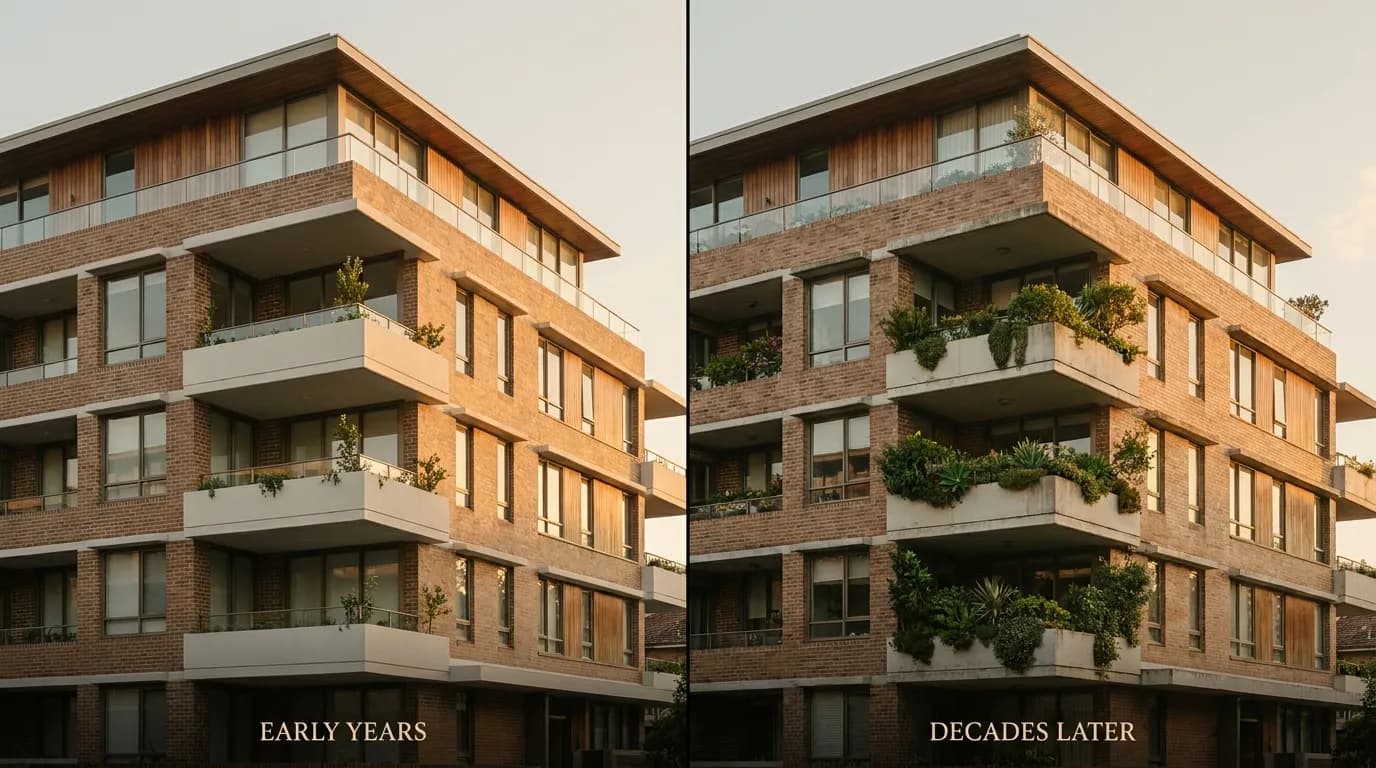
A contractor who has worked your building for five years already knows where the concrete cancer started, which balcony failed first, and what the substrate looks like under every waterproofed surface.