Why Professional Maintenance Protects Rental Income
Inconsistent maintenance costs a $750/week Sydney property $15,000+ over 5 years in avoidable vacancy, lower rents, and insurance exposure. Here's the maths.
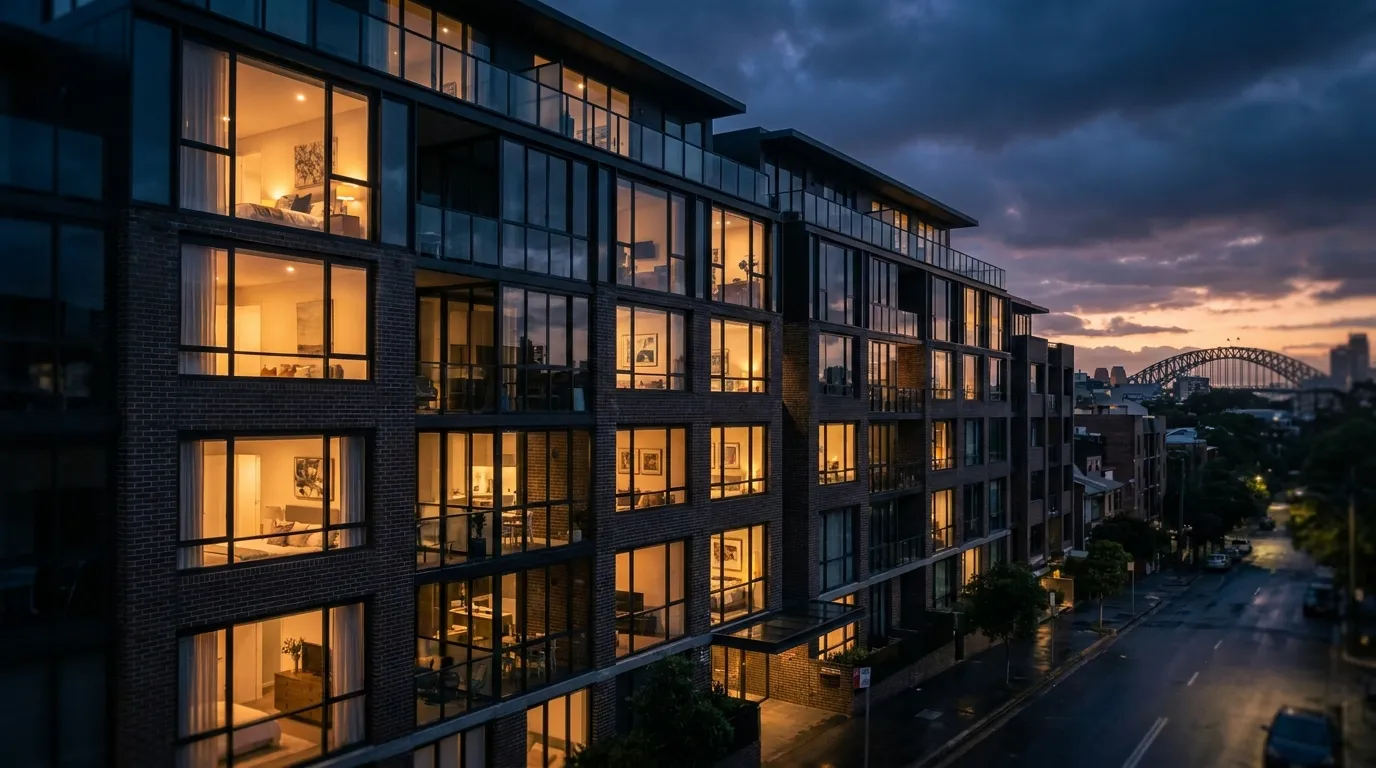
A $750 per week Sydney rental property that sits vacant for one extra week per year, rents for $30 less than it could, and generates one avoidable repair call per quarter is underperforming by approximately $5,000 per year relative to the same property managed with professional maintenance. Over 5 years, that is $25,000. The maintenance investment that prevents this outcome costs a fraction of that gap.
Most landlords think about maintenance as a cost. The better frame is that maintenance is a yield protection mechanism - and the return on a well-run maintenance program, measured in vacancy reduction, rent appraisal support, tenant retention, and insurance claim integrity, significantly exceeds the expenditure.
Vacancy minimisation: the largest lever
Vacancy is the single most expensive outcome in residential property investment. A day vacant is a day with zero income against a fixed cost base (mortgage, council rates, insurance, management fees). In Sydney at $750/week, every vacant day costs $107. Every vacant week costs $750.
The relationship between maintenance quality and vacancy is real and measurable. Properties with unresolved maintenance issues face two vacancy risks that well-maintained properties do not:
1. Tenant-initiated early departure. Tenants who have lived with unresponsive maintenance do not renew. They move to a property managed more attentively. The cost of this transition - re-letting fee, advertising, vacancy days, make-good repairs - is typically $3,000 to $6,000 per event.
2. Extended vacancy at re-listing. A property in poor condition takes longer to re-let. Prospective tenants conducting inspections see maintenance backlog as a risk signal. They choose the comparable property on the same street that looks after its tenants. In Sydney's competitive rental market, a property that takes 3 weeks to re-let instead of 1 week has lost $1,500 in rent before a new tenant signs.
| Maintenance standard | Average vacancy weeks/year | Annual vacancy cost |
|---|---|---|
| Reactive only, slow response | 3-5 weeks | $2,250-3,750 |
| Responsive, no prevention | 2-3 weeks | $1,500-2,250 |
| Preventative + fast response | 1-2 weeks | $750-1,500 |
| Difference (reactive vs professional) | 1.5-3 weeks | $1,500-2,250 saved |
Over 5 years, the difference between the reactive and professional models on vacancy alone is $7,500 to $11,250 on a single $750/week property.
Rent appraisal support
Rental appraisals are market-based, but they are not property-blind. Property managers conducting rent reviews look at the condition of the property against comparable properties in the market. A well-presented, well-maintained property will support an appraisal at the upper end of the comparable range. A property with obvious maintenance backlog will be appraised conservatively.
The difference is typically 5 to 8% in Sydney's mid-range rental market. On a $750/week property, that is $37 to $60 per week. Over 12 months, $1,950 to $3,120. Over 5 years, $9,750 to $15,600 per property.
This gap compounds. A property that achieves a higher rent in year 1 is appraised from a higher base in year 2. The maintenance investment that keeps the property in condition to support those appraisals is not just cost avoidance - it is yield enhancement.
Tenant retention mathematics
The best tenant to re-let to is the one already in the property. A tenant who renews their lease has no vacancy event, no re-letting fee, no advertising cost, no re-inspection, and no make-good repairs. The cost of retaining a quality tenant is zero.
The factor most within the property manager's control that determines whether a quality tenant renews is their experience of having maintenance handled properly. Survey data from Australian rental market research is consistent: maintenance responsiveness is the primary non-price driver of renewal decisions.
A property that achieves one additional renewal cycle over a 5-year period saves one full turnover event. That single event saving is worth $3,000 to $6,000 depending on the property. The maintenance investment that produces that renewal is typically $1,500 to $3,000 per year.
Insurance claim integrity
Landlord insurance is a product most property investors hold but few think carefully about until they need it. The condition of the policy at claim time depends partly on whether the insured can demonstrate that the property was reasonably maintained and that damage was not caused by neglect.
A documented maintenance history - regular inspection records, maintenance receipts, condition photographs - is the evidence base for a strong insurance claim. It demonstrates:
- The damage was not from gradual deterioration attributable to neglect
- The property was routinely inspected and issues were actioned
- The landlord met their duty of care as a property owner
A landlord who cannot provide this record is arguing from a weak position when a significant claim is made. Given that water damage claims in Sydney apartments - the most common large-scale residential claim type - frequently involve questions about how long the damage had been developing, the maintenance record is not incidental. It is central to claim outcome.
The 5-year compounding model
On a $750/week Sydney rental property with professional maintenance management:
| Value driver | Annual improvement | 5-year value |
|---|---|---|
| Vacancy reduction (1.5-3 fewer weeks/year) | $1,500-2,250 | $7,500-11,250 |
| Rent appraisal support (5-8% uplift) | $1,950-3,120 | $9,750-15,600 |
| Turnover reduction (1 fewer event over 5 years) | $600-1,200/year equiv. | $3,000-6,000 |
| Earlier issue detection (lower repair costs) | $600-1,600 | $3,000-8,000 |
| Insurance claim integrity | Variable - risk protection | Non-quantifiable |
| Total conservative estimate | $23,250-40,850 |
Against professional maintenance expenditure of $1,500 to $3,000 per year ($7,500 to $15,000 over 5 years), the modelled return is 2.5x to 4x expenditure in direct value, plus insurance and legal risk reduction.
What professional maintenance actually requires
Professional maintenance is not expensive maintenance. It is responsive, documented, and preventative maintenance - which costs about the same as reactive maintenance in direct spend, but significantly less in downstream consequences.
The requirements:
- A contractor who responds to quotes within 6 hours and starts jobs within 2 business days of approval
- Routine inspections twice per year minimum, with a maintenance-informed eye
- Before/after photos on every completed job
- Written quotes with clear scope before approval
- Pre-emptive reporting of identified issues before they become urgent
These requirements are operational standards, not premium services. They should be the baseline expectation of any maintenance arrangement. For how to build these into your property manager-contractor relationship, see how to keep landlords happy with faster maintenance turnarounds and preventative maintenance reduces tenant complaints.
The conversation with landlords
Property managers who can articulate the financial case for professional maintenance have a stronger advisory relationship with their landlords. A landlord who understands that a $400 preventative repair prevents a $4,000 reactive one - and that a $4,000 reactive repair with a 3-week timeline risks losing a quality tenant who costs $5,000 to replace - makes better decisions and trusts the property manager who explained this to them.
This is not about overselling maintenance. It is about giving landlords the information they need to see maintenance as the yield protection mechanism it actually is, rather than an expense to minimise.
For more on how delayed repairs accelerate the cost curve, see the real cost of delayed repairs in rental properties.
The bottom line
Professional maintenance is one of the highest-returning investments available to a Sydney landlord. The 5-year value on a $750/week property from reduced vacancy, higher rent appraisals, improved tenant retention, and lower repair costs ranges from $23,000 to $41,000. The maintenance expenditure that produces this outcome is $7,500 to $15,000 over the same period. The return is clear, and the case for it is not complicated.
To discuss professional maintenance for your Sydney portfolio, contact Superb Maintenance Group or call 0452 588 638.
Frequently asked questions
How much does one extra vacancy week cost a Sydney landlord per year?
Does property condition affect rental appraisal?
Does a well-maintained property attract better tenants?
How does maintenance affect insurance claims?
What is the 5-year compounding effect of professional maintenance?
Continue reading
The Real Cost of Delayed Repairs in Rental Properties
Delaying a $400 repair in a Sydney rental can compound into a $15,000+ problem. Here's the financial, legal, and tenancy cost of letting repairs wait.
How Preventative Maintenance Reduces Tenant Complaints
The callout cycle costs Sydney property managers hours every week. A structured inspection cadence can reduce reactive maintenance callouts by 40-60%. Here's how.

Keep Landlords Happy With Faster Maintenance Turnarounds
Landlords judge property managers on maintenance outcomes, not process. Here's a practical communication and turnaround system that protects your reputation.