The Real Cost of Delayed Repairs in Rental Properties
Delaying a $400 repair in a Sydney rental can compound into a $15,000+ problem. Here's the financial, legal, and tenancy cost of letting repairs wait.
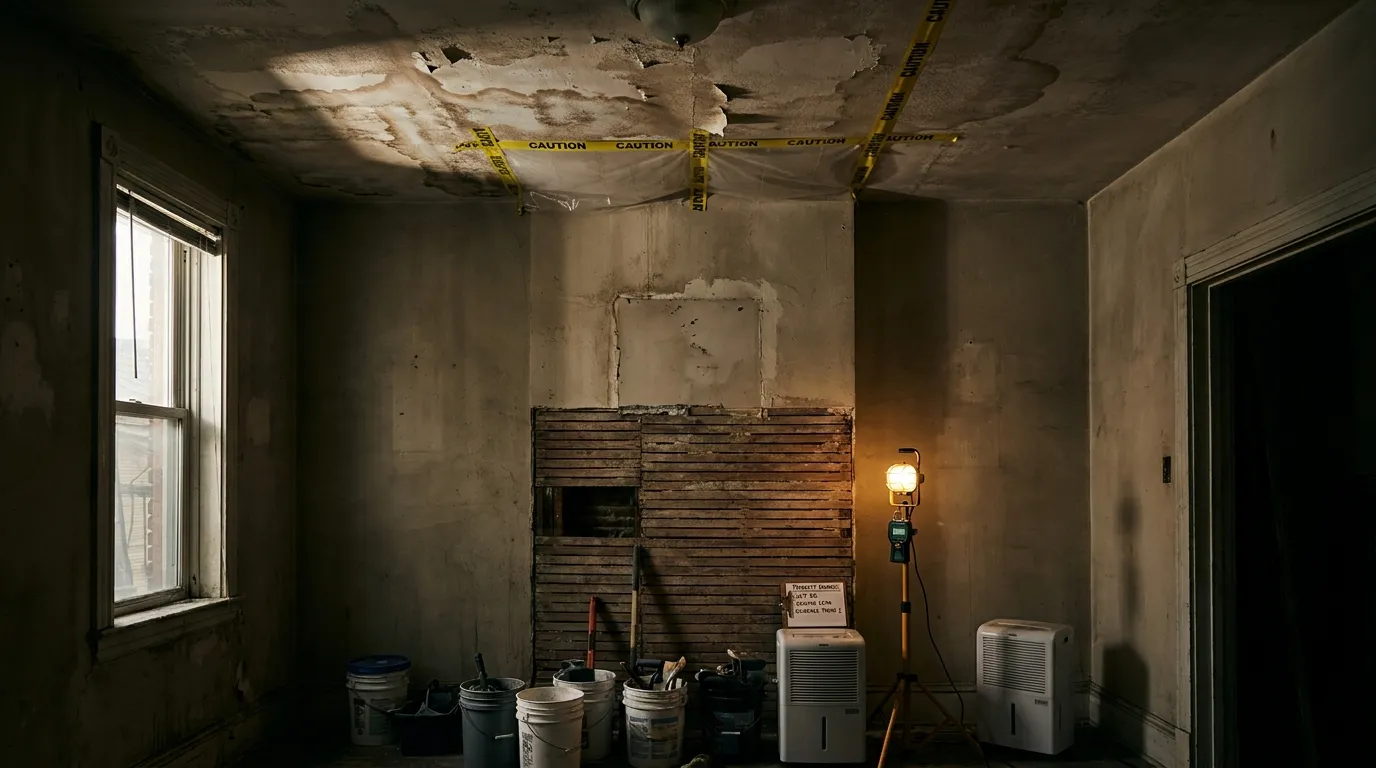
A blocked drain costs $180 to clear. Left for 3 months, it backs up and floods the bathroom, causing $4,500 in subfloor damage. Left another 6 weeks, the water has affected the ceiling of the unit below and the repair cost is now shared across two lots and potentially an owners corporation - with legal costs on top. The repair that should have been $180 has become a $25,000 to $40,000 multi-party event.
This is not a worst-case scenario. It is a pattern we have rectified multiple times in Sydney apartment buildings in the last 18 months alone.
The legal framework in NSW
Under the Residential Tenancies Act 2010 (NSW), landlords must maintain a rented property in a reasonable state of repair. The key obligation is proportionate to urgency:
Urgent repairs - must be addressed immediately (or as soon as practicable). These include burst pipes, blocked toilets, gas leaks, dangerous electrical faults, serious roof damage, and failure of essential services. If a landlord does not respond, tenants can arrange urgent repairs up to $1,000 and recover the cost.
Non-urgent repairs - must be attended to within a reasonable time. NSW Fair Trading and NCAT generally interpret this as 14 days for habitable-condition issues and within a reasonable period (depending on complexity) for general maintenance.
Tenants who are ignored can apply to NCAT for a repair order, a rent reduction, or in serious cases, a lease termination without penalty. Any of these outcomes is more costly for the landlord than the original repair.
The practical risk is not that most landlords are ignoring their obligations deliberately. It is that "I am getting a quote" or "I am waiting for the contractor" stretches into 3 weeks, 6 weeks, 3 months - at which point the legal exposure has grown alongside the physical damage.
The water damage compounding curve
Water is the most consequential delay risk in Sydney residential property maintenance, for a simple reason: it is not static. Active water ingress continues to damage whatever it contacts for as long as it is active.
The cost curve for an unaddressed bathroom leak in a standard Sydney apartment:
| Time elapsed | Extent of damage | Estimated repair cost |
|---|---|---|
| Week 1-2 (identified, not acted on) | Silicone gap, minor substrate wetness | $200-400 |
| Month 1 | Subfloor substrate softening, tile bond degrading | $1,500-4,000 |
| Month 2-3 | Floor substrate partially failed, possible tile movement | $4,000-8,000 |
| Month 4-6 | Penetration to structural elements, ceiling below affected | $8,000-20,000 |
| 6+ months (leak to unit below) | Multi-lot damage, structural review required | $20,000-50,000+ |
These figures reflect our project experience in Sydney apartments. They vary by construction type, leak volume, and building configuration - but the direction of the curve is consistent. Every delay multiplies the cost.
For the specific failure mechanisms that drive this curve, see bathroom leaks, silicone and grout: the silent cause of bigger repairs.
The tenant retention cost
Tenants who live with unresolved maintenance issues leave earlier. The correlation is not exact, but it is consistent: tenants who have experienced slow or unresponsive maintenance are significantly more likely to not renew their lease.
In Sydney's rental market, the cost of tenant turnover is material:
| Cost item | Typical range |
|---|---|
| Property management re-leasing fee | $1,000-2,500 |
| Advertising (photo reshoot, platforms) | $300-700 |
| Vacancy days at $750/week | $750+ per week |
| End-of-lease cosmetic repairs | $500-3,000 |
| Total per turnover event | $2,550-8,700+ |
A $400 repair that is delayed for 6 weeks and contributes to a tenant not renewing triggers a $3,000 to $8,000 turnover cost. The landlord who was "saving" the $400 has paid several times that.
Over a 5-year period on a property where tenant turnover is one event per 2 years instead of one per 3 years (a difference directly attributable to maintenance responsiveness), the accumulated cost difference is $6,000 to $17,000 in turnover costs alone - before accounting for the compounded damage repair costs and NCAT risk.
The NCAT consequence
A formal NCAT application for repair orders is relatively uncommon but not rare. When it occurs, it creates costs beyond the repair itself:
- Time: NCAT hearings take weeks to schedule. The property manager and landlord invest 3 to 6 hours in preparation, attendance, and follow-up.
- Legal costs: If the tenant has representation, or if the matter escalates, legal costs on both sides are real.
- Orders with teeth: NCAT can order not just the repair, but compensation for the period of inadequate condition, rent reduction, and in serious cases, termination orders that allow the tenant to vacate without penalty.
- Record: NCAT applications become part of the tenancy record. A landlord with a history of repair order applications faces scrutiny in future tenancy applications and insurance renewals.
None of this is created by a $400 repair done promptly. All of it is potentially created by that same $400 repair ignored.
The insurance angle
Landlord insurance policies typically cover sudden and accidental damage, not gradual deterioration from neglect. When a water damage claim is lodged and the insurer's assessor determines that the damage developed over a period during which the landlord was on notice of the issue (there is a repair request trail in the property management system), the claim can be reduced or rejected.
In a water damage scenario where the property manager has records of tenant reports that were not actioned promptly, the insurer may argue that the damage is attributable to neglect rather than a sudden event - shifting the cost back to the landlord.
This is not a theoretical risk. Insurance disputes on neglect grounds are one of the less-discussed but significant consequences of delayed repairs in residential property.
Practical steps for property managers
The systems that prevent delayed-repair problems are operational, not complicated:
-
Log every request with a timestamp. The timestamp is your defence and your prompt. A request logged on 01/04/2026 with no action by 15/04/2026 is a visible risk.
-
Set a 48-hour response rule for non-urgent repairs. Not completion - response. A quote or a booking confirmation within 48 hours prevents most of the "I reported it and nothing happened" complaints.
-
Use a contractor with a fast quote turnaround. A contractor who takes 5 days to quote is adding 5 days of delay before any work begins. Fast quotes matter more than cheap quotes.
-
Photo everything at report and completion. Photos create a timeline that is useful for insurance, NCAT, and bond disputes.
-
Flag persistent issues to the landlord with written recommendations. If a landlord declines a repair you have recommended in writing, the professional and legal position is different from a repair that simply was not booked.
The bottom line
The real cost of a delayed repair is almost always higher than the repair itself. The water damage compounding curve, the tenant retention cost, the NCAT exposure, and the insurance implications combine to make "waiting a bit longer" on maintenance one of the most expensive decisions in property management. Preventative maintenance that catches issues early eliminates most of these risks before they form. For the rest, speed is the only reliable risk management tool.
To discuss responsive maintenance for your Sydney portfolio, contact Superb Maintenance Group or call 0452 588 638. Emergency response within 24 hours, 7 days.
Frequently asked questions
What are a landlord's obligations to repair a rental property in NSW?
What is an urgent repair under the NSW Residential Tenancies Act?
What can happen if a landlord ignores a repair request?
How fast does water damage compound in an apartment building?
Who pays for water damage to the unit below in a Sydney apartment?
Continue reading

How Preventative Maintenance Reduces Tenant Complaints
The callout cycle costs Sydney property managers hours every week. A structured inspection cadence can reduce reactive maintenance callouts by 40-60%. Here's how.

Bathroom Leaks, Silicone & Grout: The Silent Repair Risk
A $200 silicone job in a bathroom becomes a $25,000 ceiling repair in the unit below. Here's where leaks start, how fast they spread, and when to reseal.
Why Professional Maintenance Protects Rental Income
Inconsistent maintenance costs a $750/week Sydney property $15,000+ over 5 years in avoidable vacancy, lower rents, and insurance exposure. Here's the maths.