End of Lease Repairs: What to Fix Before Listing
A practical guide to end-of-lease repairs for Sydney property managers: what's the tenant's responsibility, what's the landlord's, and what to fix before relisting.
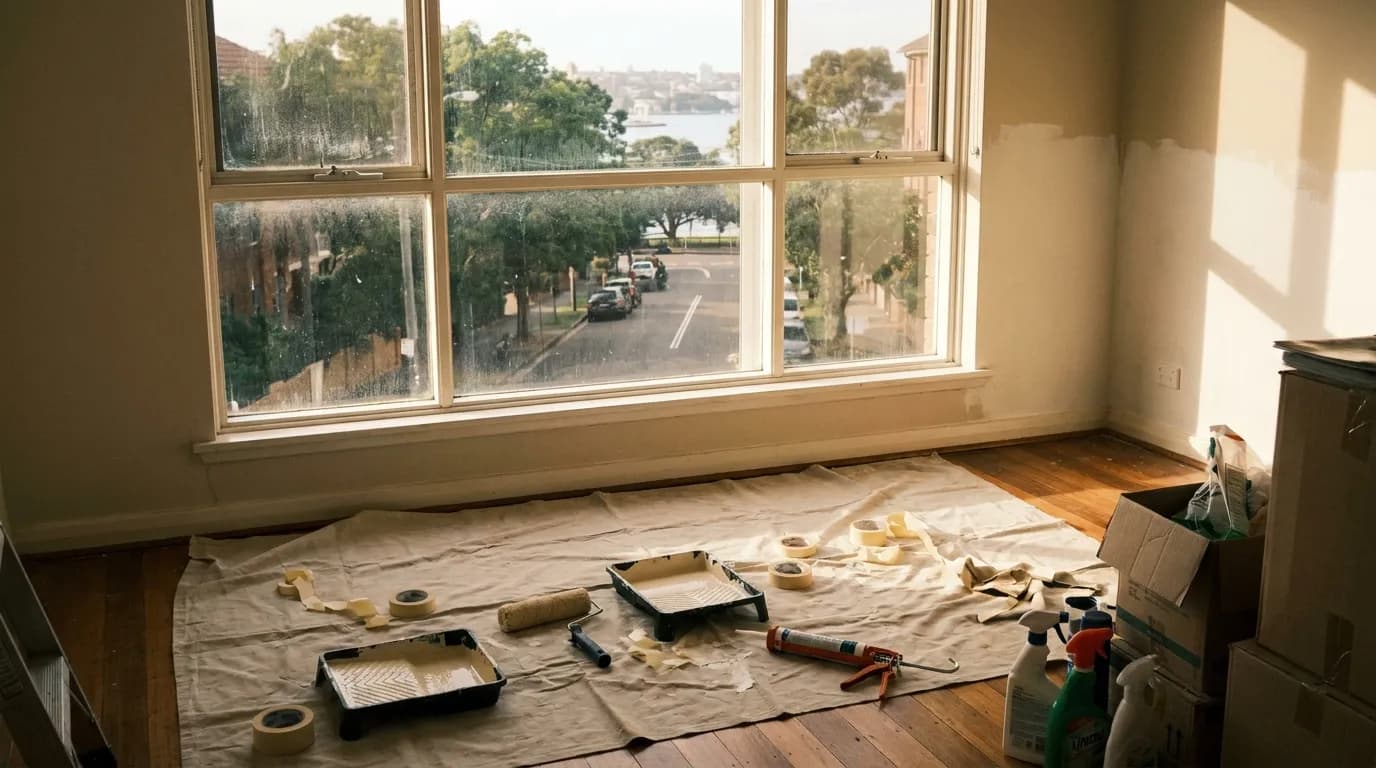
Every end-of-lease produces two lists. The first is what the tenant is responsible for under the Residential Tenancies Act 2010 (NSW). The second is what the landlord should fix before the property goes back on the market. Mixing them up - or ignoring the second list entirely - either leaves money on the table or creates a dispute that costs more than the work itself.
The tenant-vs-landlord line
Under NSW tenancy law, tenants are required to return the property in the same condition as when they moved in, allowing for fair wear and tear. That phrase - fair wear and tear - does a lot of work in end-of-lease disputes.
Fair wear and tear covers gradual deterioration from ordinary, reasonable use: minor scuffs on walls, carpet pile compression in traffic areas, small nail holes from picture hanging (in most cases), and general dulling of surfaces over time. These are not the tenant's cost.
Damage beyond fair wear and tear covers things the tenant caused beyond normal use: large holes in walls, stained or burned carpet, broken fixtures, cracked tiles from impact, unauthorised alterations, and marks that go beyond minor scuffing. These are recoverable from the bond or through NCAT if disputed.
In practice, the line is often argued. NSW Fair Trading provides guidance, but property managers see plenty of grey areas - particularly on paint, where the age of the existing paint job affects whether marks constitute fair wear and tear or damage.
The cleanest approach: document everything at the start of a tenancy with time-stamped photos, and do the same at the end. This makes the comparison objective rather than argumentative.
The common defect list
Here is what typically surfaces at end-of-lease inspections, with a guide on responsibility and approximate costs for a 2-bedroom Sydney apartment:
| Item | Typical responsibility | Approx. cost (Sydney 2026) |
|---|---|---|
| Wall scuffs, minor marks | Landlord (fair wear and tear) | Included in repaint |
| Holes, stains, significant damage | Tenant | $80-200 per patch + paint |
| Full repaint (walls, ceilings) | Landlord (after 5-7 years) | $2,500-4,500 |
| Paint touch-ups only | Landlord if minor | $400-900 |
| Grout cleaning | Landlord | $150-400 |
| Regrouting (deteriorated, not damaged) | Landlord | $400-900 |
| Silicone replacement (shower, bath, vanity) | Landlord (maintenance cycle) | $150-400 |
| Screen door / flyscreen repairs | Landlord if worn, tenant if damaged | $120-350 |
| Blind cord safety (retrofit) | Landlord | $80-200 |
| Smoke alarm testing / replacement | Landlord obligation | $60-180 |
| High-pressure cleaning (paths, courtyard) | Shared or landlord | $400-800 |
These figures are indicative. Actual costs vary by property size, condition, and access.
What to fix before relisting
Even if a defect is technically the tenant's responsibility, there are situations where the landlord is better served by fixing it promptly and recovering through the bond, rather than waiting for a dispute to resolve.
A dispute that goes to NCAT can take 4 to 8 weeks. A vacant property at $750/week for 6 weeks costs $4,500. If the repair in question is $1,500, it is often faster and cheaper to complete the work and pursue the bond claim simultaneously.
For the landlord-funded work, here is the priority order before relisting:
1. Silicone and grout (bathrooms) This is the first thing prospective tenants notice. Discoloured grout and failed silicone reads as "this property is not maintained." It is also where most water ingress starts. A $300 to $500 bathroom service makes an immediate visual difference. For more detail on why this matters beyond aesthetics, see bathroom leaks, silicone and grout: the silent cause of bigger repairs.
2. Paint touch-ups or full repaint Scuffed, marked walls photograph badly and make a property feel tired in person. If the last repaint was within 3 years and the damage is genuinely minor, targeted touch-ups work. If the paint is older than 4 to 5 years, a full repaint usually looks better than patchy touch-ups and supports a stronger rental appraisal.
3. Screen doors and blinds Broken flyscreens and non-functioning blinds are disproportionately noticed by prospective tenants. They are inexpensive to fix ($120 to $350 per screen door, $150 to $600 per blind depending on style) and have an outsized effect on first impressions during inspections.
4. Smoke alarm compliance NSW requires smoke alarms to be in working order at the start of each new tenancy. Test all alarms, replace batteries, and check the manufacture date. Any alarm older than 10 years must be replaced. This is a legal obligation, not optional. Non-compliance creates liability if something goes wrong and invalidates some insurance policies.
5. Blind cord safety Since 2014, new blinds in Australian homes are required to have inaccessible or short cords. Older properties often still have corded blinds. NSW Fair Trading recommends retrofitting existing blinds with safety devices, particularly in any room accessible to children. Cost: $80 to $200 per blind.
6. High-pressure cleaning Courtyards, balconies, pathways, and driveways accumulate grime that is barely visible to residents but obvious in listing photos. A high-pressure clean before photography costs $400 to $800 for most properties and meaningfully improves the visual quality of the listing.
The photography standard
Everything above feeds into the listing photos. In a Sydney rental market where tenants are making shortlist decisions from online listings, photos taken after a proper end-of-lease clean and repair give the property a genuine competitive advantage.
A property where the bathroom grout is dark, the walls have visible scuffs, and the courtyard is dirty will sit longer on the market than an equivalent property that presents well. Even a few extra vacancy days at $107 per day erases the cost of the repairs several times over.
Coordinating end-of-lease work efficiently
The practical challenge for property managers is getting end-of-lease work done in a tight window - typically between the end of one tenancy and the start of the next. Coordinating a cleaner, a painter, a tiler for grout, and an electrician for smoke alarms means 4 separate booking chains, 4 separate access days, and 4 separate invoices.
A maintenance team that covers multiple trades handles this as one job, on one or two days, with a single quote and a single invoice. For a property that needs paint, grout, silicone, screen doors, and a smoke alarm check, that is the difference between a 2-day turnaround and a 10-day one.
See why one reliable contractor beats managing five different trades and our cosmetic renovations and property styling service for how we structure end-of-lease packages.
The bottom line
End-of-lease repair management comes down to two things: getting the cost responsibility right, and moving fast on the landlord-funded work. The first protects the bond claim. The second protects the rental income by minimising vacancy. Both require a clear process and a contractor who can handle multiple items in a single visit.
For a quote on end-of-lease maintenance in Sydney, contact the team at Superb Maintenance Group or call 0452 588 638.
Frequently asked questions
Who pays for paint touch-ups at end of lease in NSW?
Does a landlord have to repaint between tenancies?
How much does end-of-lease repair work typically cost?
What repairs must be done before relisting a rental property?
What is the smoke alarm obligation for NSW rental properties?
Continue reading
How Preventative Maintenance Reduces Tenant Complaints
The callout cycle costs Sydney property managers hours every week. A structured inspection cadence can reduce reactive maintenance callouts by 40-60%. Here's how.
Pre-Sale Maintenance That Helps Properties Sell Faster
The right pre-sale maintenance investments return far more than they cost. Here's the ROI ranking for Sydney properties, with real cost and value-lift numbers.
Why Professional Maintenance Protects Rental Income
Inconsistent maintenance costs a $750/week Sydney property $15,000+ over 5 years in avoidable vacancy, lower rents, and insurance exposure. Here's the maths.